Qluster raises €4.7M to power the next generation of quantum computing
Paris-basedquantum computing startup Qluster has raised €4.7 million in a pre-seed fundinground led by Quantonation, an investment fund specialising in quantumtechnologies and physics-based innovation...
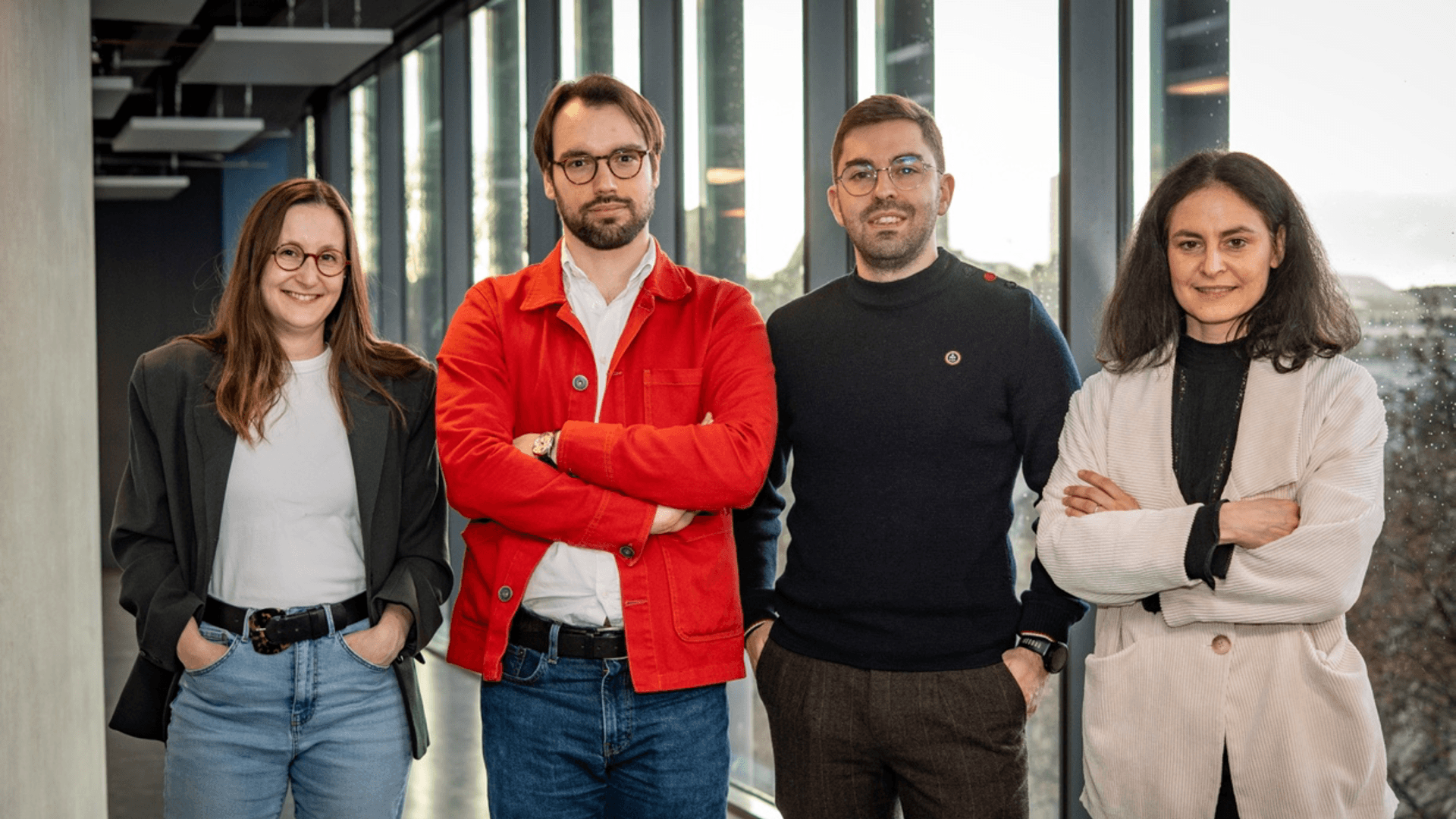
Paris-based quantum computing startup Qluster has secured €4.7 million in pre-seed funding, led by investment firm Quantonation, supported by Quantum Launchpad and Bpifrance. The company, a spin-off from Laboratoire Kastler Brossel, a Nobel Prize-winning research laboratory, was established by CEO David Fainsin, CTO Ambroise Boyer, COO Clarisse Thibault, and CSO Valentina Parigi, a physicist and professor at Sorbonne University.
Qluster aims to create a universal, fault-tolerant quantum computer for industrial applications. The startup combines continuous-variable photonic quantum computing with an Architecture First strategy, prioritizing computational needs over qubit technology limitations. This approach is based on a patented miniature photonic source developed by Parigi and Fainsin at Laboratoire Kastler Brossel, which has been experimentally validated and published in a scientific journal.
Unlike the current focus on developing powerful qubits, Qluster adopts an Architecture First approach, beginning with the computational challenges businesses face to determine the necessary resources, like qubits, circuit depth, execution speed, and energy consumption. The company then designs the quantum computer architecture around these requirements.
Since its founding, Qluster has received the 2026 i-Lab Grand Prize and support from Quantum Launchpad and Agoranov. By 2032, the startup intends to develop an intermediate-scale quantum computer, with plans to create a large-scale, fault-tolerant universal quantum computer by 2036. The company aims to establish its own R&D laboratory and expand its team to advance hardware development and quantum computing architecture.
Written by urgent.news from Tech.eu's reporting — not their text. Machine-written — may contain errors; check the original before relying on it.