Urgent.News

What's breaking now, across thousands of outlets.

Tech

Nvidia claims its Vera CPU can gain up to 39% performance boost via software optimization at SC26 — architectural fine-tuning is needed to fully unleash custom Olympus cores

Nvidia's Vera CPU, powered by its custom Olympus Arm cores, already offers strong performance with unoptimized code, but at SC26, the company demonstrated that further software optimizations can improve performance by nearly 39% with certain workloads.
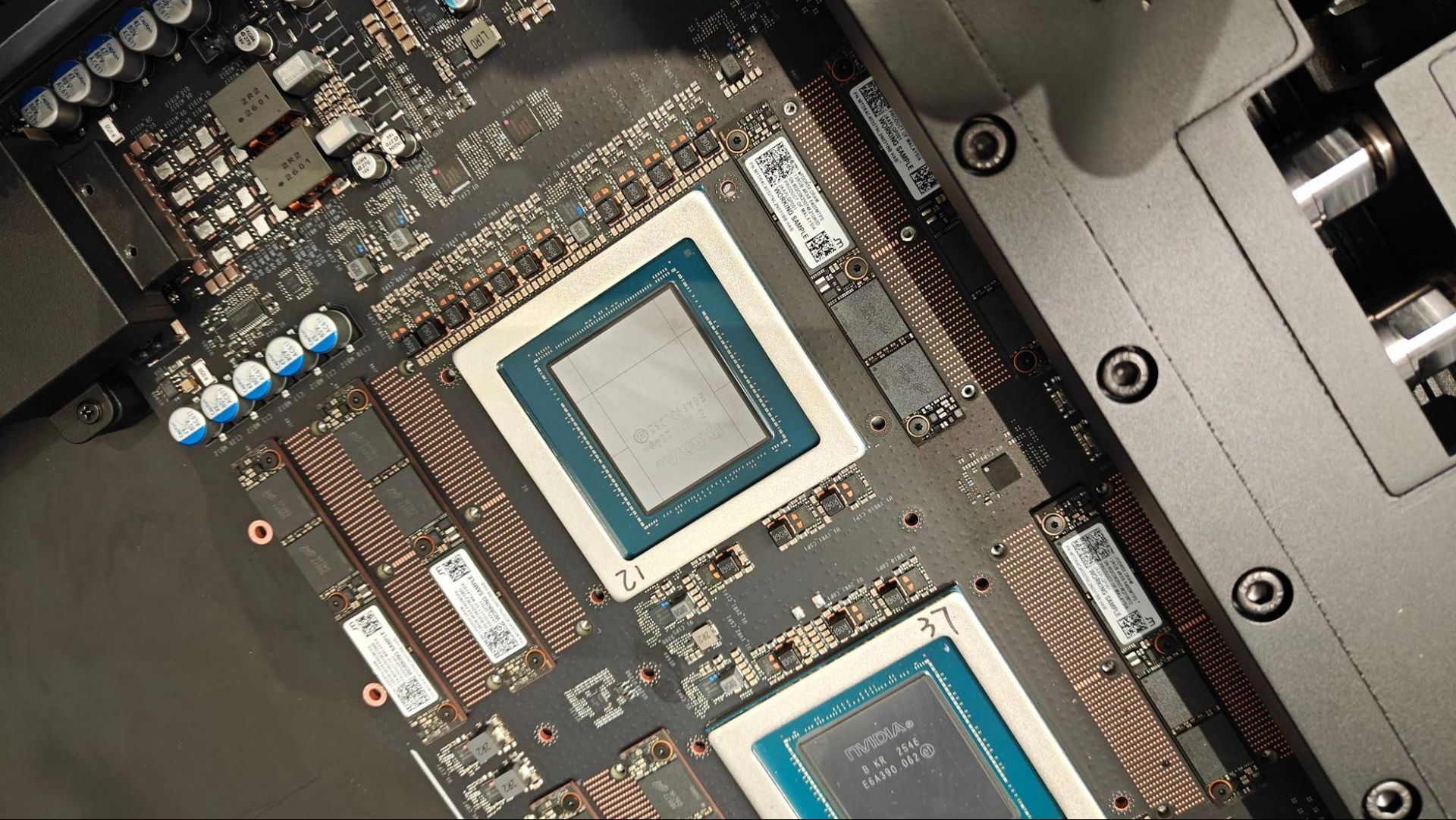
Nvidia claims its Vera CPU can gain up to 39% performance boost via software optimization at SC26 — architectural fine-tuning is needed to fully unleash custom Olympus cores

At Supercomputing 2026 (SC26), Nvidia unveiled its Vera CPU, a high-performance processor that can deliver up to a 39% performance boost through software optimization. Despite its impressive single-thread performance, Nvidia clarified that Vera is not designed for general-purpose workloads like web servers. Instead, it targets agentic AI and data processing applications, which require high per-core performance, memory bandwidth, and low latency.

Unlike its predecessor, Grace, which uses off-the-shelf Neoverse V2 CPU cores from Arm, Vera employs Nvidia's proprietary Olympus cores, featuring a wide front end with a 10-wide decoder, neural branch predictor, deep out-of-order execution engine, six vector execution units, four load pipelines, and two store pipelines. These features, combined with large private caches and advanced prefetch mechanisms, enable Vera to execute 7.53 instructions per clock and achieve 21.75 FP64 operations per cycle, surpassing Grace's capabilities by nearly 67% in a specific workload.

While software without specific optimizations can still benefit from Vera's capabilities, Nvidia's SC26 benchmarks indicate that certain applications may need to be fine-tuned to fully utilize Vera's execution resources.

Written by urgent.news from Tom's Hardware's reporting — not their text. Machine-written — may contain errors; check the original before relying on it.

Read the original at tomshardware.com →

More in Tech

The State of Trial Fonts on the Web 2026

23,303 potential licence issues, 22,289 websites, 150 foundries: what one verified pass of the live web found Abstract. We scanned the live web for trial and demo builds of commercial fonts, then…

  • 23,303 potential licence issues found across 22,289 websites and 150 foundries
  • 95% of cases had explicit trial markers in font names, 5% identified by foundry trial files
  • Variable fonts contribute to 5% of issues, with estimated unlicensed use value at €4.7 million

Rows vs Columns: The Cache-Line Math That Decides Your Database Layout

A 48-byte record holds a 4-byte column you actually need. Reading that one column through a row-oriented layout pulls twelve times more bytes from memory than the query uses, because the CPU cannot…

  • Row-oriented layout stores records adjacent, like CSV line or array
  • Column-oriented layout stores columns together, like struct in array-of-structs
  • Column storage allows CPU to fetch exact data, row storage fetches extra data

How to handle refund requests in a subscription app

This guide was originally published on the Hailbell blog . Short answer: iOS: you can't refund App Store purchases. Apple decides.

  • Refund handling depends on store (App Store, Google Play, or own website)
  • Verify store, plan status, and charge details before responding
  • Prepare policy statement for consistent refund communication

Chaos engineering with Dynatrace: measure before you inject a failure

Before scheduling a chaos engineering with Dynatrace experiment in production, one question matters: « if I slow down or cut this component, how will I know within ten minutes that the experiment…

  • Dynatrace measures before injecting failures in production
  • Chaos experiment treated as hypothesis test with clear contract
  • SLO and SRG guardian automate verdict for experiment decision

More from Tuesday 17 November →