Nsafoah Poku blames BoG liquidity mop-up for slowing economic growth
Energy analyst Kwadwo Nsafoah Poku says Ghana’s slowing agricultural growth shows that government money spent on the Big Push road programme would have done more good in farming. Mr Poku, a former NPP presidential aspirant, made the case on Adom FM’s Dwaso Nsem. He said agriculture grew by 6.8 percent in the first half of […]
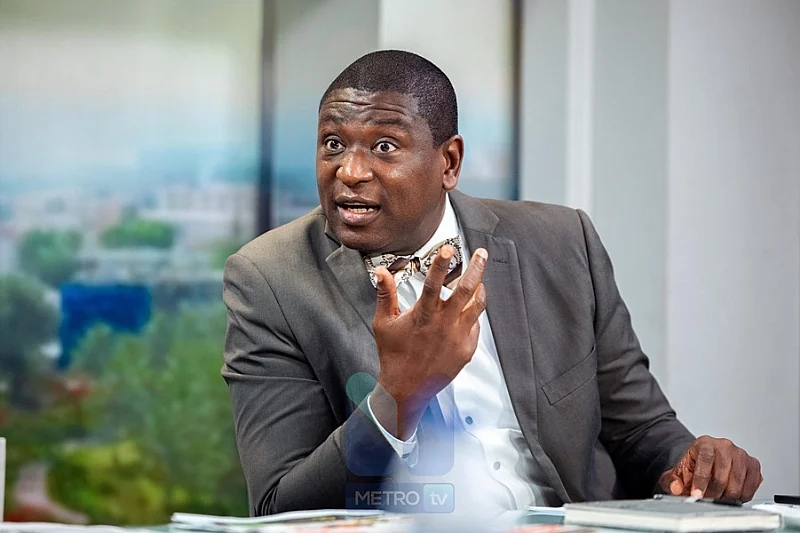
Energy analyst Kwadwo Nsafoah Poku asserts that Ghana's agricultural growth is a clear indication that the money spent on the Big Push road programme would have been more beneficial if directed toward farming. The analyst, a former NPP presidential hopeful, highlighted this point on Adom FM's Dwaso Nsem. Poku points out that while agricultural growth increased by 6.8 percent in the first half of 2025, it only rose by 3.9 percent in the first half of 2026.
Despite overall growth of 5.8 percent in 2024, 6 percent in 2025, and 6.2 percent in the first half of 2026, the economy is now experiencing a slowdown. He argues that the Bank of Ghana's effort to maintain low inflation through liquidity management and stringent anti-inflation measures have contributed to the economic stagnation.
Drawing parallels with developed nations, Poku claims that their growth remains limited when inflation is low. Critics argue that the government knew what it was doing and would continue to spend heavily on the Big Push. According to Poku, the government has nearly utilized the US$10 billion allocated to the program and awarded contracts worth over US$8 billion.
He further states that the government has borrowed GH¢160 billion this year, but these expenditures have not yielded any positive economic impact. Poku strongly believes that agriculture could be the key to Ghana's growth, and if the allocated funds had been invested in farmers, the agricultural sector would not have grown at such a slow pace of 3.9 percent.
The analyst also challenges the notion that the Iran war negatively impacted the government, arguing that higher crude oil prices resulted in 85 percent more money for the Finance Minister compared to what he would have received otherwise, thus negating the reason for weaker growth. Poku concludes by noting that the 2027 budget projects a growth rate of 5.2 percent, emphasizing that the current figures demonstrate that the economy is not thriving as it should.
The Ghana Statistical Service reported that the economy grew by 6.2 percent in the first half of 2026, with agriculture contributing 3.9 percent in the second quarter, a decline from 7.1 percent a year earlier. The Finance Minister, Dr Cassiel Ato Forson, claims that the government surpassed its first-half targets, and inflation has dropped from 13.7 percent in June 2025 to 5.3 percent by June 2026.
The Roads Minister defends the Big Push, claiming it delivered the infrastructure that Ghanaians demanded.
Written by urgent.news from Adom Online's reporting — not their text. Machine-written — may contain errors; check the original before relying on it.
This story
This is one outlet's version. Read the fullest account.