Nadie hace vino para vender alcohol
Retirar el etanol después de la fermentación permite a las bodegas ganar consumidores justo cuando la demanda mundial retrocede
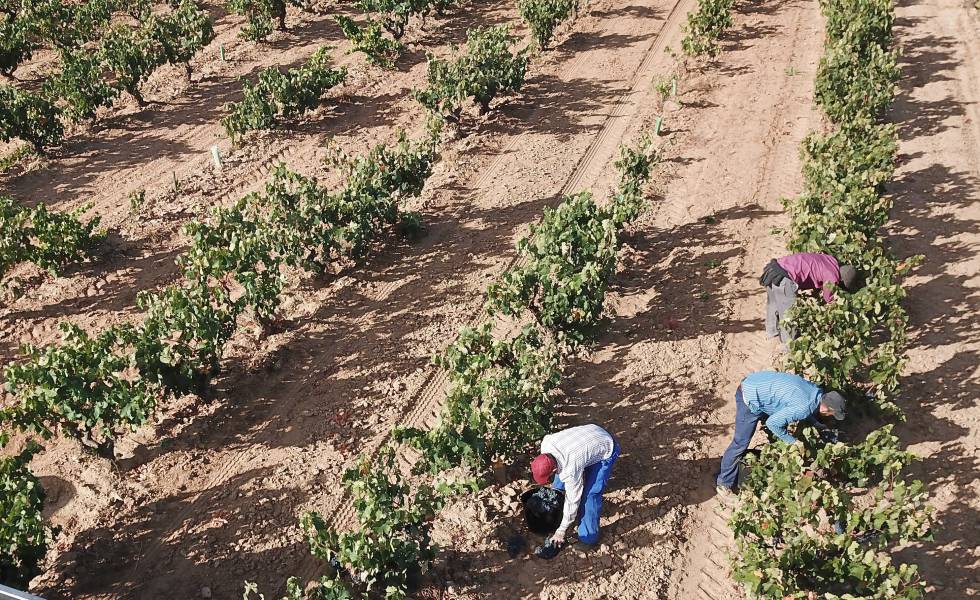
For generations, families in the Ribera del Duero have woken before dawn to sell alcohol. This region, known for its limestone and clay soil, faces harsh winters that crack bones and wrinkles grapes hardened by time. A family has tended to the vineyards for five generations, inheriting the land with the promise to protect its legacy.
However, modernity does not come to destroy this legacy but to reinforce its purpose. The alarm has been raised: global wine consumption fell by 14% in 2025 compared to 2018, and in Spain, it decreased by 7.2% in the last year.
The temptation is to cut corners, blame the millennial generation, or the economic cycle. But this is not just a crisis of consumption; it is a cultural evolution. Spain holds the largest vineyard in the world and is the second largest exporter of wine by volume. I have tasted wines from all around the world and am proud to live in the country where my favorites are born: Ribera del Duero.
Traditional wines are a gem that must be preserved, defended, and promoted without complexes. However, leading is not about guarding the gem behind a key. The original purpose of Spanish wineries was never to sell ethanol. The true reason for Spanish wineries is to accompany people's lives: to connect, celebrate, and inspire desserts.
If consumers change the way they celebrate, the purpose obliges us to adapt the vehicle, not to change the goal.
I recently met Noelia Oliver, the commercial director of BevZero, a company that produces alcohol-free wine in its facility in Villatobas, Toledo. I admit it with transparency: she breathes this every day. My first reaction was almost one of heresy. Wine without alcohol, after thousands of years of tradition? Then I learned how it is made.
Alcohol-free wine is not an easy solution; it is an engineering feat of organoleptic properties. It originates from the same grapes, the same vintage, and the same complete fermentation. Afterward, the alcohol is removed by vacuum distillation at no more than 48 degrees to preserve the aromas, and the wine is returned to its equilibrium.
Not every wine is suitable: only one made by those who love what they do. And it is happening. In 2015, BevZero produced half a million liters of alcohol-free wine in Spain. This year, it will close with over eight million, 16 times more in 11 years. It is not alone. Matarromera, Familia Torres, Martín Códax, Freixenet, Codorníu, Grandes Vinos, or Vintae already have alcohol-free wine in their catalog.
They understand that innovation is not betraying tradition but honoring it so it can survive. And outside of Spain, there are alcohol-free wine brands with wine produced here that are going viral. Believe me, I know firsthand. I am not selling a fantasy: alcohol-free wine will not compensate for what is lost. But according to a study by the University of León, 87.5% of Spaniards aged 18 to 35 would try alcohol-free wine.
The opportunity is not to compensate losses but to expand the circle. Spain has everything to lead this initiative: the grape, the vineyard, the know-how, the wineries, and the talent to reinvent itself without betrayal. We lead not by reacting to fear, but by deciding with audacity. Nobody rises before dawn to sell alcohol. They rise so that, that night, someone raises a glass and says "for us."
Whether the glass contains alcohol or not, the vineyard does not care. The vineyard only asks that someone take care of it and pass it on to the next generation with the pride of the five who preceded it.
Written by urgent.news from El Pais Economia's reporting — not their text. Machine-written — may contain errors; check the original before relying on it.