More than a headpiece: what a tanjak can reveal about its wearer
For craftsman Muhammad Ali Yusof, the traditional headgear carries clues to identity, status and custom.
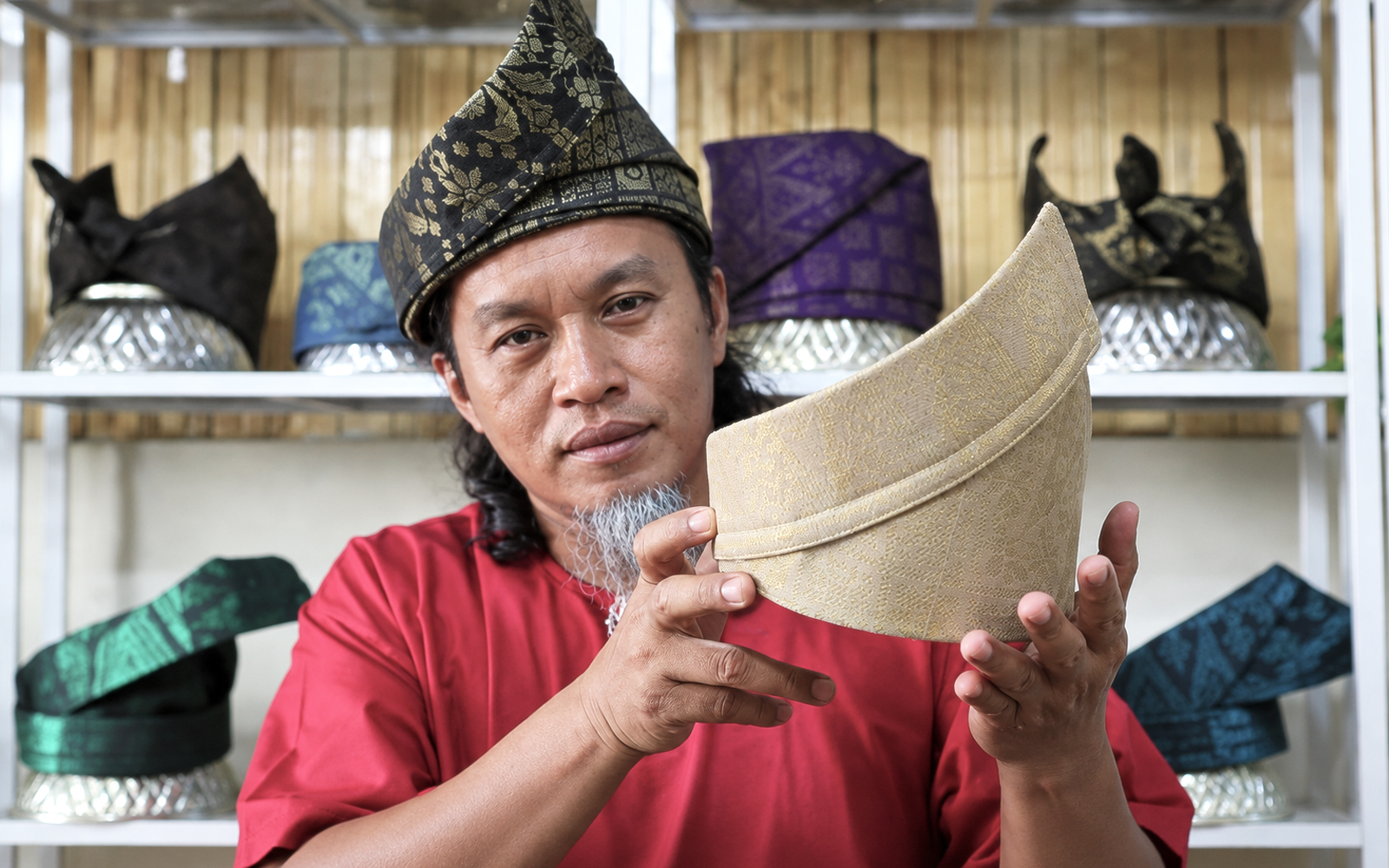
A tanjak, a traditional Malay headpiece, carries much more than aesthetic value for its wearer. Muhammad Ali Yusof, a 52-year-old craftsman from Terengganu, has dedicated his life to mastering the art of tanjak-making. The intricate folds and shapes in a tanjak can communicate crucial information about the wearer's identity, social standing, rank, place of origin, and customs associated with the design. To Ali, creating a tanjak demands not just technical skill, but also an understanding of Malay traditions and protocols.
Tanjaks, also known as tengkolok or dastar, have been worn by Malay men since the Malacca Sultanate era and have evolved into various regional styles. Originating from Terengganu, the craft is closely tied to the state's sultanate history. Ali's interest in tanjak-making began while performing with traditional music group Kumpulan Dendang Anak, where he would wear Malay attire. This led him to learn the craft in 2014, studying techniques and the underlying meanings and protocols.
Depending on the design, a tanjak can take anywhere from 30 minutes to half a day to create. Common fabrics include songket and semi-songket, and different designs are associated with specific meanings. There are eight basic Tanjak designs in Terengganu, each with its own significance, such as Belalai Gajah, linked to the Sultan, or Bendahara and Laksamana, reflecting senior court positions.
The choice of tanjak is not solely based on aesthetic preference; certain designs come with specific protocols, especially during royal events, and the folding techniques must be executed with precision to avoid violating royal customs and protocol.
Ali's work has received commissions from the Sultan of Terengganu and members of the royal family, with the designs requiring specialized songket and precise folding techniques. Traditional Malay attire, including the tanjak, holds cultural significance, and Ali hopes to preserve this heritage for future generations. His son, Mustaffa Matin, shows interest in learning the craft, ensuring that the knowledge of crafting and wearing a tanjak will continue in the family.
For Ali, a tanjak is more than just a decorative accessory; it embodies status, history, custom, and identity, and should be appreciated and maintained in modern life.
Written by urgent.news from Free Malaysia Today's reporting — not their text. Machine-written — may contain errors; check the original before relying on it.
This story
This is one outlet's version. Read the fullest account.
- More than a headpiece: what a tanjak can reveal about its wearer freemalaysiatoday.com