Maintainers don’t need more AI bug reports. They need fixes.
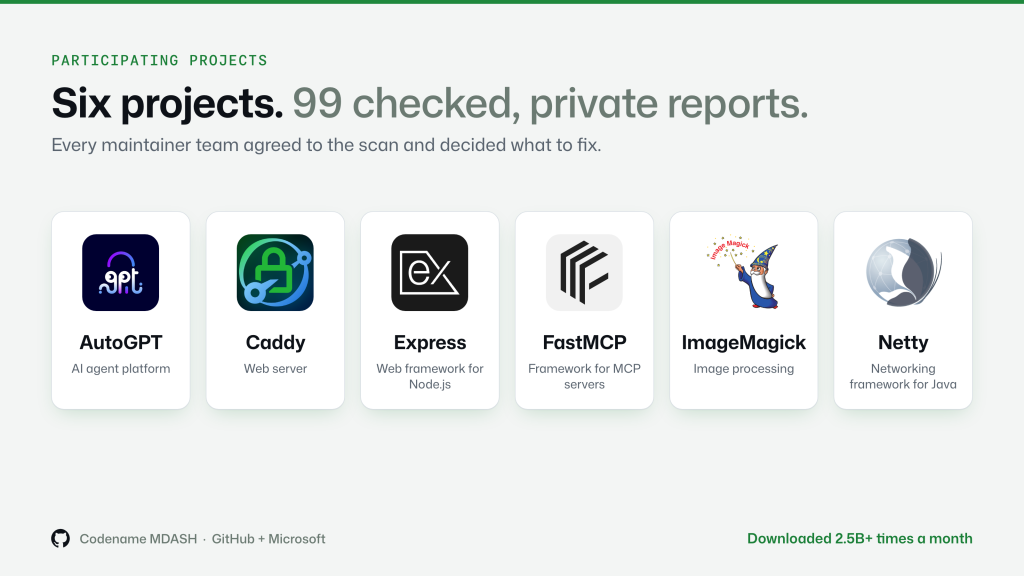
In the Codename MDASH pilot, GitHub and Microsoft turned thousands of raw AI findings into 99 checked, private reports with suggested fixes for six widely used open source projects. Maintainers have already fixed more than half. The post Maintainers don’t need more AI bug reports. They need fixes. appeared first on The GitHub Blog .
The article discusses a pilot project between GitHub and Microsoft to address the overwhelming number of AI-generated security findings that maintainers of open source software receive. The aim was to provide maintainers with only verified and high-impact fixes, rather than a flood of raw findings. The pilot used GitHub's Codename MDASH, a multi-model agentic scanning harness, powered by Microsoft's MAI Cyber model, to find and suggest fixes for security vulnerabilities.
An AI triage agent from the GitHub Security Lab filtered out duplicates and checked the validity of findings, while Microsoft FORGE Lab researchers manually verified the remaining findings. The project involved six open source projects, all alumni of the GitHub Secure Open Source Fund, and resulted in maintainers receiving 99 private reports with fixes.
The maintainers decided on the fixes and their implementation timeline. The pilot showed that while fixes matter more than findings, the process still has gaps that need to be addressed, such as maintaining a balance between efficient verification by researchers and ensuring maintainers have access to cyber-capable models for proof of concept checks.
Written by urgent.news from GitHub Blog's reporting — not their text. Machine-written — may contain errors; check the original before relying on it.