Made in Our Image: A Live Conversation on AI
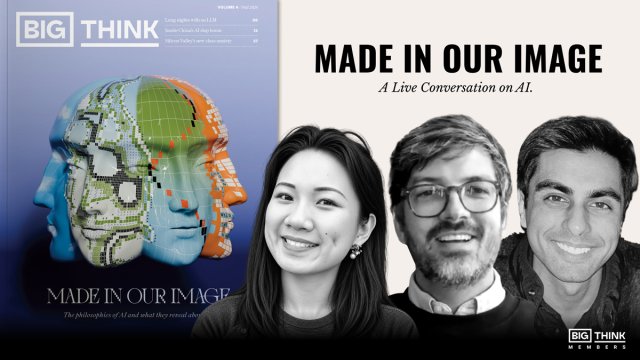
Big Think hosted a live event on our latest issue, Made in Our Image , which explores the philosophies behind artificial intelligence and what they reveal about us. Executive Producer Dan Hayes sat down with the writers behind the magazine for a candid conversation about the human side of this century’s most consequential technology, along with a behind-the-scenes look at what went into making…
Made in Our Image: A Live Conversation on AI
Big Think recently hosted a live event to discuss the latest issue of their quarterly magazine, Made in Our Image. The magazine delves into the philosophies surrounding artificial intelligence (AI) and the insights these philosophies offer about humanity. Executive Producer Dan Hayes sat down with writers Afra Wang and Namir Khaliq for a candid conversation about the human aspect of AI and the behind-the-scenes process of creating their favorite issue yet.
DAN: Producing these quarterly magazines is a point of pride for us at Big Think. It's remarkable to have a tangible item you can display on your nightstand or coffee table and read in the physical world. The audience response has been overwhelmingly positive since we launched the magazine, with more people expressing a desire for an analog thought partner and an appreciation for big ideas. I'd like to thank the entire team for their contributions. You're the best!
Today, I have two exceptional writers with me: Afra Wang and Namir Khaliq. We plan to explore several topics, starting with the AI-generated film Zombie Scavenger and Afra's inquiry into AI video creation in China. I also want to discuss the connection between censorship and art, as well as the relevance of AI slop, particularly in light of China's ghost cities.
Additionally, we'll examine the relationship between Afra's article on AI slop and Namir's piece on the permanent underclass, which share some overlapping themes. I'll share some personal experiences with AI as a filmmaker, followed by a discussion with Namir about the potential for a permanent underclass and whether AI represents the new industrial revolution for knowledge workers.
We'll also address questions like whether every generation believes it is living through the end of history, whether it is evolutionarily difficult for humans to envision genuine advantages, and the extent to which our nation's character—from Silicon Valley to Wall Street to the American West—is built on the virtue of labor. Lastly, we'll consider the implications of AI delivering everything we desire and what might remain to do with our lives in an AI-driven utopia.
Finally, we'll explore whether humans have an innate need to contribute to find meaning in their lives. These are the key areas we will cover during our discussion.
Written by urgent.news from Big Think's reporting — not their text. Machine-written — may contain errors; check the original before relying on it.