How tea bags exposed a global drug ring, Interpol tells summit
Dubai: A plastic package labelled as green tea, found on a South Korean beach, helped Interpol uncover a drug trafficking network linked to 24 tonnes of ketamine seized across nine countries. The case was highlighted at the World Police Summit in Dubai, where international officials warned of evolving drug trafficking networks, the spread of methamphetamine in the Middle East and the need for…
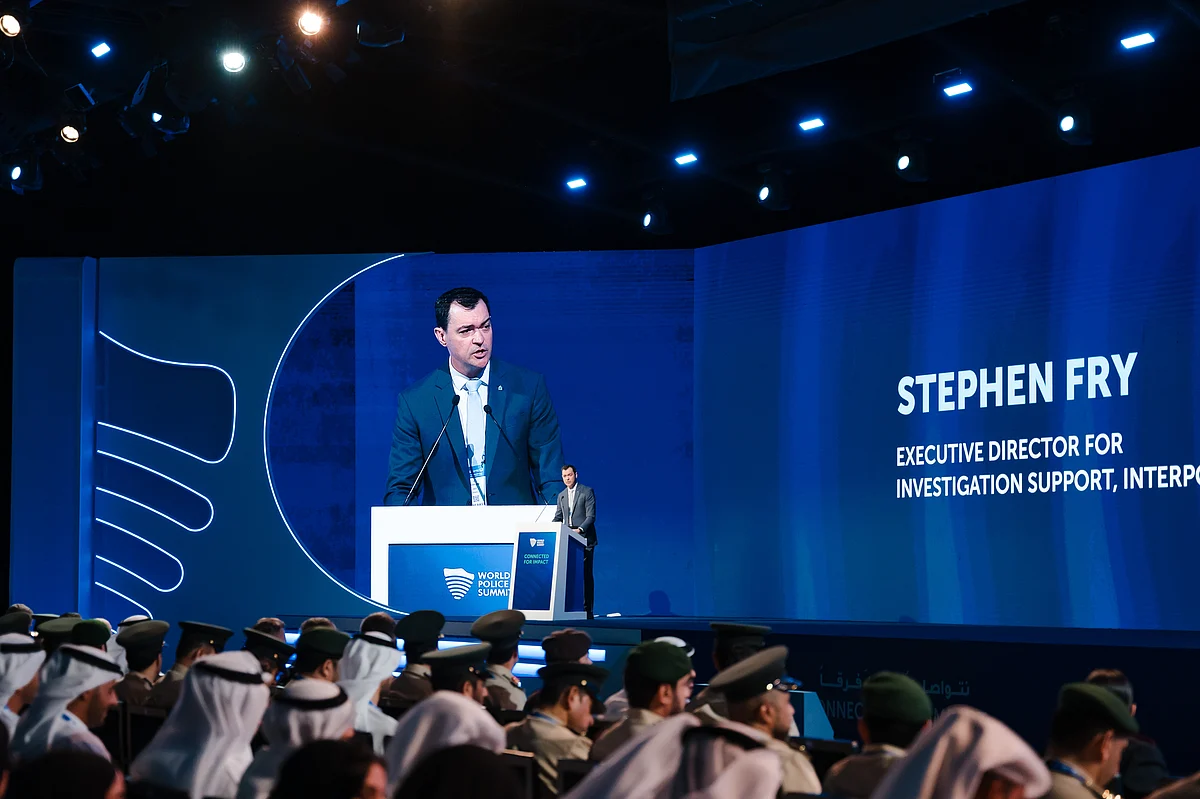
A plastic package labeled as green tea, discovered on a beach in South Korea, enabled Interpol to uncover a drug trafficking network associated with 24 tonnes of ketamine seized across nine nations. This discovery was presented at the World Police Summit in Dubai, where officials emphasized the evolving nature of drug trafficking networks and the rising threat of methamphetamine in the Middle East.
Stephen Fry, Interpol's Executive Director for Investigation Support, stressed the importance of targeting the financial and supply chains of drug networks, rather than solely focusing on traffickers. South Korean authorities sought Interpol's assistance in analyzing photographs of the packaging and comparing it with intelligence from previous seizures, which revealed matching shipments across the nine countries and linked the 24 tonnes of ketamine to a single criminal network.
Fry urged police to use each seizure to trace trafficking routes, financial flows, intermediaries, and suppliers, rather than treating each incident as isolated. Meanwhile, Siri Bjune, chief of the UN Office on Drugs and Crime's border management branch, warned of methamphetamine's increasing presence in the Middle East following the disruption of Syria's Captagon trade, traditionally a major source of Captagon, which was the world's biggest supplier under the Assad regime.
She noted that criminal groups quickly shifted to methamphetamine following the disruption of Captagon production and smuggling networks, and methamphetamine remains the largest synthetic drug market globally, with North America, East Asia, and South-East Asia as its primary markets. Bjune highlighted the rise in fentanyl use in North America, tramadol misuse in Africa, and the increasing spread of nitazenes, highly potent synthetic opioids.
She also reported that opium cultivation in Afghanistan had surged over four times, from 10,000 hectares in 2025 to over 43,000 hectares in 2026, generating an estimated $525 million for Afghan traffickers this year. Fry pointed out that ketamine was the fastest-growing substance on Interpol's radar, driven by pharmaceutical diversion and clandestine laboratory production.
During Operation Lionfish-Mayag, ketamine seizures surpassed those of methamphetamine for the first time, and authorities seized fentanyl quantities equivalent to an estimated 63 million potentially fatal doses. He warned that traffickers conceal drugs in various items, use lead shielding to evade X-ray screening, and forge shipping documents.
AI is making the production of counterfeit paperwork increasingly convincing. Fry noted that drug trafficking often overlaps with other illegal activities, such as firearms, wildlife, and human trafficking, as criminal groups exploit shared routes and financial channels. He emphasized that global drug networks exploit gaps in jurisdictional cooperation, and every weakness in these systems presents an opportunity for them.
Interpol aims to address these issues through its Silver Notice mechanism, which enables member countries to trace and identify criminal assets linked to drug trafficking. Member countries are expected to vote on making this a permanent Interpol capability at its General Assembly in Hong Kong. Fry highlighted Interpol's secure global police communications system, which facilitates intelligence-sharing among its 196 member countries and provides access to over 155 million criminal records and specialized drug databases.
Fry also announced plans to establish Interpol's first dedicated drug task force in South America, based in Buenos Aires, with investigators from 12 countries exchanging intelligence, coordinating cross-border investigations, and identifying high-value targets.
Written by urgent.news from Gulf News's reporting — not their text. Machine-written — may contain errors; check the original before relying on it.