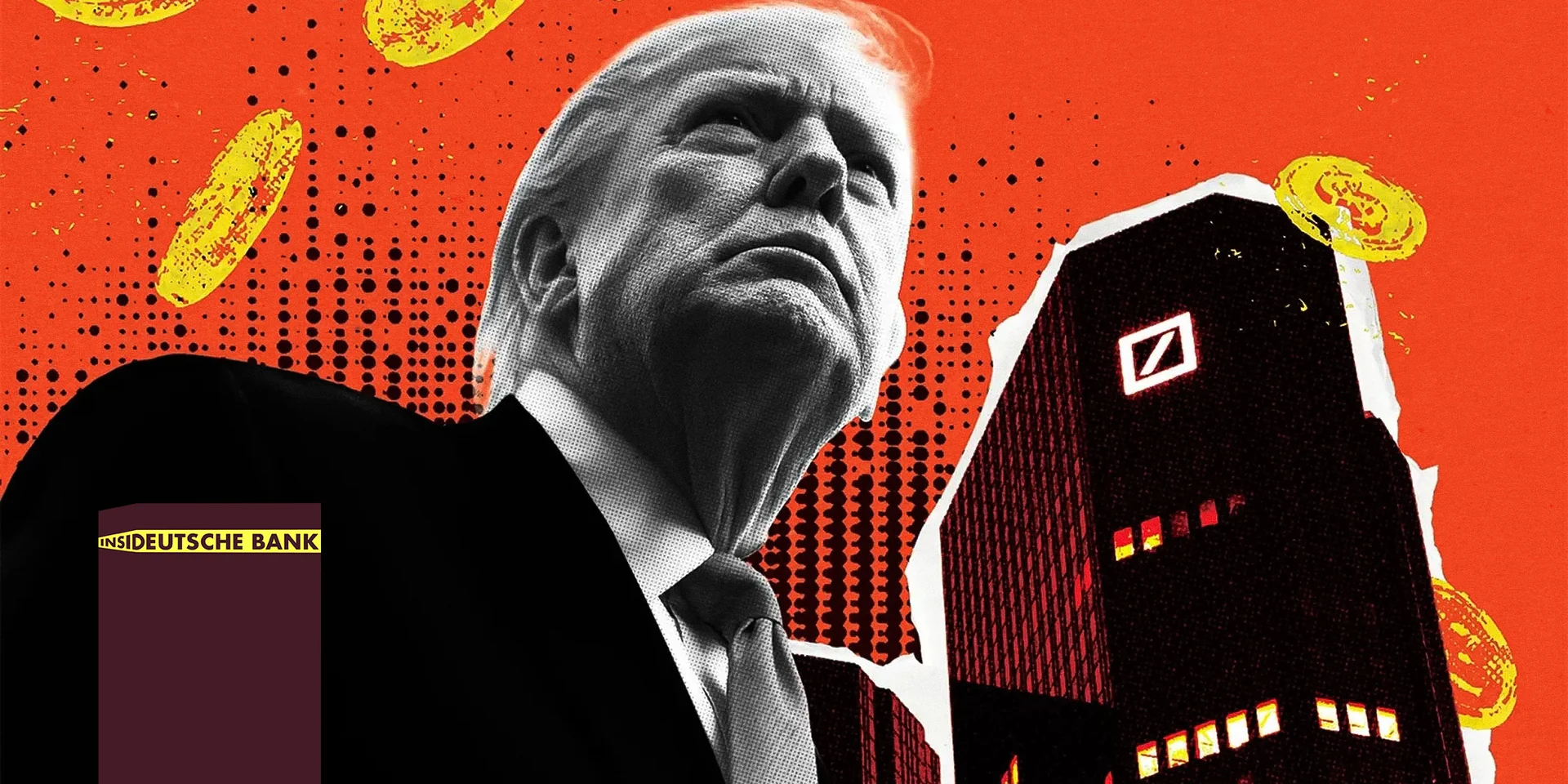
Deutsche Bank Moved Russian Billionaires to “Secrecy Jurisdictions”
Ahead of global sanctions, Deutsche Bank moved wealthy Russians to its offices in Switzerland and Luxembourg
In December 2021, escalating fears of a full-scale Russian invasion of Ukraine prompted some significant Western banks to contemplate exiting the Russian market. Amidst this backdrop, Deutsche Bank took decisive action by relocating its Moscow headquarters to a new office in the White Square business center, concurrently declaring its steadfast commitment to serving the Russian market.
The internal documents leaked from the bank, analyzed by an international team of journalists from over 50 news outlets, shed light on Deutsche Bank's strategic move to accommodate prominent Russian billionaires within "secrecy jurisdictions," where stringent bank secrecy laws are in place. This move effectively shielded the bank from providing any information about these clients to the U.S. Justice Department, which had initiated inquiries after the sanctions were imposed following the 2014 annexation of Crimea.
Deutsche Bank's clientele included a myriad of well-known Russian billionaires, such as Roman Abramovich, Andrey Melnichenko, Alisher Usmanov, Alexei Mordashov, Oleg Deripaska, Gennady Timchenko, and others. These individuals had faced international sanctions in the aftermath of the 2014 annexation of Crimea, with several billionaires within Putin's inner circle, including Timchenko, also impacted.
In 2015, Deutsche Bank had formulated a document titled "Russian Business Case" to facilitate the relocation of these high-net-worth individuals to alternative service hubs. Initially, Switzerland, Luxembourg, and Germany were identified as the primary jurisdictions for this relocation. However, the German option was ultimately abandoned.
In 2017, internal emails revealed Deutsche Bank employees' unwavering confidence in the robust bank secrecy laws of Switzerland and Luxembourg, with the data protection lawyer highlighting the "strict Swiss banking secrecy rules" and "strict statutory banking secrecy rules" in Luxembourg. Despite these assurances, the bank's strategic shift raised eyebrows.
In 2018, Luxembourg authorities inquired about Deutsche Bank's handling of these Russian clients during a meeting with the bank's director for regulatory relations. In November 2020, Deutsche Bank released its comprehensive 172-page "Russia Strategy Review," acknowledging the high risk of financial crimes in Russia, particularly money laundering and sanctions violations.
The review further directed the bank to concentrate its "Russian-linked" clients within Switzerland, Luxembourg, and the United Kingdom, with an intention to eventually close its German hub for Russian clients and transfer the remaining clients to Zurich. Notably, 17 of these Russian clients were identified as being on the U.S. Treasury Department's "Kremlin list" by November 2020.
These individuals, including major Russian billionaires and political figures, generated a significant 47% of Deutsche Bank's revenue from its Russian client base. The bank downplayed the significance of this fact, stating that even if all the U.S. Treasury Oligarch List individuals were sanctioned, which was considered highly unlikely, the revenue would only drop by a mere 30-35%.
By 2021, Deutsche Bank's various units were serving at least 46 "Most Sensitive Clients," clients with elevated reputational and sanctions risks, all of whom had been moved under the protection of bank secrecy in secrecy jurisdictions by that time. These individuals encompassed notorious figures like Oleg Deripaska, Gennady Timchenko, and Suleiman Kerimov, who were already under U.S. sanctions.
An internal analysis of the bank's data labeled Deripaska as having "historical integrity issues" and one of the most loyal to the government among the oligarchs. The "Most Sensitive Clients" list also featured a separate roster of "Critical Clients," which in November 2021, included a Moscow company associated with Deripaska's mother, a company that the bank was aware of.
The same month, 11 companies linked to Kerimov were placed in the "to be onboarded" list in Luxembourg. Kerimov, a senator in Russia, had been under U.S. sanctions for years. Despite Deripaska, Deripaska, Timchenko, and Mordashov not responding to requests for comment, Usmanov's representative defended his reputation, emphasizing his philanthropic contributions and U.S. sanctions against him.
Deutsche Bank attributed the relocation of Russian clients to specialized hubs in Switzerland and Luxembourg as part of their corporate strategy.
Rewritten by urgent.news; may contain errors — check the original.
Source: istories.media