Chile copper output nears 23-year low as mines struggle
Ageing deposits, uneven mine performance and dependence on imported sulfuric acid complicate Chile's copper recovery.
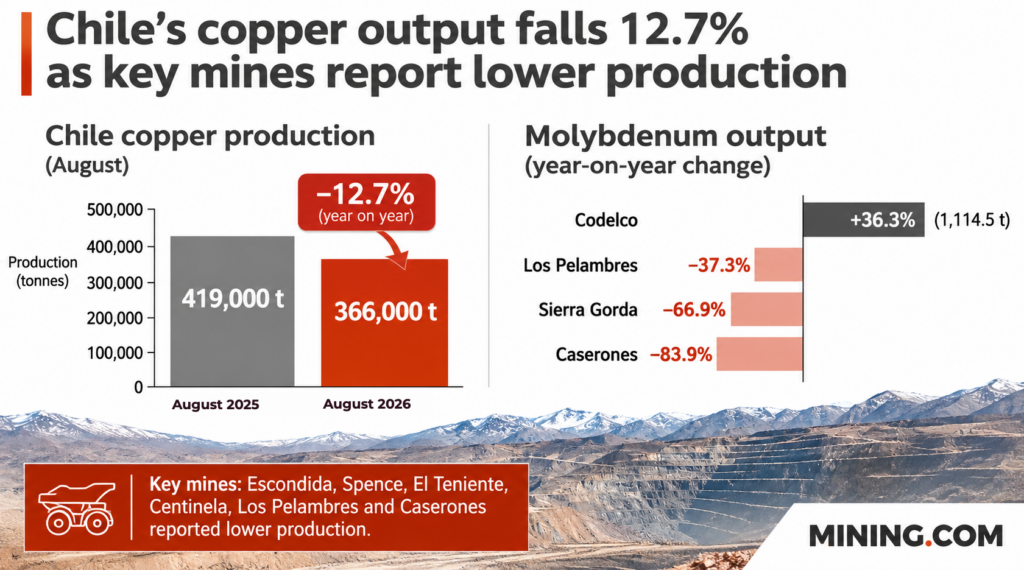
Chile's copper production is projected to hit its lowest level in 23 years, with output expected to decline 6.6% to 5.034 million tonnes in 2026, according to industry estimates. This significant drop, amounting to 354,000 tonnes less than the previous year, would be the weakest performance since 2003, when production reached 4.904 million tonnes.
The country's dependence on sulfuric acid imports is exacerbating the situation, with imports reaching a record 3.97 million tonnes in 2025, supplying nearly half of national consumption. China accounted for 37% of these imports before restricting exports in May 2026. The decline in domestic sulfuric acid production, down 17.2% to 3.92 million tonnes in 2025, adds to the pressure.
Chile's mines are aging, leading to weaker ore grades, operational disruptions, and adverse weather conditions. Major mines like Escondida and Spence are among those reporting reduced production, while others, such as El Teniente, continue to struggle due to the aftermath of a 2025 rockburst. Despite these challenges, Chile still holds the title of the world's largest copper-producing nation.
Written by urgent.news from Mining.com's reporting — not their text. Machine-written — may contain errors; check the original before relying on it.