Berlin: Eight-Year-Old Cyclist’s Death Fuels Debate Over Bike Safety
Advocacy groups describe the city’s bike lanes as too narrow and too fragmented to shield children. The Senate Transport Department says it will not weigh in before the police have completed their investigation.
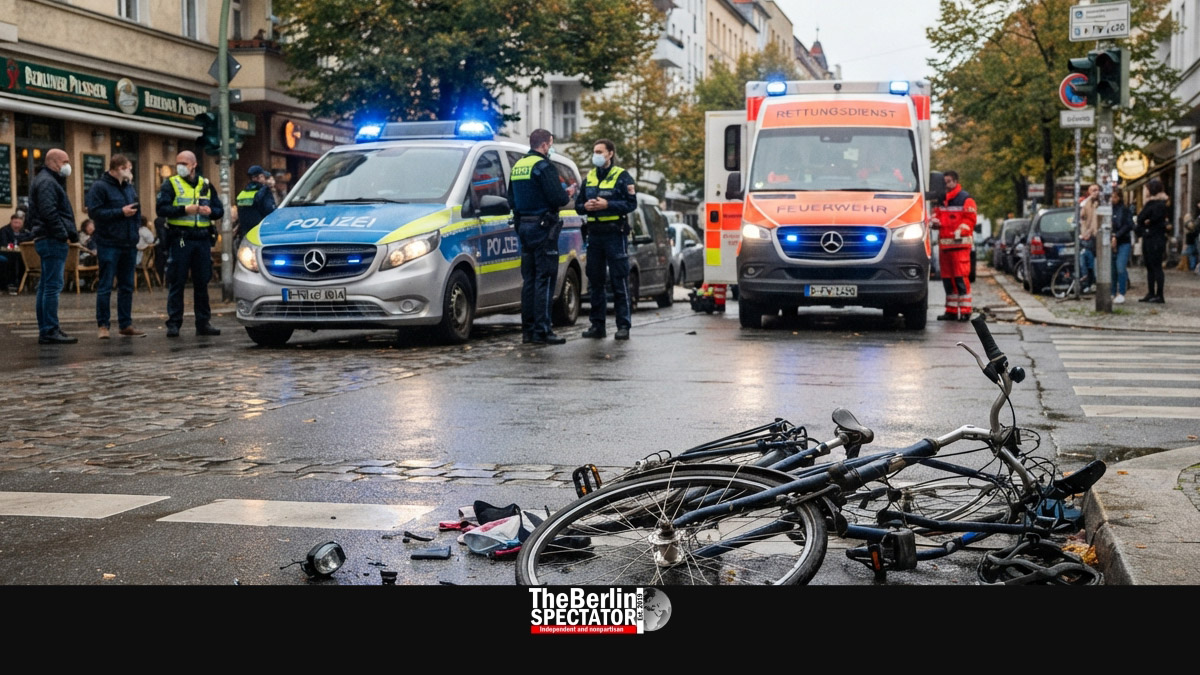
On November 17th, 2026, an eight-year-old girl was killed in Berlin when she was struck by a bus as she cycled on Potsdamer Strasse in the Tiergarten district. The tragic accident occurred at an intersection with Lützowstrasse, where the girl and her mother were riding their bicycles in the bike lane. As they waited for the traffic signal to change, a bus in the adjacent bus lane proceeded forward at the same time the cyclists were moving.
The child fell from her bicycle and was subsequently run over by the bus. Since the Senate Transport Department has not yet commented on the case, the situation has sparked a debate over bike safety.
Christopher Schriner, Green Party district councilor for Mitte, highlighted structural problems in Berlin's city design, emphasizing that vulnerable road users often bear the consequences of traffic accidents, sometimes with their lives. The Green Party official pointed to the high speed of moving traffic, which he says takes precedence over the safety of people in public spaces, and called for a broader discussion on the value of "freedom" for society.
The police reported a rise in accidents involving children up to the age of 14 in 2025, with a 11 percent increase to 864 cases, the highest level in five years. These accidents involved children actively participating as road users, and about 63 percent of cases listed children as the main or contributing cause. The Marzahner Promenade had the most accidents involving children (4), followed by four intersections with three accidents each: Greifswalder Strasse and Hufelandstrasse, Fennstrasse and Müllerstrasse, Am Wasserwerk and Landsberger Allee, and Detmolder Strasse and Mecklenburgische Strasse.
Changing Cities, an association that has monitored Berlin's bike network expansion since 2018, believes the current infrastructure is inadequate. Spokeswoman Ragnhild Sørensen pointed out that the bike lane at the intersection where the tragedy occurred was too narrow, allowing cars and buses to pass cyclists too closely. She also noted that the growing number of parents driving their children to school indicates families do not feel safe cycling or walking.
The association claims the bike network is expanding slowly, despite the city's bicycle traffic plan calling for strong annual increases. Sørensen called for a speed limit of 30 kilometers per hour (19 miles per hour) on more streets and even lower limits in areas with many children and seniors. The Berlin chapter of the cycling club ADFC echoed similar demands, advocating for defused junctions, slowed motor traffic, and physically separated paths.
The club criticized the state government for removing the requirement from the Berlin Mobility Act to convert 30 intersections per year, as the majority of frequent and severe accidents occur at intersections.
Written by urgent.news from The Berlin Spectator's reporting — not their text. Machine-written — may contain errors; check the original before relying on it.