At SC26, Nvidia debuts new Rubin HPC chip, scientific research libraries
Nvidia Corp. today introduced a set of offerings designed to speed up scientific research across a range of fields. The lineup is headlined by Rubin HPC, an upcoming graphics card with significantly more cores than the company’s current flagship chip. It’s joined by more than a half-dozen software tools geared toward scientists and engineers. The […] The post At SC26, Nvidia debuts new Rubin HPC…
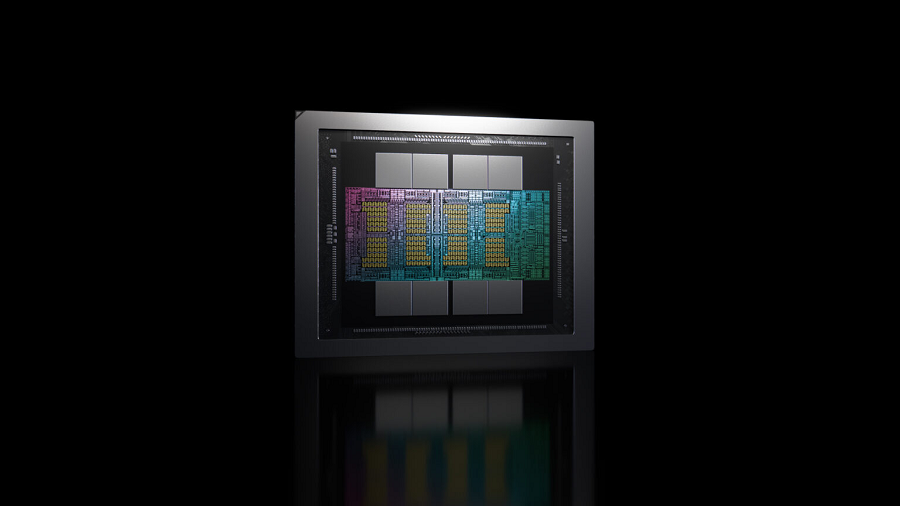
Nvidia unveiled a suite of technologies at the SC26 high-performance and supercomputing conference in Chicago aimed at accelerating scientific research across various fields. The centerpiece of the announcement is the Rubin HPC graphics processing unit, set to debut in 2028 with over 50,000 CUDA cores, significantly more than current flagship chips.
The new chip also includes an enhanced version of NVLink, Nvidia's data exchange technology between GPUs and CPUs, capable of moving 3.6 terabits per second per graphics card. Nvidia's vice president of hyperscale and high-performance computing, Ian Buck, emphasized that Rubin HPC will accelerate scientific simulations, enabling scientists and engineers to explore more possibilities and bring breakthroughs closer.
To support these scientific endeavors, Nvidia introduced several software tools. For astrophysics, cuPhoton.xBeam, a library facilitating data analysis from the Event Horizon Telescope network, can perform tasks that previously took a month in just eight minutes. cuPhoton.xLens, another new addition, simulates the plasma used in fusion reactors to generate electricity.
In the biology research community, Nvidia is open-sourcing cuSpa, which accelerates cell polygon calculations for studying cell structure and interaction. Additionally, the cellular analysis tool rapids-singlecell is now available in a containerized format.
Nvidia also presented an AI bundle called Nemotron for Science, built on the open-source Nemotron 3.5 Super VL large language model. With 124 billion parameters and a hardware-efficient architecture, Nemotron for Science pairs the LLM with pre-packaged post-training workflows to optimize the model for specific scientific tasks. Over 50,000 chemistry-related questions have been added to help post-train AI models and evaluate their capabilities.
Lastly, Nvidia announced advancements in quantum computing. The company released new software tools for linking quantum hardware to GPUs and CPUs, expanding its CUDA-Q suite. Nvidia is collaborating with IBM and the U.S. Energy Department's Fermilab on a modular quantum codesign platform, combining its DGX B200 systems with IBM's quantum hardware. This collaboration aims to develop new qubit error correction algorithms and other quantum software.
Written by urgent.news from SiliconANGLE's reporting — not their text. Machine-written — may contain errors; check the original before relying on it.
This story
This is one outlet's version. Read the fullest account.