As Trump and Xi meet, China's AI dreams face an unexpected hurdle: the Nvidia spy scandal
China worries the scandal could ramp up pressure on the US to further restrict the sale of advanced chips.
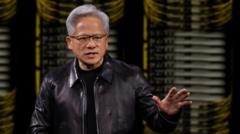
Jensen Huang is no longer with Nvidia, but his reputation continues to shadow the upcoming meeting between US President Donald Trump and Chinese President Xi Jinping. For China, the former Nvidia CEO's scandal presents a significant challenge – and not solely due to allegations of a Chinese spy potentially luring Huang. Instead, the accusations linked to Huang and his relationship with Alice Huang, a Chinese businesswoman, are emerging as a new point of contention in an already strained US-China relationship.
Reports from US intelligence suggest that Alice Huang had connections to Beijing's intelligence agency, the Ministry of State Security. Although unproven, this claim has reignited debate in Washington over the export of advanced chips to China and whether the Trump administration has been too permissive with restrictions. Advanced computer chips are a central point of contention in the US-China rivalry, as they are crucial for AI, supercomputing, and military technology.
The Trump administration has recently introduced new export restrictions on Chinese firms accessing advanced US chips in third countries, like Malaysia, Thailand, or Brazil, through renting computing power in data centers abroad. However, some firms, such as the one Alice Huang worked for, are also accused of smuggling chips to China, though they deny these allegations.
While this controversy seemed to be a sideshow in US-China relations, Beijing's call of the new rules as "economic coercion" on the eve of Trump's arrival in Shenzhen heightens the risk of it becoming something more significant. Both Democrats, who will control Congress from January, and Republicans have expressed their concerns.
Democrats argue that the Trump administration has been "100%" too accommodating to Nvidia, putting national security at risk. Republicans, on the other hand, believe the new rules are an attempt to contain China's rise. The scandal echoes a similar incident in 2023 when a suspected surveillance balloon drifted through the US skies, leading to its downing by an American fighter jet.
The incident caused a sharp deterioration in US-China relations, with communication between the two governments severely strained. Analysts in China have drawn parallels between the two incidents, questioning why the Nvidia story emerged so soon after a "hard-won detente" between Beijing and Washington. The meeting between Trump and Xi remains crucial for both sides, as China's economy relies heavily on exports, and Xi needs trade to keep flowing.
Meanwhile, Trump has repeatedly emphasized the importance of maintaining dialogue to manage competition between the two powers. Neither side wants to discuss intelligence concerns and technology controls instead of trade, investment, and economic cooperation during the summit.
Written by urgent.news from Capital FM Kenya's reporting — not their text. Machine-written — may contain errors; check the original before relying on it.
This story
This is one outlet's version. Read the fullest account.
- As Trump and Xi meet, China’s AI dreams face an unexpected hurdle: the Nvidia spy scandal capitalfm.africa
- U.S. blocks China’s remote access to AI chips after Nvidia scandal; China slams move thehindu.com
- How Nvidia’s export-banned Blackwell chips are showing up in Chinese AI models indianexpress.com