AI firms turning books into toilet paper, committee told
AI companies are ripping apart books and turning them into toilet paper, an Oireachtas committee has heard.
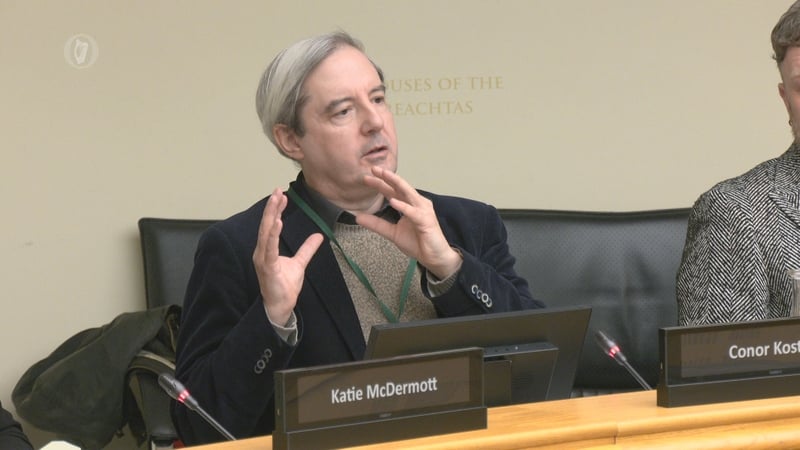
An Oireachtas committee has been made aware of the alarming practice where AI firms are dismantling books and transforming them into toilet paper, as reported by writers and artists. The Committee on Artificial Intelligence heard from Conor Kostick of the Irish Writers Union who lamented the destruction of centuries of book publishing by tech giants' relentless pursuit to train AI.
Kostick revealed that tech companies had acquired approximately two million books from second-hand and antique bookshops worldwide, which are then scanned in bulk and discarded as waste, with their physical forms shredded and recycled into toilet paper. According to Kostick, within AI scanning factories in the US, the spines of books are cut out and discarded to enable high-speed scanning of the remaining pages.
These digitized files are then exploited for developing large language models, often resulting in the disappearance of the books forever, existing solely as digital property of AI tech companies.
The Irish Writers Union has expressed its concerns over the protection of rare books, reminding that UNESCO considers their systematic destruction to be a serious breach of the Hague Convention. The majority of the union's members do not wish their works to be used in AI training. Kostick also proposed for remuneration, regulation of how their works are used, and strong enforcement of copyright laws.
He noted the flood of AI books flooding the market and questioned readers on the committee how they would feel if they found out a book they were reading was AI-generated. Furthermore, the IWU called for distinguishing between human-made and AI-assisted books on Amazon, as around half a million AI books have been published and passed off as human-written.
Robbie Kitt, Chairperson of The Praxis Artists Union, shared his concerns about AI models scraping free publicly available material from galleries, archives, and museums for training, putting pressure on publicly funded institutions. Kitt highlighted the vital energy that goes into creative works which provide depth and meaning to humankind, emphasizing that AI companies are seeking to turn this energy into profit. He stressed that the implications extend beyond arts and culture, and are of utmost seriousness.
Noel Kelly, CEO of Visual Artists Ireland, acknowledged that AI can produce remarkable results, but stressed that producing something and creating something are not the same. Kelly argued that society should not confuse output with the human experience of making art and that protecting the rights of artists should be a priority.
Artists do not want to hinder progress, but they do want to know whether their work has been used to train AI systems, by whom, and on what basis. They want to receive appropriate compensation and safeguards in place. Kelly emphasized that art plays a crucial role in questioning and interpreting the world, especially during periods of significant change.
Written by urgent.news from RTE News's reporting — not their text. Machine-written — may contain errors; check the original before relying on it.