Top Chamber of Commerce official says the midterms weren’t just about prices: They were about 20 years of 2% growth
Neil Bradley warned Washington against “the easy button” of rate caps and price controls. His growth math holds up; his fix is another matter.
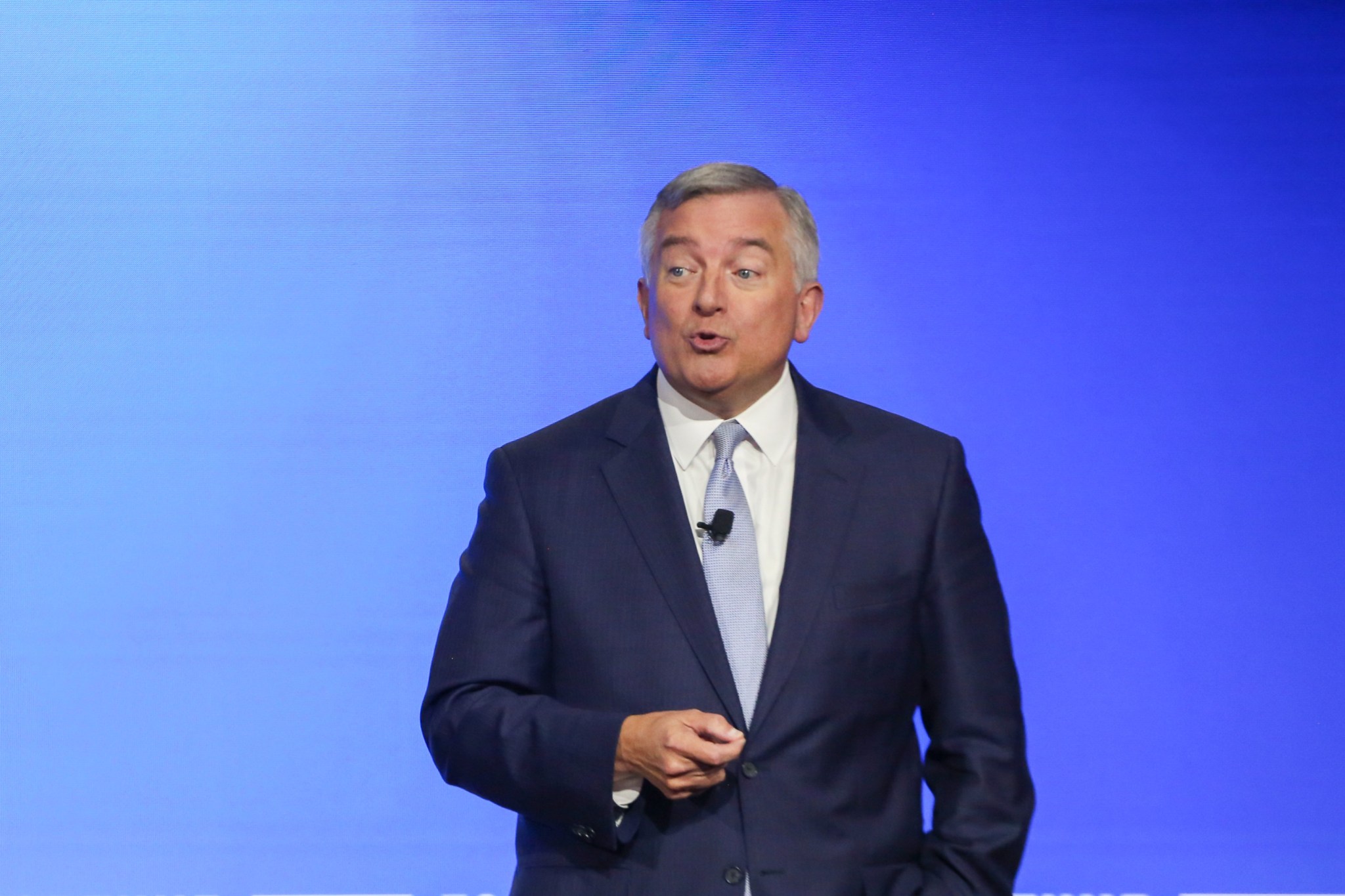
Less than two weeks after Democrats secured control of both chambers of Congress amid concerns over the cost of living and alleged corruption, the U.S. Chamber of Commerce’s top policy official cautioned executives that lawmakers may be misinterpreting the electorate’s message. Neil Bradley, the Chamber’s executive vice president, chief policy officer, and head of strategic advocacy, spoke at the Fortune 500 Innovation Forum in Detroit, stating that frustration over affordability is real but is compounded by 20 years of modest 2% real GDP growth, following a 60-year period of more than 3%.
This discrepancy reflects the difference between a generation growing richer than their parents and one that does not. Harvard economist Raj Chetty and his co-authors found in a 2017 study that the share of Americans earning more than their parents dropped from about 90% for those born in 1940 to just 50% for those born in the 1980s.
Bradley emphasized that the American dream is highly correlated with growth rates above 3%, rather than solely reliant on it.
Bradley’s primary concern was what Congress should do next. He warned that proposals like capping credit card interest rates, controlling pharmaceutical prices, or limiting stock buybacks and dividends might provide short-term relief for voters but fail to address long-term challenges. He pointed out that such proposals have gained bipartisan support, including support from President Trump, who advocated for a one-year, 10% cap on credit card rates, and Senators Bernie Sanders and Josh Hawley, who introduced legislation for similar measures.
Bradley argued that the solution lies in promoting growth through expanding the supply, trade, and labor force via legal immigration reform. These measures align with the Chamber’s membership, which includes card issuers, drugmakers, and public companies with buyback programs. Real GDP growth has averaged around 3.5% annually from 1950 to 2005 and about 2% from 2005 to 2025, according to Bureau of Economic Analysis data.
At a 3% growth rate, an economy doubles in approximately 23 years, similar to the time from birth to one’s first job. Conversely, a 2% growth rate results in a doubling in about 35 years.
Bradley acknowledged that increasing GDP growth alone cannot restore mobility rates to those seen in the 1940s cohort. Chetty’s research indicates that achieving the equal distribution of growth from that era would reverse over 70% of the mobility decline. While Bradley recognized this limitation, he maintained that a growing economy does not guarantee that everyone’s slice of the pie will be larger.
Despite these concerns, Bradley pointed to a record number of new business applications—5.68 million in 2025—as a testament to entrepreneurial optimism. However, the Census Bureau’s figures suggest that only about 1.69 million of these applications are likely to result in businesses with payroll, marking a decline from previous years. The new Congress will convene in January, and the Congressional Budget Office projects a 1.8% annual growth rate for GDP in 2027 and 2028.
Written by urgent.news from Fortune's reporting — not their text. Machine-written — may contain errors; check the original before relying on it.