The Hidden Greenhouse Gas Emissions Woven into Braided Rivers
Slow-moving backwaters and smaller rivers can be hotspots of nitrous oxide emissions, revealing how channel complexity and nitrogen availability shape the climate footprint of braided rivers.
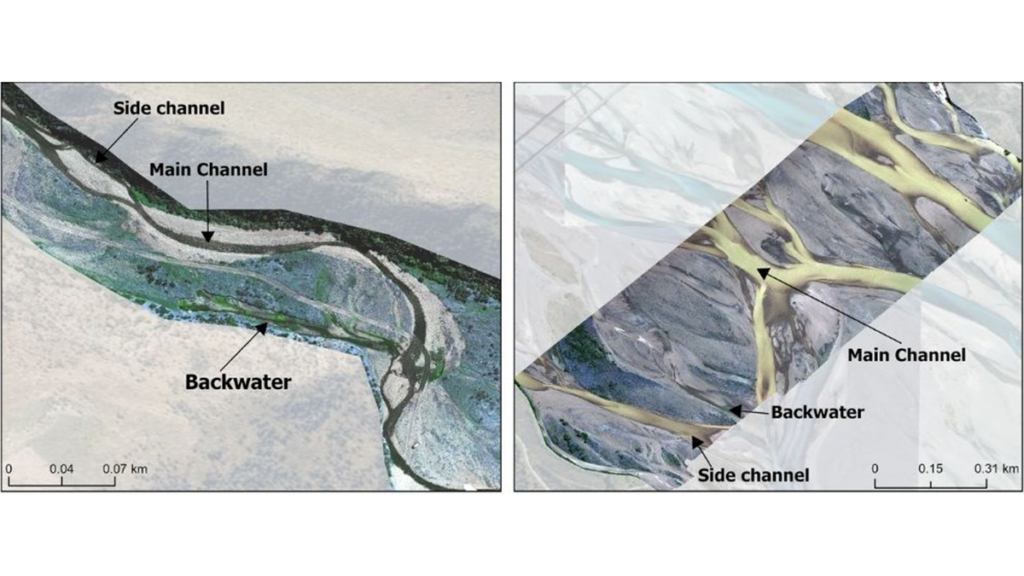
Greenhouse gas emissions from rivers, such as nitrous oxide (N2O), have been largely overlooked despite their significant role in climate change. A new study in the Journal of Geophysical Research: Biogeosciences reveals that the emissions from braided rivers, which feature multiple channels that split and rejoin, have been underappreciated.
By examining eight braided rivers in New Zealand, researchers discovered that smaller, hill-fed rivers release more N2O than larger, faster-flowing alpine rivers. Emissions also varied greatly within individual rivers, with slow-moving backwaters emerging as hotspots of N2O accumulation and release. The study found that nitrogen availability was the primary factor influencing N2O concentrations, with water temperature playing a secondary role, particularly during winter.
The findings suggest that the unique flow dynamics and channel structures of braided rivers can significantly impact their greenhouse gas emissions, potentially leading to underestimations in global N2O emission estimates if these factors are not taken into account.
Written by urgent.news from Eos's reporting — not their text. Machine-written — may contain errors; check the original before relying on it.