Researchers ‘recognize that AI will never replace HPC,’ says AMD executive — high-precision workloads will ‘exist for a very long time’ even as AI usage expands
The emergence of AI has seemingly posed a threat to high-precision FP64 computation, but AMD doesn't think the HPC world is moving away from those complex calculations in the wake of AI.
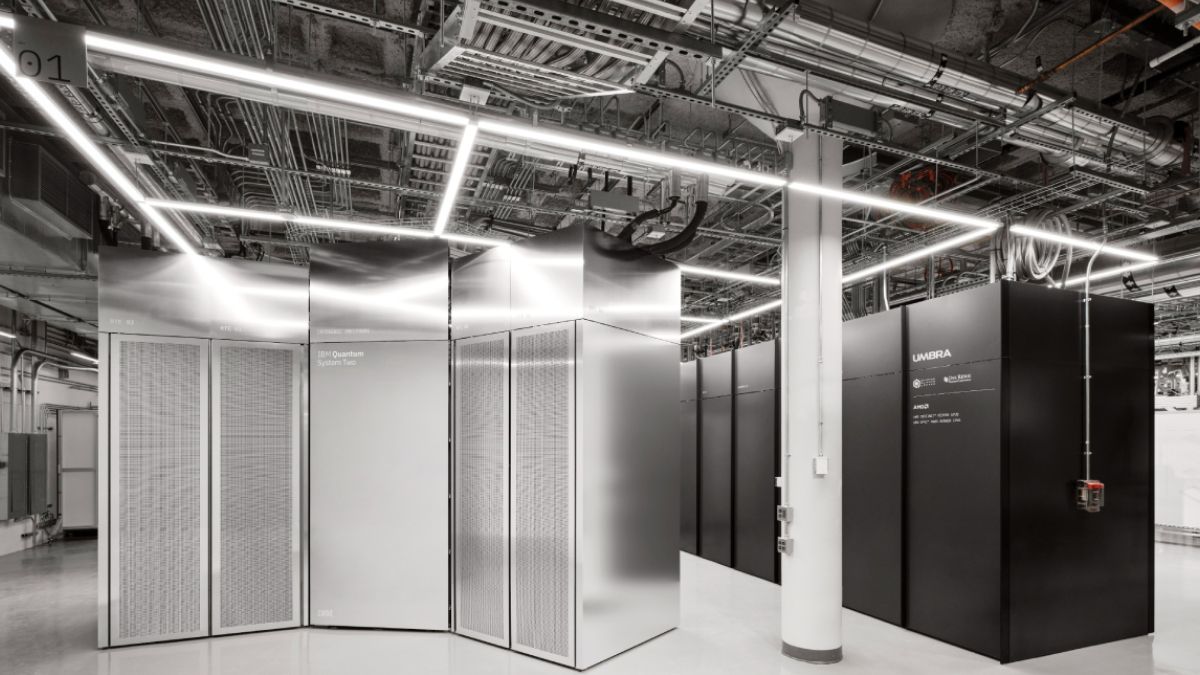
AMD executive Scott Tease affirmed that high-precision workloads like HPC (High-Performance Computing) will continue to exist despite the rise of AI usage, according to Tom’s Hardware Premium. Tease, who joined AMD this year after an extensive career at Lenovo and IBM, spoke to the importance of a heterogeneous compute stack for tackling cutting-edge research. This stack integrates quantum, HPC, and AI under one roof, which AMD is actively piloting at Oak Ridge National Laboratory in collaboration with IBM.
AMD's focus on high-precision FP64 (floating-point double-precision) is crucial for HPC workloads, given its significance in precision. Notably, Nvidia's latest GPU, the Rubin, offers 33 TFLOPs of FP64 compute, which is lower than AMD's older Instinct MI355X, which reaches 78.6 TFLOPs, and the upcoming HPC-focused MI430X, which peaks at 288 TFLOPs.
Nvidia has resorted to emulation to boost FP64 performance, a strategy that AMD opposes but still acknowledges the disparity between AI's preference for low-precision formats and HPC's reliance on high-precision FP64.
Tease emphasized the necessity of interconnected systems to efficiently handle diverse workloads. Highlighting AMD’s collaboration with IBM and Oak Ridge National Laboratory, they are integrating AMD’s classical computing stack with IBM’s quantum computer, the Quantum Nighthawk. This integration is aimed at exploring how quantum, AI, and classical computing can work together to accelerate scientific discoveries and national security.
AMD’s vision for the future of scientific computing is a unified fleet that combines AI, HPC, and quantum computing. This approach acknowledges that while quantum computing will excel in specific domains such as human health and chemistry, traditional HPC will remain essential for many other applications. Tease outlined the challenge of scheduling workloads across these systems, noting that open-source schedulers like Slurm currently handle the distribution effectively within supercomputers.
However, the ultimate goal is to optimize workload distribution dynamically—deciding when and where to apply AI, GPU acceleration, or quantum computing based on the nature of the task. This holistic approach is crucial for advancing scientific computing, particularly in areas like quantum error correction, which is pivotal for developing fault-tolerant quantum systems.
Written by urgent.news from Tom's Hardware's reporting — not their text. Machine-written — may contain errors; check the original before relying on it.