Q&A: How ocean carbon sequestration changes under different glacial conditions
By separating the effects of cold seawater, Antarctic sea ice, and changing ocean circulation on deep-ocean carbon storage, new research sheds light on how these interactions influence climate patterns.
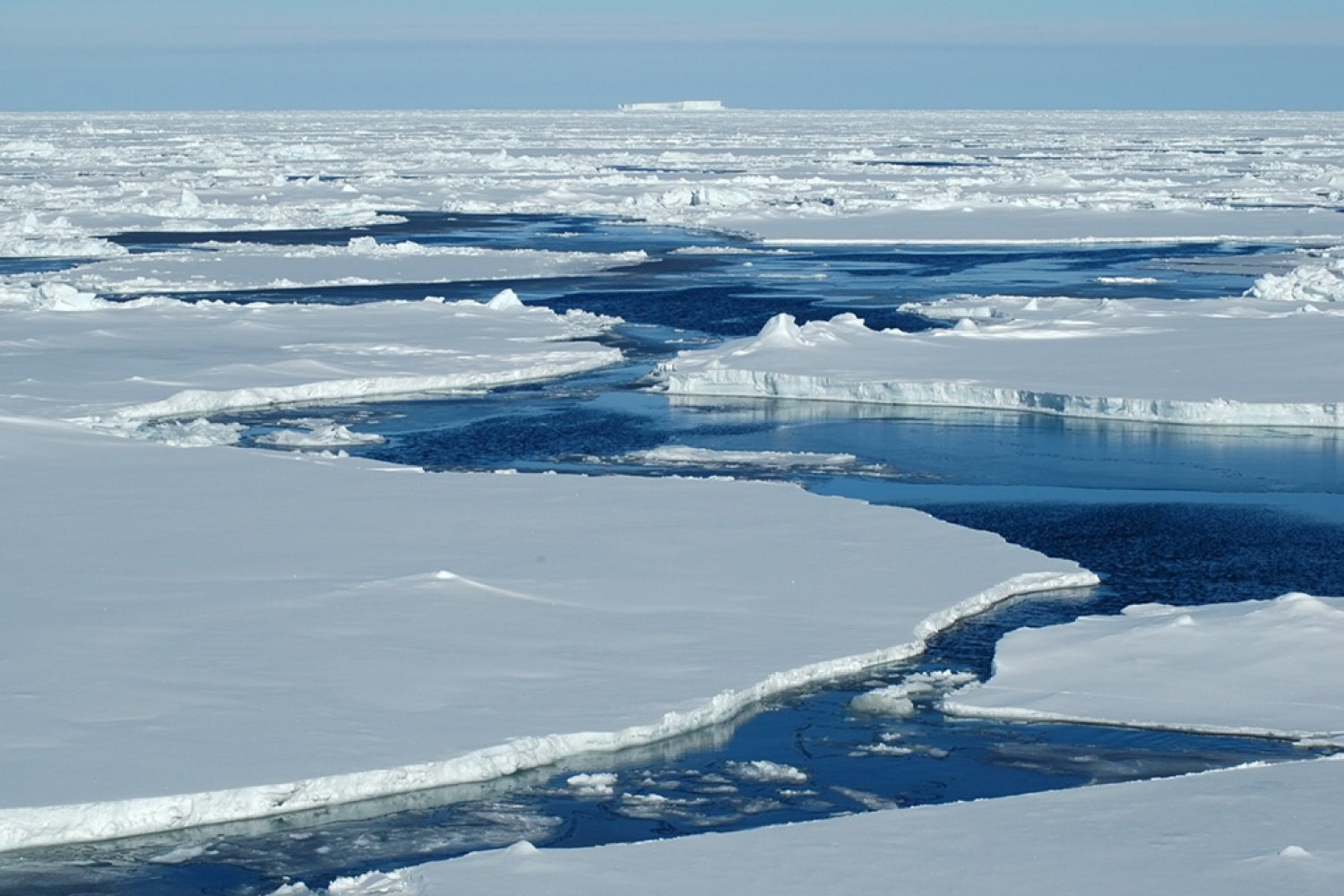
In the past 800,000 years, Earth's climate has undergone significant fluctuations, transitioning between warm periods and cold periods characterized by large ice sheets covering much of the Northern Hemisphere. The transition between these climates is influenced by the Earth's orbit around the sun, but changes in carbon dioxide (CO2) levels, a greenhouse gas, also impact global temperatures.
Understanding how CO2 is exchanged between the atmosphere and the ocean is crucial for scientists to apply this knowledge to future climate scenarios.
In a recent Science Advances paper, researchers from MIT and Université du Québec à Rimouski examined how processes occurring in the Southern Ocean during glacial periods, such as ocean cooling, sea-ice expansion, and changes in ocean circulation, contribute to global ocean carbon storage and atmospheric CO2 drawdown. By examining the interconnected systems that drive these processes, rather than treating them independently, the researchers aimed to better understand the complex mechanisms at play.
Jonathan Lauderdale, a research scientist at MIT's Department of Earth, Atmospheric and Planetary Sciences and MIT's Center for Sustainability Science and Strategy, discussed the ocean's role in the global carbon cycle. The ocean acts as a key player, storing CO2 for thousands of years. Three important ocean carbon stores are solubility, biology, and disequilibrium.
Solubility refers to the amount of CO2 that cold seawater can hold, while biological processes involve phytoplankton taking up CO2 near the surface and converting it into organic particles that sink into the deep ocean. Disequilibrium represents the difference between the estimated CO2 that the water mass could hold and the actual CO2 present.
Scientists have previously studied different mechanisms during ice ages separately, such as seawater cooling, sea ice expansion, and changes in ocean circulation. However, Lauderdale explains that studying these processes individually can help isolate cause and effect, but it is also important to consider their interconnectedness.
When researchers run models with all three mechanisms combined—extensive sea ice, glacial circulation, and cooler temperatures—the outcomes show a significant decline in atmospheric CO2, indicating increased ocean carbon storage. This finding aligns with results from other models, although the specific storage mechanisms in the disequilibrium carbon pool were initially unclear.
When the oxygen levels in the Southern Ocean increase, the ocean's ability to store CO2 improves, as cooler temperatures and sea ice expansion enhance solubility and disequilibrium carbon storage. Lauderdale emphasizes that the relationship between these processes and glaciation is crucial, as it helps explain why the disequilibrium change is so significant.
By considering the interactions among physical processes, such as sea ice and circulation, scientists can better understand how these factors contribute to ice age ocean carbon storage. Additionally, the findings suggest that a collapse of the Atlantic Meridional Overturning Circulation (AMOC) could alter current carbon sequestration processes in the ocean.
Written by urgent.news from MIT News Research's reporting — not their text. Machine-written — may contain errors; check the original before relying on it.