Pataxó Indigenous people protest the arrest of a female vice-chief in Brazil’s Bahia
Pataxó Indigenous people occupied the entrance to the Civil Police station in the city of Eunápolis, in the far south of Brazil’s Bahia state on Nov 12. It was a peaceful protest against the arrest of two Pataxó leaders in the Barra Velha Indigenous Territory. Erilsa Braz dos Santos, known as Uruba Pataxó, vice-chief of […]
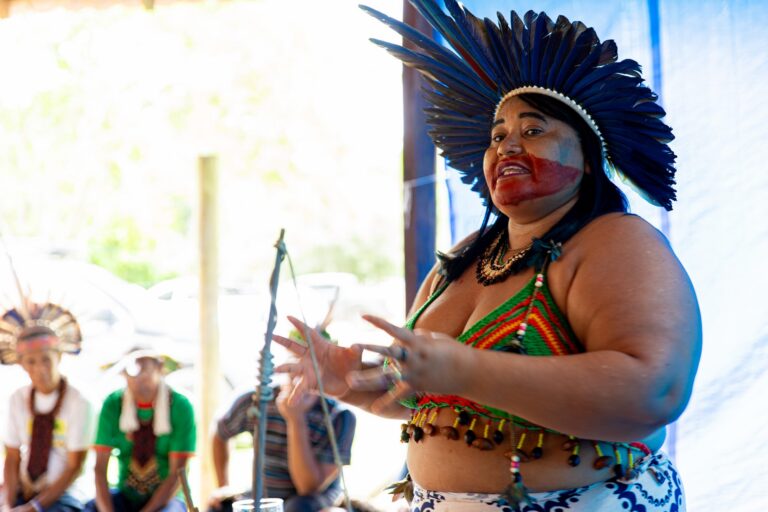
On November 12, the Pataxó Indigenous people occupied the entrance to the Civil Police station in Eunápolis, a city in Brazil's Bahia state. The peaceful protest was in response to the arrest of two Pataxó leaders, Erilsa Braz dos Santos, known as Uruba Pataxó, and Karen Pataxó, who were accused of drug trafficking in the Barra Velha Indigenous Territory.
Uruba, who serves as the vice-chief of Barra Velha Mother Village and is a communicator, was still in custody and was transferred to a prison in Teixeira de Freitas on November 12, leading to outrage and mobilization among Indigenous people on social media. According to a protester, Uruba's arrest is a political accusation as she is a leader who defends her people and her territory.
The imprisonment of Uruba and Karen was part of Operation Barra Velha, conducted by the Civil and Military Police in the Porto Seguro municipality. Indigenous leader Dário Pataxó stated that the arrest is meant to silence those who speak out against drug trafficking in the territory. He mentioned that Uruba is one of the frontliners, and they have already stopped Cacique Suruí, who was the president of the Barra Velha Council of Chiefs and is currently facing proceedings under house arrest.
Written by urgent.news from Mongabay's reporting — not their text. Machine-written — may contain errors; check the original before relying on it.