Martin Puryear’s Liberatory Violence
A concern with liberation and revolution runs throughout his exhibition at the High Museum.
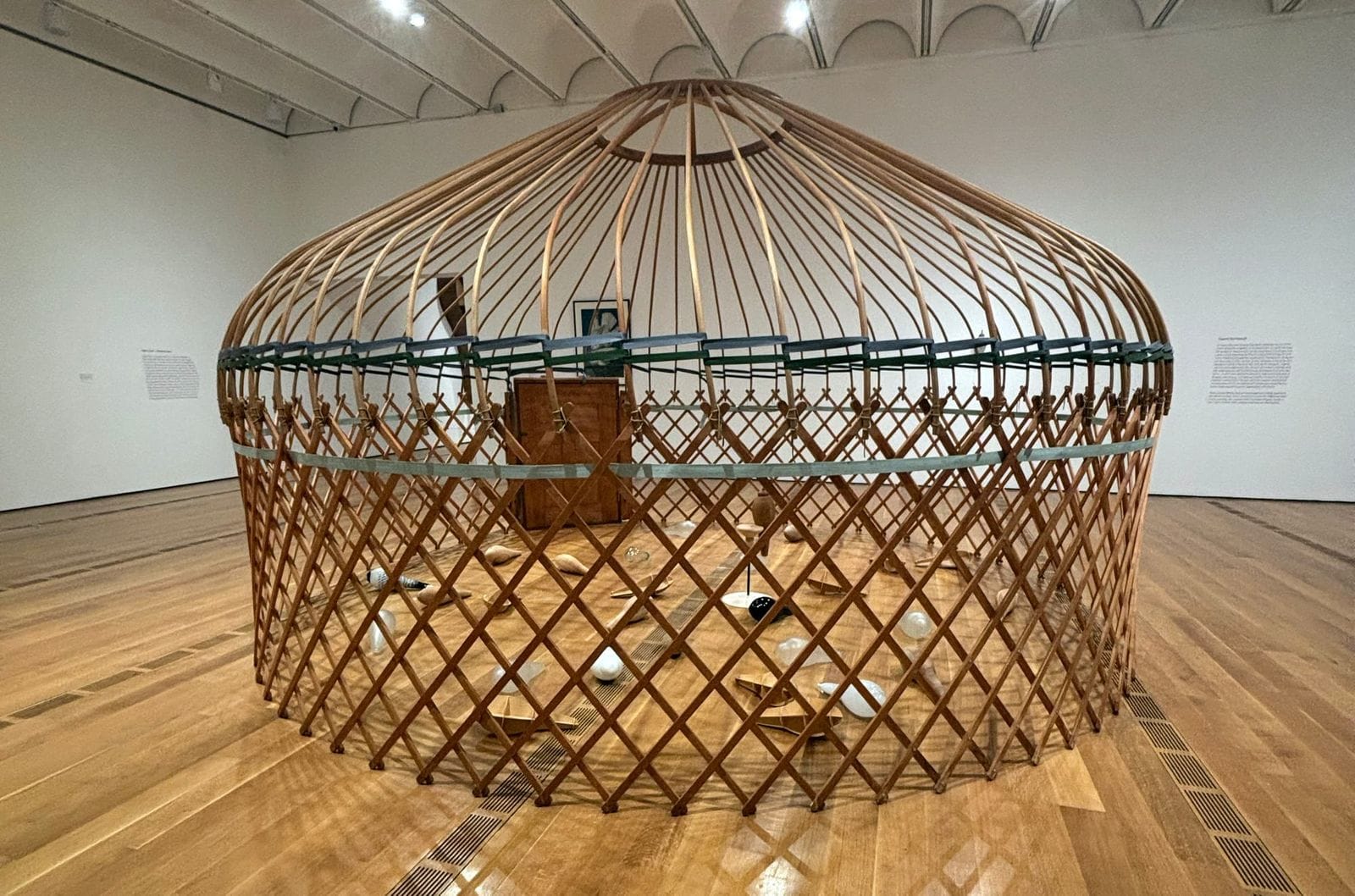
In the hallowed halls of the High Museum of Art, the imposing presence of Martin Puryear's Nexus left an indelible impression upon me. As a writer, my instinctual urge to dissect and deconstruct objects on the page was put to the test by the sheer physicality of this sculpture. The words "bicycle" and "press pass" that spring to mind upon encountering everyday objects were insufficient in capturing the essence of Nexus.
The word "violent" springs to mind when contemplating the power of Puryear's work. Beneath the surface of his sculptures lies an intense, almost annihilatory force that defies easy description. The challenge of articulating this reality on the page was no small feat, and I found myself grappling with these thoughts long after leaving the museum. My attempts at vocalizing my reactions to Nexus were met with an equally formidable challenge.
Nexus, with its "Bask" (1976) sculpture, presented a striking tableau of natural materials and traditional practices. Wood, rawhide, fiber, basket weaving, boatmaking, tanning, and structure building from cultures around the world all found their way into Puryear's creations. This fusion of material and technique served to obscure the sculptures' violent nature under the cloak of "natural." The installation's effect was palpable, as I found myself smiling in relief as I beheld this powerful work.
Written by urgent.news from Hyperallergic's reporting — not their text. Machine-written — may contain errors; check the original before relying on it.