Fish pay the price for sacred rituals at Mumbai’s Banganga Tank
In October, hundreds of fish were found dead in Mumbai’s Banganga Tank, an ancient freshwater tank considered sacred with roots in Indian mythology. Fish deaths have become nearly an annual occurrence there following the Pitru Paksha rituals, when flowers and various food items are immersed in the water. The immersions likely cause a severe drop […]
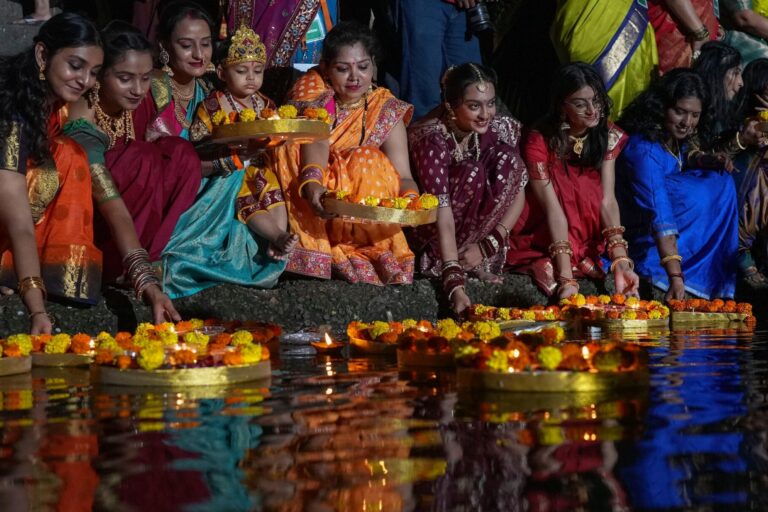
In October, a grisly discovery was made in Mumbai’s Banganga Tank – a large number of deceased fish washed ashore. This notorious phenomenon has become an annual occurrence, recurring each year during the Pitru Paksha rituals. Performed by Hindu devotees, these rituals involve immersing flowers and various food items, including rice, flour, and ghee, into the sacred tank.
Experts attribute the fish deaths to a drastic decline in dissolved oxygen levels caused by the immersions. Rohit Manohar Joshi, president of Yeoor Environmental Society, confirmed to Mongabay that this tragic occurrence has plagued Banganga Tank for the past ten years. The Banganga Tank, a 10-meter-deep water body nestled within the expansive Walkeshwar Temple complex, relies on a natural underground spring for its water supply.
Every year, numerous devotees partake in the Pitru Paksha rites, contributing to the ongoing fish mortality. Prior to 2025, media reports documented fish deaths following ritual immersions as far back as 2014. The city’s municipal corporation (BMC) reportedly removed 10,000 kilograms (22,000 pounds) of dead fish and floral waste in the same year.
In 2025, activists had penned a letter to officials, urging the provision of artificial immersion tanks, akin to those set up near beaches during the Ganpati festival, to mitigate the pollution of the tank. However, officials have not yet responded to these concerns.
Written by urgent.news from Mongabay's reporting — not their text. Machine-written — may contain errors; check the original before relying on it.