Experimental Vaccine for Pancreatic Cancer Could Help Find and Destroy Lurking Cancer Cells
Learn how this new, experimental vaccine could help target the KRAS gene that are found in about 90 percent of pancreatic cancers.
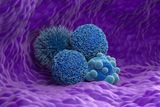
Pancreatic cancer, notoriously aggressive and difficult to treat, could face a new potential ally in the form of an experimental vaccine called camupepimut. The vaccine targets seven mutations in the KRAS gene, present in approximately 90 percent of pancreatic ductal adenocarcinomas, driving the cancer's growth. Designed to deliver the vaccine directly to the lymph nodes by attaching key ingredients to a fatty molecule that binds to the blood protein albumin, camupepimut demonstrates promise in triggering an immune response against these cancer cells.
Despite its high risk of recurrence post-surgery and chemotherapy due to its rapid spread, a phase 2 clinical trial led by Mayo Clinic researchers sought to evaluate the vaccine's impact on patients who had previously undergone treatment and shown no detectable signs of cancer. The study involved 144 patients with KRAS-mutated pancreatic cancer, with 96 receiving the vaccine and 48 serving as the control group.
However, the trial did not yield statistically significant improvements in survival rates, with the average disease-free survival in both groups at 23.8 and 21.2 months, respectively. Nevertheless, the results provided some hope, as nearly 99 percent of vaccinated patients developed increased T-cell responses against the mutated KRAS, and this immune response persisted over 46 weeks post-study commencement.
The researchers identified two factors that may help predict vaccine efficacy: patients with no detectable ctDNA in their bloodstream at the start of the trial tended to stay cancer-free longer, and those who had not received radiotherapy showed a stronger lymphocyte response to the vaccine. These findings suggest that camupepimut holds promise and warrant further investigation in a larger phase 3 clinical trial.
Written by urgent.news from Discover Magazine's reporting — not their text. Machine-written — may contain errors; check the original before relying on it.