Carbon dioxide is a climate problem. It might also be a laundry solution.
A technology born in aerospace uses liquid CO2 to wash clothes without water or a dryer. The challenge is making it work in a home appliance.
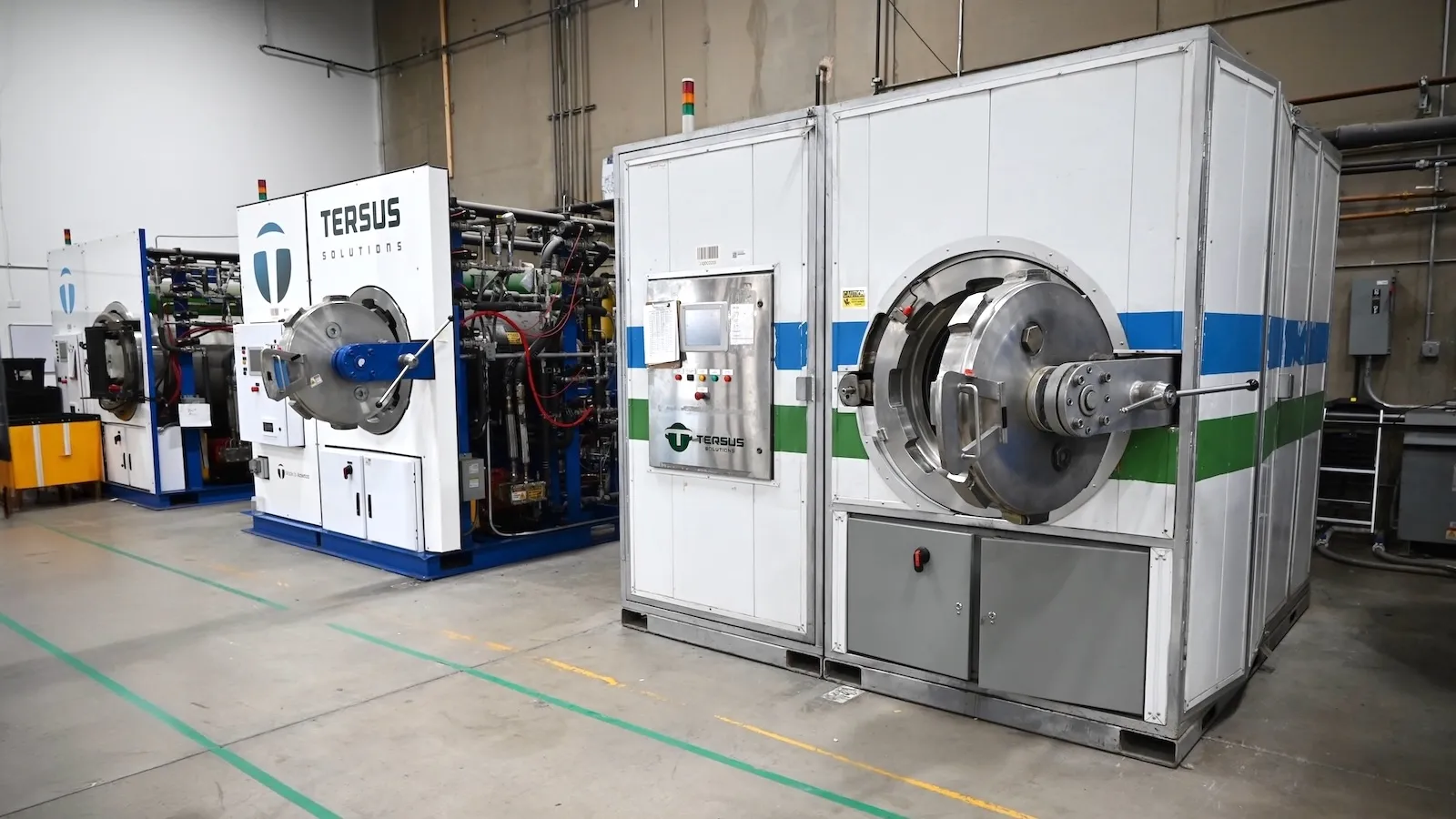
Doing the laundry has remained a constant over time, requiring both water and heat. However, a technology originally designed for cleaning aerospace parts has found a new use in the laundry room - carbon dioxide. Under pressure, CO2 turns into a low-viscosity liquid that can penetrate fabrics and remove oils and grime. When the pressure is released, it reverts back to a gas, leaving clothes clean and dry without any wastewater or drying.
The average family runs about 300 loads of laundry per year, consuming thousands of gallons of water and producing significant CO2 emissions from dryer usage. Liquid-CO2 cleaning, once confined to industrial settings, is now being explored by appliance giants LG and Samsung for home use. The technology was developed in 1990 by Hughes Aircraft to remove grease from electronic components and later adopted by Electrolux as a safer alternative to solvent-based dry cleaning.
Colorado-based Tersus Solutions has been refining the technology, creating "futuristic front-loading washers" that occupy a large footprint but offer significant water savings of around 300 gallons per load. However, the challenge lies in shrinking the bulky, high-pressure machinery down to a size suitable for household use without sacrificing environmental benefits.
Tersus's machines are described as "futuristic front-loading washers" and occupy roughly a 10-foot cube, with larger units capable of handling up to 85 pounds of laundry or a dozen sleeping bags. Inside, a rotating drum sits inside a pressurized chamber, with filters trapping grime that accumulates as a thick purple sludge for disposal.
The process is effective, particularly on firefighter gear, with an average of over 95% removal of contaminants. While the energy equation is complex, liquid-CO2 cleaning avoids thermal drying, which is typically the most energy-intensive part of conventional laundry. However, removing impurities from the carbon dioxide for reuse requires significant power.
Tersus gets its CO2 from a nearby ethanol plant, minimizing transportation needs, but purifying and liquefying it still requires energy. The companies LG and Samsung are working on shrinking the technology for household use, with patents focusing on removing stains resistant to CO2 cleaning and reducing the pressure required for the technology to work.
Written by urgent.news from Grist's reporting — not their text. Machine-written — may contain errors; check the original before relying on it.