Canada exploring ‘other options’ with Europe, Asia to grow auto sector: Carney
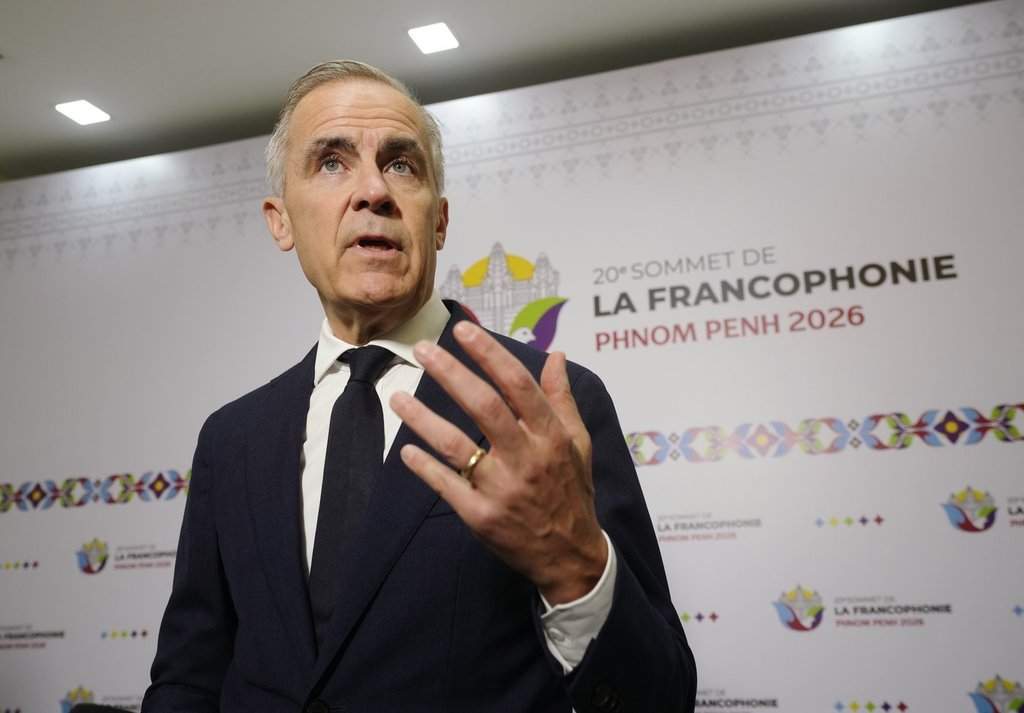
Prime Minister Mark Carney says the auto sector remains part of trade talks with the U.S., but Canada is also looking at "other options" in Europe and Asia.
The Association of Pacific Coast Leaders (APEC) nations, which account for more than half of global trade, will grapple with limited objectives at their weekly summit in Shenzhen, China. The United States and China, along with Japan, Russia, Canada, Mexico, Australia, and Indonesia, are all part of the group. However, the presence of China as the host in an institution that includes the United States and Russia has not been successful, according to Deborah Elms, head of trade policy at the Hinrich Foundation in Singapore.
Elms noted that many geopolitical rivalries and the fact that the United States and China are at odds with one another have made cooperation difficult, even on relatively minor issues.
APEC members have been left without key officials due to Trump's trade war. US Treasury Secretary Scott Bessent skipped an APEC finance ministers meeting in Hong Kong in October, depriving other members of the opportunity to connect with a key U.S. official. Additionally, China has made unhelpful changes to APEC processes, such as moving some meetings online and not confirming late timings for key events.
Despite Democrats winning control of both houses of Congress after the midterm elections, there is no indication that Trump's tariff blitz will be reversed. The Supreme Court struck down some of Trump's customs duties in February, but Washington has imposed new tariffs on 60 economies, including APEC members, citing inadequate efforts to combat forced labor.
Sector-specific tariffs on steel, automobiles, and timber are still in effect, and Trump is continuing to increase tariffs, said Joshua Kurlantzick, a senior fellow at the Council on Foreign Relations. He added that Congress cannot do much about Trump's trade and tariff policies and that Trump is not concerned about their impact on GOP favorability.
In response, other countries are seeking to reduce their dependence on the U.S. by deepening trade relations. Canadian Prime Minister Mark Carney announced negotiations for a free-trade pact with the Philippines and a broader agreement with the entirety of the 11-member Association of Southeast Asian Nations (ASEAN). Similarly, Brazil's newly re-elected President Luiz Inacio Lula da Silva stated that Brazil had decided to look for other partners to sell and buy from after the U.S. imposed tariffs on other countries.
The Regional Comprehensive Economic Partnership (RCEP), a free-trade agreement encompassing China, Southeast Asian nations, and other regional partners, has set long-term targets for tariff reductions, but its provisions suffer from weaker enforcement and dispute settlement mechanisms, according to Nick Marro, a principal Asia economist at the Economist Intelligence Unit.
Written by urgent.news from New Straits Times's reporting — not their text. Machine-written — may contain errors; check the original before relying on it.
This story
This is one outlet's version. Read the fullest account.
- Trump's tariffs cast shadow over APEC talks nst.com.my
- Carney says Canada could turn to Chinese automakers if Trump trade talks fail toronto.citynews.ca
- Canada ready to turn to Chinese carmakers if US trade talks fail to protect auto sector, PM Carney says euronews.com
- Canada exploring ‘other options’ with Europe, Asia to grow auto sector: Carney globalnews.ca
- Mark Carney says Canada could turn to Chinese automakers if Trump trade talks fail hindustantimes.com
- Canada exploring ‘other options’ with Europe, Asia to grow auto sector: Carney winnipegfreepress.com