'Blue Wave' reshapes Malaysian politics as GE16 approaches
THE Nov 14 Melaka state election delivered a verdict, but its deeper political meaning deserves careful examination.
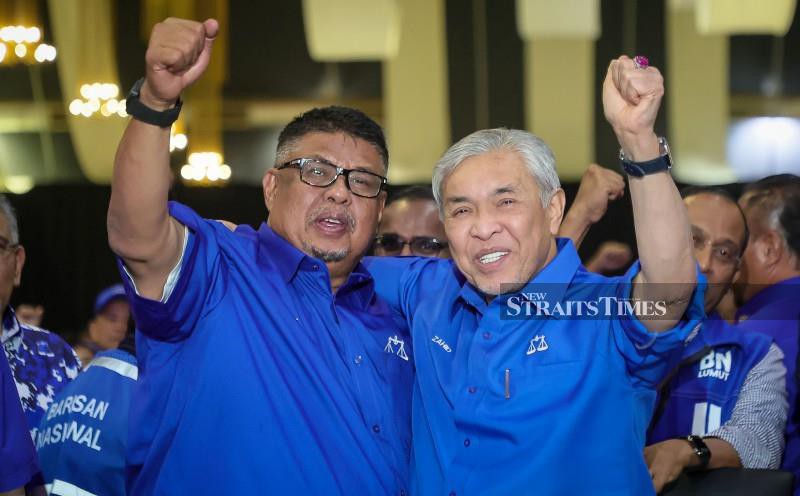
The Nov 14 Melaka state election results revealed a split in political power among Barisan Nasional (BN), Perikatan Nasional (PN), and Pakatan Harapan (PH). BN secured 21 seats, PN took three, and PH captured four out of the 28-member assembly. While BN alone exceeded the simple-majority threshold, the two-party coalition reached 24 seats, surpassing the two-thirds benchmark.
However, this legislative strength does not equate to an unlimited mandate, as power without responsibility can lead to vulnerabilities, much like a grand house lacking supporting pillars.
The BN's victory underscores the continued importance of grassroots organisation, administrative experience, and community relationships. However, the PH's four-seat representation, despite its continued support in several constituencies, raises questions about its electoral reach, organisational effectiveness, and ability to address public priorities. Similarly, Bersatu and Bersama must reflect on their electoral performance and capacity to meet public needs.
The election outcome prompts a closer examination of voter motivations rather than assuming a single driving force behind political choices. The idea of Muslim political unity should be approached with caution, as political differences cannot be reduced to a monolithic stance towards the ummah. Rhetoric that encourages divisiveness poses risks for all parties involved.
BN and PN have agreed to continue their political cooperation in forming Melaka's government, with BN and PN nominating Datuk Seri Dr Ab Rauf Yusoh for another term as chief minister. This decision marks a transition from electoral Tafahum Siyasi to an arrangement for governing together. However, this election win does not replace the formal procedures for executive appointment or the requirement for legislative confidence.
As the new chief minister takes office, he must ensure that the coalition agreement is translated into accountable governance. The electorate's mandate should be honored by respecting constitutional institutions, accepting scrutiny, and delivering on promises. The focus should be on governance, not merely on applause.
Looking ahead to the 16th General Election (GE16), the implications extend beyond Melaka. Umno organisations in Selangor, including Bangi, should prioritize factual public communication and engage with residents in villages and urban areas. The concerns of young people, farmers, small traders, and workers—such as living costs, employment, housing, and essential infrastructure—must be addressed through transparent procurement, dependable services, balanced investment, and responsive constituency representation.
A commanding majority can facilitate implementation, but it also heightens the responsibility to maintain legislative scrutiny and institutional checks. Stability should be coupled with fairness and results. Malaysia's constitutional framework must protect Islam's position, the rights of Malays and Bumiputera, and the lawful rights of every community, without fostering ethnic antagonism.
Political developments in Sabah, Johor, Negeri Sembilan, and Melaka may shape broader discussions, but they should not be viewed as inevitable national trends. Momentum does not guarantee future success, as elections occur under distinct conditions. The real examination begins after the celebrations fade, and the public will ultimately judge whether leaders maintain clean administration, distribute development fairly, and address everyday hardships.
The responsibility of those in power should not be taken lightly. Victory should inspire gratitude, humility, and renewed service rather than complacency or entitlement. Melaka's voters have conferred authority through the ballot box, and respecting that authority entails honoring constitutional institutions, accepting scrutiny, and delivering on promises. The measure of this political outcome will be governance, not just the volume of partisan accusations.
Written by urgent.news from New Straits Times's reporting — not their text. Machine-written — may contain errors; check the original before relying on it.