Asia stocks slide as AI jitters deepen ahead of Nvidia results
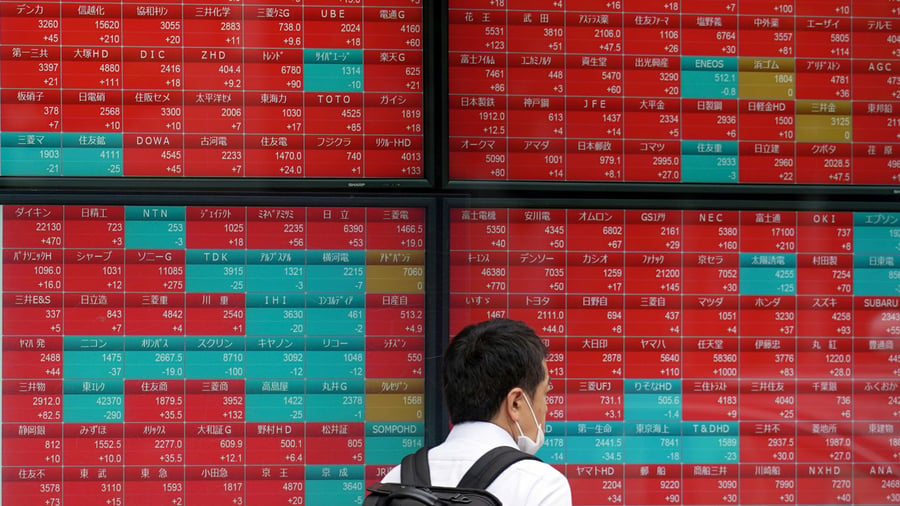
Asian stocks experienced a decline on Monday, with Taiwan and South Korea's markets leading the downward trend. The cause behind this was the growing skepticism surrounding the AI trade and concerns about Nvidia's leadership, which had unsettled technology shares ahead of the chipmaker's upcoming results. In addition to these factors, weak Chinese data and Japan's first economic contraction in a year further weighed on investor sentiment.
The MSCI Asia Pacific index fell by 1%, while its technology sub-index dropped by 3.6%. The Nasdaq 100 futures declined by 0.2%, and the S&P 500 futures slipped by 0.1%. This decline came after a 1.2% drop and a 0.4% decrease in U.S. indexes on Friday. The results of Nvidia's meeting, scheduled for Tuesday, may further test market sentiment.
Nvidia's market value had plummeted from $5.8 trillion in early October to $3.9 trillion by Friday, resulting in a loss of over $500 billion. Jansen Huang stepped down from his role, and CFO Colette Kress took over as interim CEO. According to The Financial Times, Huang had previously discussed a potential return, but the Treasury Secretary urged the board to seek an external successor.
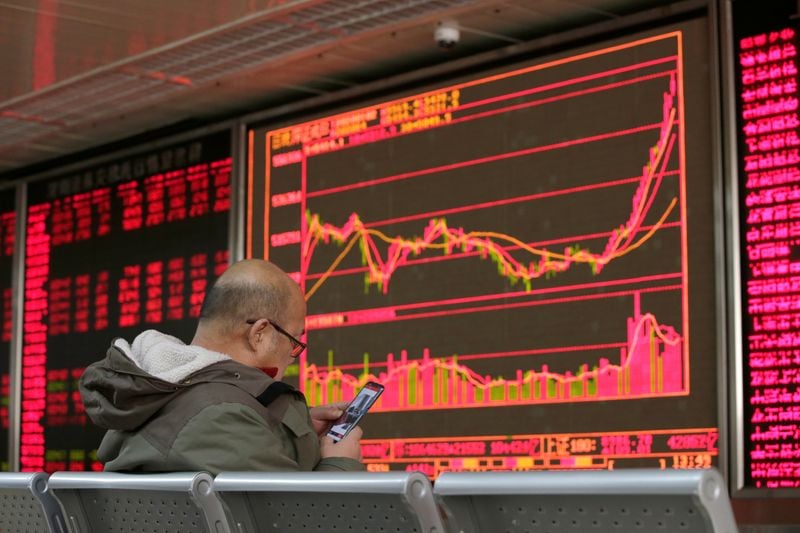
Huang's connections to China may play a role in shaping chip-export policies. The anticipated IPO of Anthropic, set to occur two days later, has garnered interest from more institutional investors compared to SpaceX's IPO. A Microsoft outage disrupted oil-trading data and dealmaking activities. The Hang Seng in Hong Kong rose by 0.84%, while mainland Chinese markets saw a decline, with the CSI 300 falling by 0.54% and the Shanghai Composite losing 0.41%.
The weakening sentiment was driven by October activity data that fell short of expectations, indicating the limited strength of domestic demand. Industrial output and retail sales both failed to meet forecasts, further exacerbating concerns over the economic recovery. Housing prices continued to decline, casting doubts on the overall health of the market.
Despite recent stimulus measures, technology shares faced broader selling pressure. South Korean stocks, represented by the KOSPI, dropped by 2.8%, with SK Hynix declining by 5.6% and Samsung Electronics losing 3.6%. In Taiwan, the benchmark index fell by 3.9%, with notable drops in Largan Precision (10%) and Taiwan Semiconductor Manufacturing (2.8%).
Japan's Nikkei 225 index also experienced a decline of 1.7%, as Kioxia and Murata Manufacturing suffered losses of 5.5% and 5.8%, respectively, while TDK fell by 3.4%. Chinese AI developers were also affected by the market downturn, with Z.AI dropping by 10.9% and MiniMax falling by 8.7%. Japan's economy contracted for the first time in a year during the third quarter, shrinking by 0.1% on an annualized basis.
Poor weather conditions and rising living costs contributed to a decline in household spending, raising concerns about the strength of domestic demand. Apart from the affected Asian markets, the S&P/ASX 200 in Australia experienced a minor decline of 0.2%, while the NZX 50 in New Zealand saw a gain of 0.7%. Singapore's Straits Times Index also dropped by 0.2%.
In India, Nifty futures declined by 0.5%. The selloff in U.S. bonds has heightened the expectation of further tightening by the Federal Reserve, with the 10-year Treasury yield reaching 5.14% after its largest weekly increase since April 2025. Investors are closely monitoring the upcoming Federal Reserve minutes, retail sales data, and policymakers' comments for further guidance.
Jeff Schmid, President of the Kansas City Fed, has warned that inflation remains elevated, citing energy, goods, healthcare, and AI-related investment costs as key factors. Brent crude prices hovered near $95 a barrel, with ample supply mitigating the impact of renewed Middle East shipping risks. The possibility of a meeting between U.S. President Donald Trump, Chinese President Xi Jinping, and Russian President Vladimir Putin during the APEC summit was also noted, with discussions expected to cover nuclear arms reduction and the ongoing conflict in Iran.
Written by urgent.news from Investing.com's reporting — not their text. Machine-written — may contain errors; check the original before relying on it.
This story
This is one outlet's version. Read the fullest account.