The SCO’s Civilisational Moment: Can Delhi Turn Shared Heritage Into Strategic Dialogue?
When nations find it difficult to agree on the present, they can sometimes discover common ground in the past. The Shanghai Cooperation Organisation’s (SCO) Civilisational Dialogue Forum, scheduled in New Delhi from November 20 to 22, seeks to build such a bridge. Pakistan’s decision to send its climate change minister Musadiq Masood Malik adds significance. It will be the first visit by a…
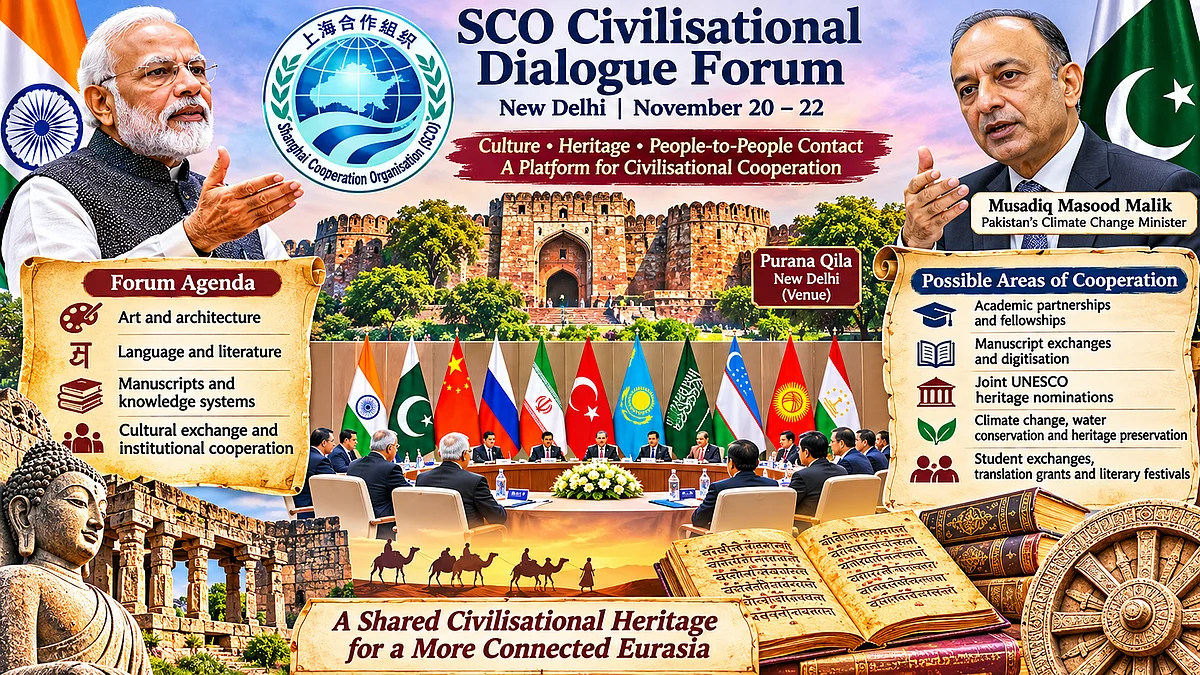
The Shanghai Cooperation Organisation’s Civilisational Dialogue Forum is set to convene in New Delhi from November 20 to 22, aiming to forge common ground between nations by exploring their shared heritage. Pakistan’s decision to dispatch climate change minister Musadiq Masood Malik marks a significant diplomatic move, as it is the first visit by a Pakistani minister to India in over three years.
The forum will take place at Purana Qila, symbolising the integration of culture into the SCO’s broader discussions on security, trade, and connectivity.
Pakistan’s involvement, though not indicative of a restoration in bilateral relations, provides a means to maintain a channel of communication. Initially, Pakistan had intended to send its national heritage and culture minister, Aurangzeb Khan Khichi, but opted for climate minister Musadiq Masood Malik instead. This choice underscores Pakistan’s ongoing commitment to civilisational dialogue within the SCO framework.
The conference will explore various facets of culture, including art, architecture, language, literature, and manuscripts. Four sessions are slated after the inauguration by Prime Minister Narendra Modi, who proposed this cultural dimension at the SCO Summit in Tianjin in September 2025. Modi's vision seeks to highlight the interconnectedness of Eurasian societies through shared cultural practices, even amidst political differences.
Despite divergent political systems and strategic objectives, the SCO societies are historically intertwined through factors such as trade, migration, religion, languages, and intellectual exchange. The forum offers an opportunity to remind governments that the region’s history extends beyond its current conflicts. Potential collaborations include manuscript exchanges, digitised collections, exhibitions, academic partnerships, and joint UNESCO heritage nominations, all of which could transform goodwill into substantive cooperation, provided there is investment in scholarship and institutional coordination.
The diplomatic atmosphere surrounding Pakistan’s participation is tinged with tension. Relations soured following the April 22, 2025, Pahalgam attack, which resulted in 26 deaths. The conflict escalated with India’s May 7 Operation Sindoor, targeting terrorist infrastructure in Pakistan and Pakistan-occupied Kashmir, and culminated in a ceasefire on May 10.
Subsequent measures, including India’s suspension of the Indus Waters Treaty and restrictions on travel and diplomatic engagement, have further exacerbated the situation. While direct political engagement remains limited, the SCO remains a crucial multilateral platform for official interaction between the two nations.
Ideologically, Pakistan’s engagement in the forum is framed by concerns over terrorism. In May 2026, senior RSS official Dattatreya Hosabale argued for maintaining dialogue through people-to-people contact, advocating that India protect its security while acknowledging the historical and cultural ties between the two nations. RSS chief Mohan Bhagwat clarified that Hosabale’s remarks were directed towards the people of Pakistan, not the nation’s political leadership, and reiterated the RSS’s stance of supporting cultural engagement while opposing political normalization.
India’s participation in the forum presents both opportunities and challenges. With 25 countries invited, 15 had confirmed attendance before Pakistan’s announcement, including China, Saudi Arabia, Iran, Türkiye, and Central Asian states. These nations share historical connections through Buddhism, trade, Persian influences, and historic trade routes.
For India, the forum offers a platform to showcase its civilizational influence across Asia. Culture minister Gajendra Singh Shekhawat emphasized the parallel civilizational journey of India and Pakistan, despite the divisions caused by Partition.
However, significant obstacles persist. Bilateral disputes, such as border issues, strategic competition between India and China, and the deep-seated trust deficit between India and Pakistan, remain unresolved. Historical narratives, like the contested Indus Valley Civilisation, further complicate matters within the framework of the Indus Waters Treaty. Despite these challenges, India must strive for an inclusive agenda that engages all participating countries.
For the forum to evolve from dialogue to partnership, sustained efforts in education, cultural exchanges, archaeological research, and literary festivals are essential. Climate change, water conservation, and heritage preservation also offer avenues for cooperation, even amidst political disagreements. Pakistan’s hosting of the SCO Heads of State Summit in Islamabad in August 2027 further positions the nation as a key player in regional cooperation.
While cultural and academic engagement cannot erase the scars of conflict, they can preserve avenues for future dialogue. The success of the forum should be measured by the development of lasting partnerships, rather than mere ceremonial events. Ultimately, Pakistan’s presence in the SCO Civilisational Dialogue Forum represents a strategic opportunity to navigate the complexities of regional politics through the lens of shared heritage and mutual respect.
Written by urgent.news from Free Press Journal's reporting — not their text. Machine-written — may contain errors; check the original before relying on it.