Sindh cotton experiment faces winter test
LAHORE: Pakistan’s cotton and textile supply chain is at a critical juncture, caught between grassroots climate adaptation in the fields of lower Sindh and widening statistical discrepancies in official crop reporting. The decision by growers in Sindh’s coastal districts of Thatta and Sujawal to begin cotton sowing in the second week of November marks an unusual departure from the country’s…
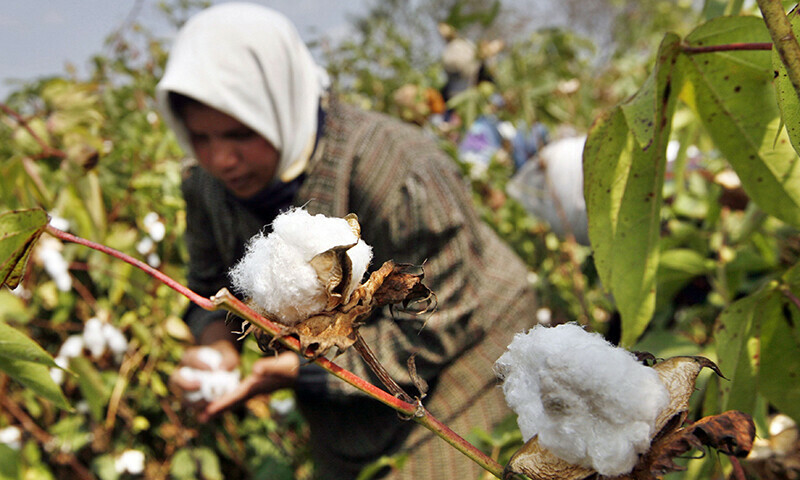
Pakistan's cotton and textile sector finds itself at a crossroads, with a unique experiment in the coastal districts of Sindh potentially offering a solution to longstanding industry challenges. This off-season cotton sowing, initiated by farmers in Thatta and Sujawal, begins in November, defying the conventional agricultural calendar that sees sowing take place between February and March in Sindh.
While the intention is commendable, the success of this initiative hinges on two critical factors: the crop's ability to withstand the harsh winter conditions and the accuracy of official crop reporting.
Traditionally, Punjab leads the cotton sowing in May and June, while Sindh follows a month later in February and March. This schedule exposes the crop to the scorching summer heat and post-monsoon pest attacks, particularly the pink bollworm. In response, growers in coastal Sindh are adopting a multi-season model, intercropping cotton with tomatoes and adopting frost-free pockets for "off-season" planting.
However, plant breeding experts at the Central Cotton Research Institute (CCRI) remain cautious, as they closely monitor the fields and conduct parallel trials to assess the viability of this approach.
If the November-sown cotton manages to mature through the winter and yield lint by February and March, it could alleviate the supply gap faced by domestic spinners. This early infusion of raw material would help bridge the annual inter-season gap, reducing reliance on costly imported lint. However, the success of this venture is contingent upon the crop's resilience to winter challenges and the potential impact on fibre quality.
While daytime temperatures of 33-34 degrees Celsius and night-time lows of 21-22°C in mid-November seem favorable for germination, the decisive test lies in the soil temperatures during the critical winter months of December and February. Cold soil can hinder root development, delay flowering, and impair boll formation, which could ultimately affect the quality of the lint.
From an industrial perspective, reduced sunlight and sub-optimal winter warmth can compromise fibre maturity, lowering micronaire values and staple length. Such quality issues could lead to textile mills discounting the crop, negatively impacting farmer profitability. Additionally, the continuous presence of cotton plants from November until the conventional spring sowing season could create a breeding ground for pest cycles, particularly the pink bollworm.
This could result in a continuous infestation that migrates into the main summer crop, posing a significant threat to the overall cotton yield.
The reporting gap for the 2026-27 season further complicates the situation. While the Pakistan Cotton Ginners Association reported 1.999 million bales by October 31, the Punjab Crop Reporting Service projected provincial output at 3.7 million bales, with an overstatement of 1.6 million bales. This discrepancy distorts price discovery across the value chain, artificially depressing local lint prices and delaying spinners' forward import contracts.
The uncertainty surrounding crop statistics creates a ripple effect, exposing mills to panic buying on global spot markets at steep premiums, driving up bank risk premiums and borrowing costs for warehouse financing.
In conclusion, while the November sowing experiment in coastal Sindh holds promise for Pakistan's cotton and textile sector, its success is far from guaranteed. The resilience of the crop to winter conditions and the accuracy of official crop reporting are paramount. Only through rigorous monitoring, targeted research for cold-tolerant and pest-resistant varieties, and credible, unified crop statistics can this innovative approach translate into lasting relief for the textile industry.
As the winter test unfolds, the fate of Pakistan's cotton and textile supply chain hangs in the balance.
Written by urgent.news from Dawn Business's reporting — not their text. Machine-written — may contain errors; check the original before relying on it.
This story
This is one outlet's version. Read the fullest account.