Resolution on law against Sardari system in Balochistan rejected
QUETTA: A resolution seeking effective and non-discriminatory implementation of the 1976 Act abolishing the Sardari system in Balochistan was defeated in the provincial assembly by a one-vote majority, with six members opposing it and five supporting it. Only 11 members were present when Deputy Speaker Ghazala Gola, who was presiding over the session, put the resolution to a vote after a debate.…
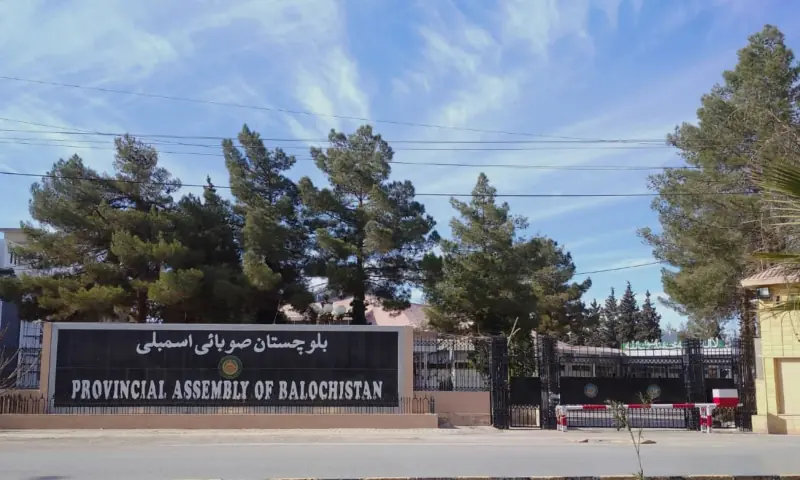
Quetta, Pakistan: A proposed resolution aiming for the proper and unbiased implementation of the 1976 Act, which abolished the Sardari system in Balochistan, was narrowly rejected by the provincial assembly. A single vote separated the supporters from the opponents, with six members voting against it and five in favor. Only 11 lawmakers were present when the resolution was voted upon after a lengthy debate.
The proponent, Maulana Hidayatur Rehman Baloch from the Jamiat-e-Islami party, argued that the 1976 Act was designed to liberate citizens from tribal domination by eliminating illegal powers, coercion, and exploitation, while safeguarding their freedom, equality, autonomy, and legal rights. However, he noted that despite this legislation, certain regions in Balochistan still experienced threats, pressure, forced decisions, and social and economic exploitation under the guise of Sardari and tribal influence.
Rehman stressed that human freedom, dignity, and the right to independent decision-making were both constitutional mandates and fundamental Islamic principles. The resolution called for the provincial government to guarantee the effective and non-discriminatory application of the 1976 Act across the province.
The opposition, led by Maulana Hidayatur Rehman, maintained that the elimination of the Sardari system was not in conflict with the traditional tribal system, which is an integral part of their identity. He pointed out that despite the presence of 140 sardars, none could save the father of Asma Jattak, a case that resonated deeply with the audience.
He also demanded the prohibition of the titles Sardar and Nawab, asserting that while it was not the opposition to individuals bearing these titles, they were against the misuse of such titles linked to human rights violations.
Minister Mir Zahoor Buledi, while not opposing the nawabs and sardars as individuals, condemned instances of human rights abuses associated with them. Opposition leader Mir Younis Aziz Zehri contended that a similar resolution was submitted during a previous session, but the language subsequently employed on social media and at press conferences was deemed inappropriate.
He affirmed his support for the JUI's stance against oppressive nawabs and sardars, and highlighted the sacrifices made by the JUI, including the martyrdom of Wadera Ghulam Sarwar Musiani, Kamran Jattak, and Mulla Amanullah, in opposing the Sardari system.
Minister Ali Madad Jattak, who supported the resolution, clarified that the 1976 Act had indeed abolished the system, although he acknowledged that some sardars both settled disputes and engaged in acts of cruelty. PML-N member Zarak Mandokhail opposed the resolution, arguing that the Sardari system was deeply entrenched and could not be eradicated.
In contrast, PPP member Samad Gorgage supported the resolution, echoing the previous stance of Sardar Attaullah Khan Mengal. JUI-F member Dr. Nawaz Kibzai questioned which sardar had failed to deliver essential services, such as schools, hospitals, and roads, in their respective areas. He also requested the removal of unparliamentary remarks against sardars.
After the debate, the Deputy Speaker announced the resolution's rejection due to it falling short of a majority.
Written by urgent.news from Dawn - Pakistan's reporting — not their text. Machine-written — may contain errors; check the original before relying on it.