On this day in space! Nov. 15, 1988: The 300-foot Green Bank Telescope collapses suddenly, leaving a huge pile of wreckage in West Virginia
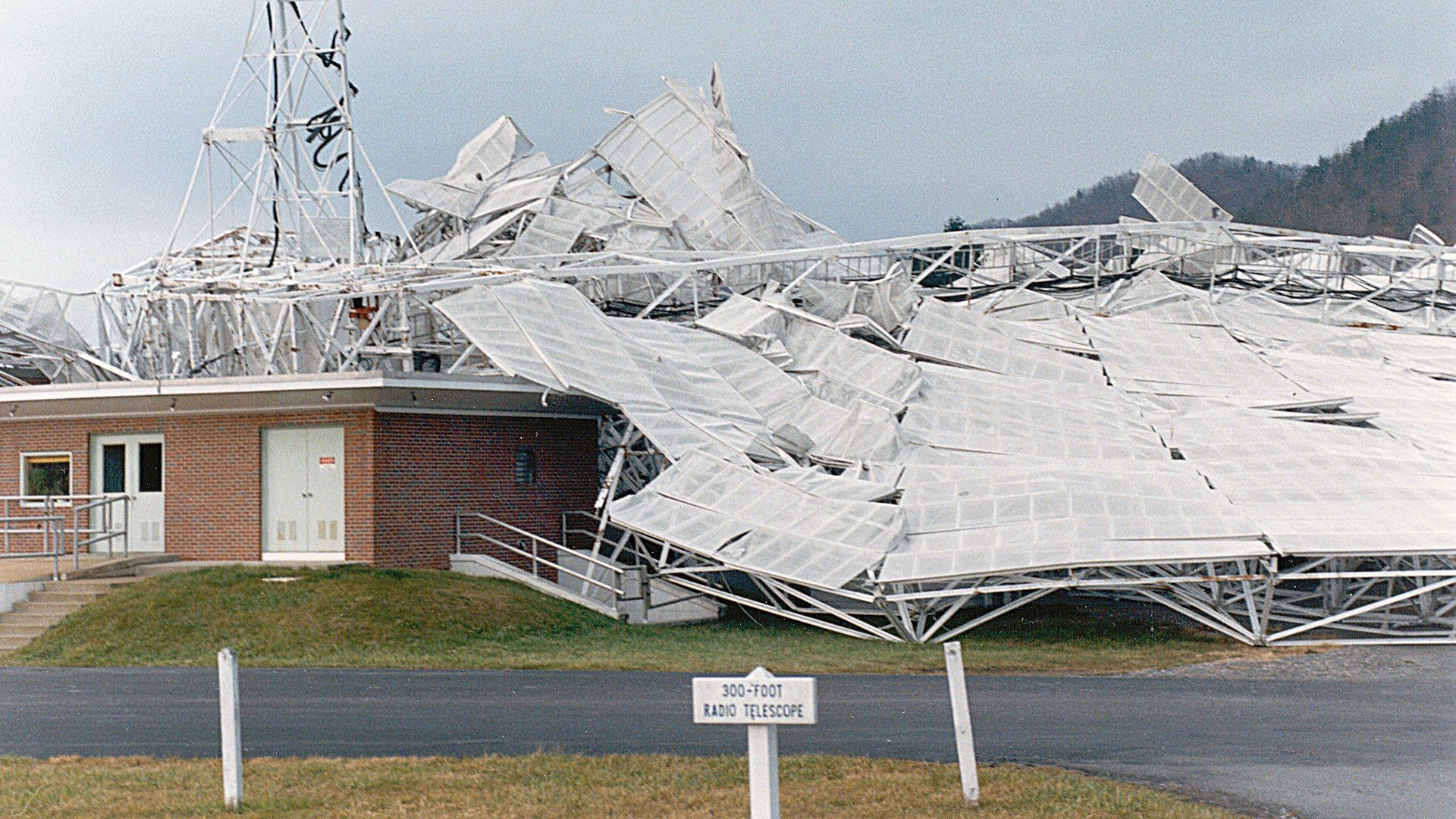
On November 15, 1988, a 300-foot radio telescope in Green Bank, West Virginia suddenly collapsed. The collapse occurred at 9:46 p.m. on a clear night with no strong winds. Upon arrival the following morning, observatory staff found a large pile of wreckage where the telescope had once stood. The telescope had collapsed under its own weight following the failure of a key structural element known as a gusset plate.
This plate was one of four connecting plates that held the telescope's large metal beams together. Investigations revealed that the gusset plates had not been designed to withstand the 26 years of service the telescope had already provided. Three years later, construction began on a new telescope that was even larger and more sensitive.
It began science operations in 2001. The Green Bank Telescope was significant for being the largest radio observatory in the United States and the largest facility of its kind in the world at the time of its construction. However, its rapid construction led to the need for later upgrades. In 1970, a new finer-meshed aluminum surface was installed on the telescope's surface, and a larger traveling feed was added at the prime focus.
Despite these improvements, the telescope's collapse was not due to any negligence. Unforeseeable stress factors were the cause. The collapse resulted in a mass of twisted debris. The telescope's observations contributed to important scientific discoveries, including the detection of dark matter and the realization that pulsars originate from supernova explosions.
One of the most notable products of the telescope was the Green Bank 6cm Survey, an all-sky survey of radio objects. This survey cataloged nearly every northern hemisphere radio object studied by other telescopes, making it a crucial resource in radio astronomy.
Written by urgent.news from Space.com's reporting — not their text. Machine-written — may contain errors; check the original before relying on it.