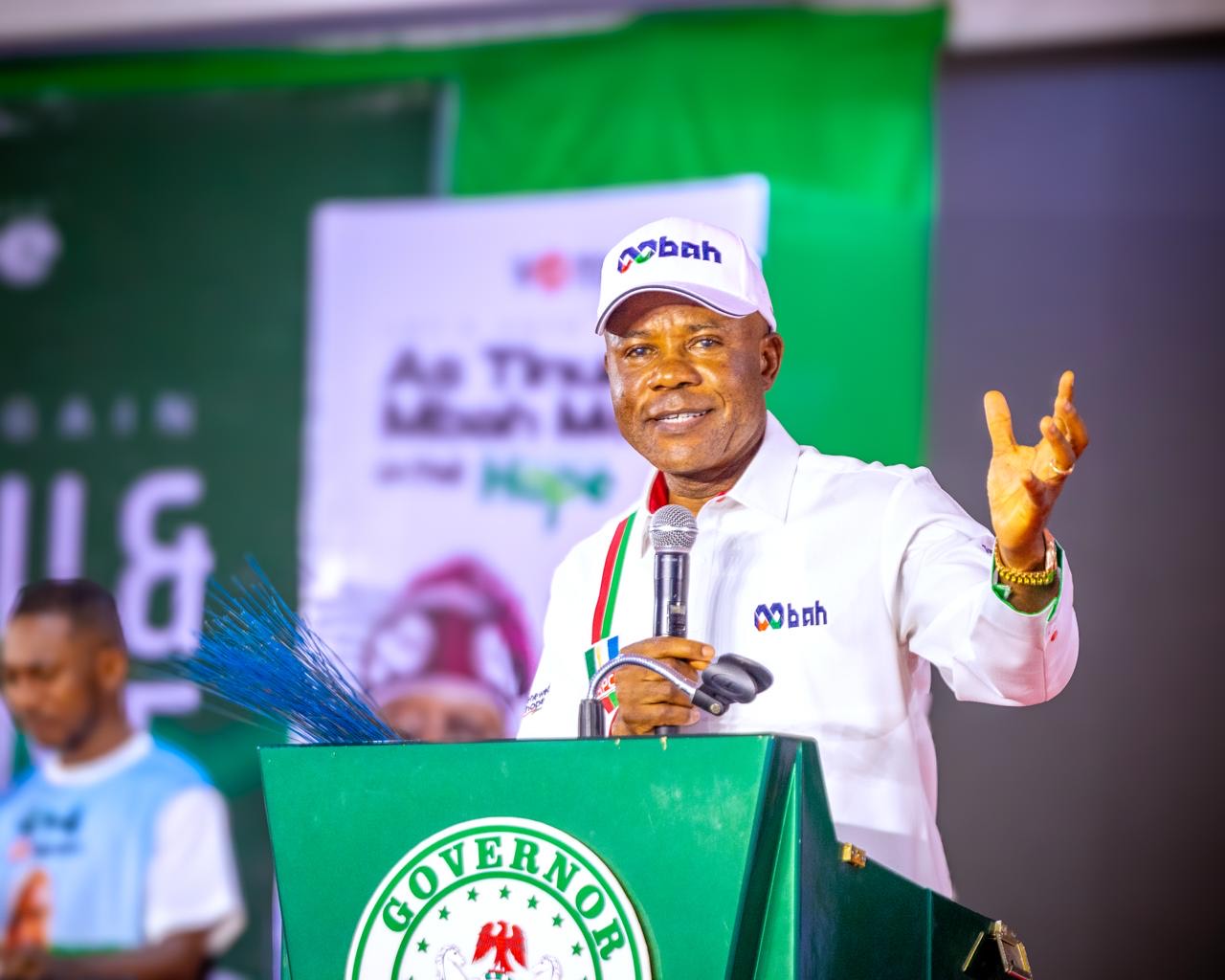
How Tinubu’s reforms averted Nigeria’s economic collapse – Gov Mbah
The governor argued that the removal of fuel subsidy and floating of the naira only waited until the President’s assumption of office in 2023 because the nation delayed the ‘evil day’ and lived on borrowed time. The post How Tinubu’s reforms averted Nigeria’s economic collapse – Gov Mbah appeared first on Premium Times Nigeria .
In a recent interview, Kemi Asekun-Shittu, a member of the All Progressives Congress Presidential Campaign Council, discussed the challenges facing President Bola Tinubu's administration ahead of the 2027 elections. Asekun-Shittu argued that convincing Nigerians to appreciate the president's economic reforms and their long-term benefits would be the party's biggest hurdle.
She emphasized that while the task might not seem as daunting as many people assume, the government had to work diligently to ensure that citizens understood the efforts being made. The party acknowledged the difficulties faced by the populace and aimed to demonstrate that it was not speaking from a position of ignorance regarding the issues at hand.
Tinubu's administration has repeatedly urged Nigerians to conserve resources and reduce spending, a stance Asekun-Shittu criticized, as she believed the government should also practice what it preached. She questioned the validity of providing seven Prado jeeps to the Youth League, stating that optics mattered in public communication and that actions needed to align with words.
Asekun-Shittu also noted that she did not observe any government official's convoy larger than the one proposed by President Tinubu, but emphasized that in a democracy, everyone is accountable for their actions. She highlighted that it was essential for the press to report any violations of presidential directives.
When asked if the average Nigerian was better off now compared to before the 2023 election, Asekun-Shittu hesitated, as the answer depended on individual experiences. She pointed out that while some Nigerians felt improved, others believed they were worse off. The World Bank's statistics revealed that while poverty levels had risen since 2014, they had recently stabilized and were no longer increasing.
Tinubu's economic policies had contributed to this stabilization, and Asekun-Shittu expressed optimism that poverty could decline if the current trajectory continued.
Asekun-Shittu also discussed the Nigeria First policy, highlighting how it had benefited some Nigerians, such as young entrepreneurs who took advantage of prioritizing local products over foreign alternatives. She provided examples of successful implementations, such as the digital postcode system created by three young Nigerians, which was swiftly adopted by the Nigerian Postal Service, thanks to President Tinubu's support.
She concluded by encouraging Nigerians to view the situation positively, despite the challenges, and to remain hopeful for a brighter future.
Written by urgent.news from Punch's reporting — not their text. Machine-written — may contain errors; check the original before relying on it.
This story
This is one outlet's version. Read the fullest account.