From Acne To Pigmentation: 5 Skincare Myths That Could Be Harming Your Skin
When it comes to skincare, there are quite a few myths, especially about pigmentation, acne and uneven skin tone. One needs to demystify, explain and understand them to ensure we take proper actions and have a great skin. Clearing the myths Dr Shallu Kapiil, an aesthetic physician and founder of Skinique, explains that myths about pigmentation, acne, and uneven skin tone are common because of the…
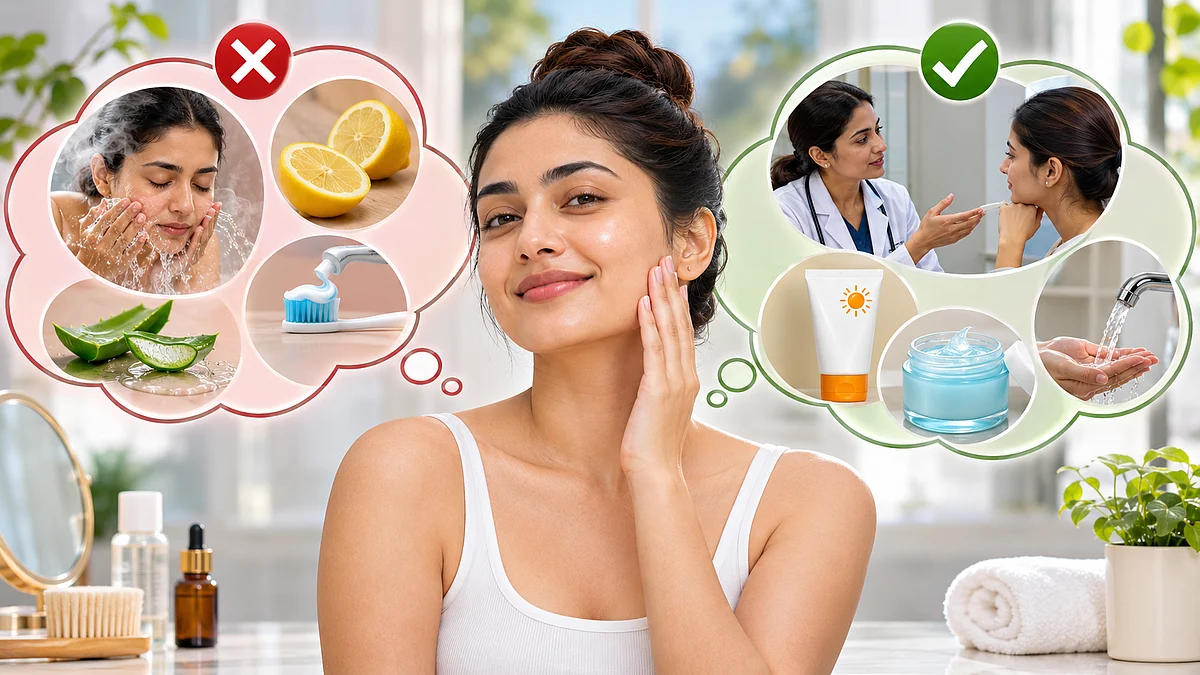
Many people believe in misconceptions about skincare, particularly regarding pigmentation, acne, and uneven skin tone. These misunderstandings can lead to ineffective or harmful practices. Dr. Shallu Kapiil, founder of Skinique, explains that concerns about the skin often have emotional implications. When visible changes occur, people may feel self-conscious and seek quick fixes.
This can be exacerbated by skincare advertisements that use fear tactics to promote instant results. Traditional home remedies are also widely followed, even though they may not suit every skin type, and the promise of easy, inexpensive solutions can make such advice particularly persuasive. Consequently, it is crucial to base skincare choices on one's specific skin needs and professional advice rather than trends or promises of immediate results.
Dr. Soma Sarkar, a dermatologist and co-founder of Skin Beyond Borders (SkinBB), frequently encounters these myths leading individuals to use unsuitable products or follow influencer recommendations. This often results in ineffective treatment or delays in seeking appropriate care. People tend to opt for readily available, quick solutions, often foregoing dermatological consultation in favor of over-the-counter products.
This approach can prevent individuals from receiving the correct guidance necessary for their unique skin concerns.
### Myth 1: Hot water opens pores, and cold water closes them.
**Reality:** Pores do not actually open and close like doors. Hot water may soften surface oils and make the skin feel slightly more relaxed, giving the impression that pores are open. However, excessive heat can strip the skin’s protective lipid barrier, causing irritation. Cold water may temporarily tighten the skin, making it feel tighter, but prolonged ice-cold exposure can leave the skin dry, flaky, and potentially damage superficial blood vessels. It is recommended to cleanse the skin with tepid water instead.
### Myth 2: Oily skin does not need moisturizer.
**Reality:** Oily skin produces excess sebum, whereas hydration refers specifically to the skin's water content. Confusing oiliness with hydration can lead to improper skincare choices. Skipping moisturizer or using harsh products to remove oil can compromise the skin barrier. It is advisable to select a lightweight, gel- or water-based moisturizer that is appropriate for your skin type.
### Myth 3: If an ingredient is natural, it is always safe.
**Reality:** 'Natural' does not inherently mean that an ingredient is safe or suitable for everyone. For instance, applying aloe vera gel directly from the plant can sometimes lead to skin irritation or allergic reactions. Similarly, some natural ingredients, such as certain essential oils, citrus juices, and botanical extracts, can have adverse effects.
Dr. Sarkar emphasizes that carefully formulated synthetic ingredients can be purified and standardized to deliver specific concentrations and consistent performance. When assessing ingredients, consider their evidence, formulation, concentration, and compatibility with your individual skin type.
### Myth 4: Sunscreen is only needed on sunny days and not on cloudy days or indoors.
**Reality:** UVA rays can penetrate clouds and window glass, contributing to skin aging and collagen breakdown. Therefore, sun protection is necessary regardless of weather conditions. Dr. Shallu advises incorporating broad-spectrum sunscreen into your morning skincare routine and reapplying it as directed by the product description.
### Myth 5: Any product suggested will work for skin issues.
**Reality:** Some individuals rely on bleaching agents or rub lemon slices on their skin to lighten dark spots or reduce tan. However, these practices can damage and irritate the skin. For acne, applying saliva or toothpaste to pimples in the hope of making them disappear overnight is another prevalent misconception that should be avoided. To effectively address skin problems, it is essential to use products specifically developed for those issues and recommended by a dermatologist for optimal results.
Written by urgent.news from Free Press Journal's reporting — not their text. Machine-written — may contain errors; check the original before relying on it.