Delhi air pollution: Outdoor workers report breathing difficulties, cough and burning eyes as AQI worsens
An analysis by the Centre for Science and Environment (CSE) found that Delhi’s average PM2.5 concentration in the week preceding Deepavali reached 236 micrograms per cubic metre, the highest in three years
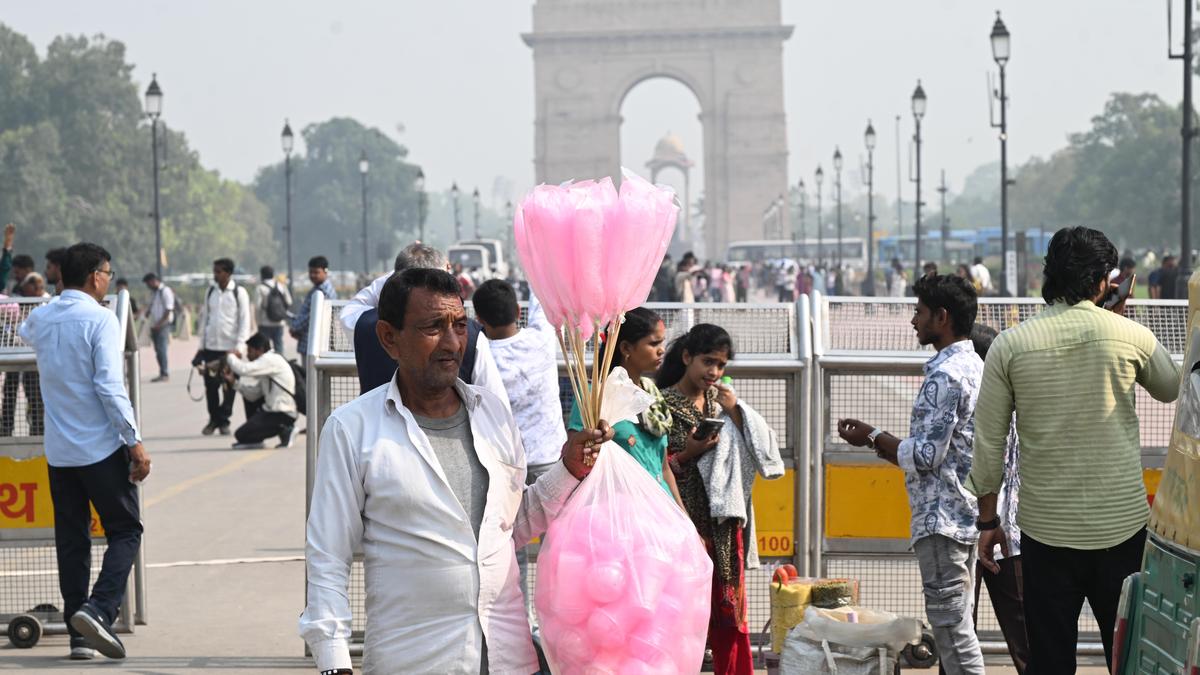
As the Air Quality Index (AQI) surged to over 400 in certain parts of Delhi, outdoor laborers are reporting breathing problems, persistent coughs, headaches, and burning eyes due to worsening pollution. Traffic police officers, domestic workers, street vendors, mechanics, and gig workers often have no choice but to stay outside, making them particularly vulnerable to poor air quality.
Yogendra Kumar, a traffic inspector in outer north Delhi, explained that health risks persist year-round, but spike significantly when air quality deteriorates. He noted that road dust, combined with vehicle emissions, exacerbates the issue for those working outdoors. Protection measures are limited to basic masks.
Reena Chaudhary, a domestic worker in Palam Colony, began experiencing breathing difficulties and headaches the day before Deepavali. Her condition worsened on the festival day, causing dizziness and a persistent cough. She had to cover her face with her dupatta to breathe during smoke-filled nights. Chaudhary now takes her daughter with her, fearing she may become ill and unable to work.
Ravi, a 21-year-old gig worker who works night shifts, picks up rides across the city to support his family. He notices the air is dense and heavy, even at night, and has to stop near green areas to breathe.
Mukesh Yadav, an e-rickshaw driver, said road dust is a constant problem throughout the year, exacerbated by smoke from fireworks and vehicle emissions. He ties a towel around his face to mitigate the dust, working eight to ten hours daily between Palam metro station and Kailashpuri.
An analysis by the Centre for Science and Environment (CSE) revealed that Delhi's average PM2.5 concentration reached 236 micrograms per cubic metre in the week leading up to Deepavali, the highest in three years. This is 97% higher than 2025 and 32% above 2024 levels. The study also showed that despite time-bound vehicle restrictions, traffic congestion persists.
Nitrogen dioxide, a marker of vehicular pollution, accumulates during the evening and remains elevated until midnight, even after traffic eases. Anumita Roychowdhury, CSE's executive director, stated that while Deepavali pollution is an annual issue, the higher baseline pollution this year indicates that air quality is poorer than in previous years.
She suggested that cleaner air before winter and measures to curb pollution from farm fires and firecrackers could have mitigated the severe pollution during seasonal weather changes.
Written by urgent.news from The Hindu - Sci-Tech's reporting — not their text. Machine-written — may contain errors; check the original before relying on it.
This story
This is one outlet's version. Read the fullest account.