Clothing factories shut in Bangladesh as workers strike over pay
Dozens of factories in Bangladesh's main clothes-producing area have been shut by workers striking over a higher minimum wage.
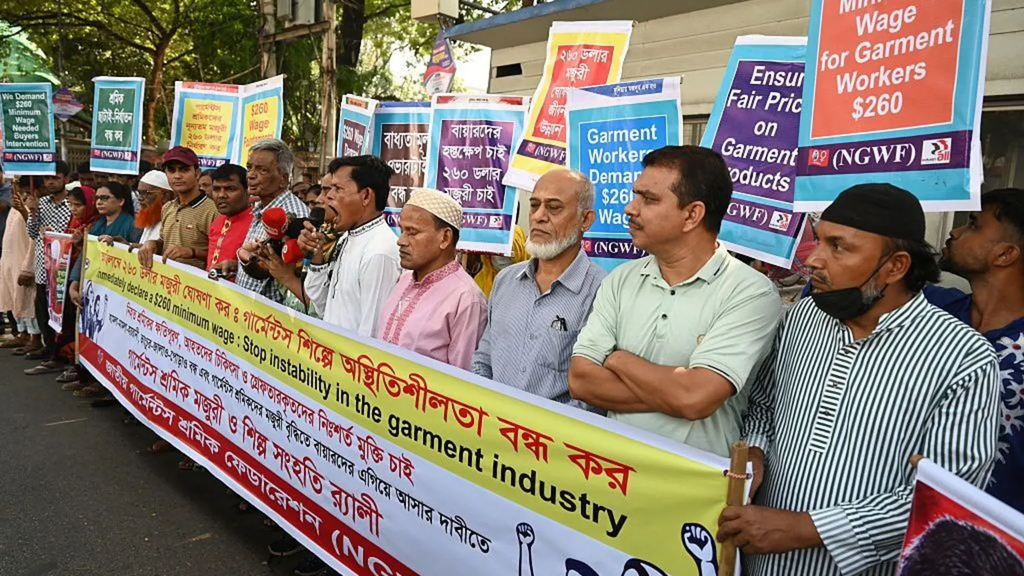
Dozens of clothing factories in Bangladesh’s main textile-producing regions have been shut down by workers striking for a higher minimum wage, according to reports from this weekend. Nearly 150 sites were closed across the country, particularly in the Savar, Ashulia, and Gazipur areas. The garment industry is a crucial pillar of Bangladesh’s economy, contributing nearly $40 billion annually in exports and accounting for 10% of the nation’s GDP.
The workers are demanding a minimum monthly wage of 30,000 taka (£182), which is considerably higher than the current national minimum of 12,500 taka (£76). This wage disparity has exacerbated a cost of living crisis among garment workers. Demonstrations escalated on Sunday morning in Gazipur, where striking workers blocked the Dhaka-Tangail highway, causing traffic disruptions for around an hour before police intervened.
Under Bangladesh's labor laws, a "No Work No Pay" provision allows owners to suspend operations and withhold wages when production is interrupted. Police Superintendent Mohammad Amjad Hossain confirmed to the BBC that 13 factories were shut down on Saturday night, and another 16 factories were closed during the early morning unrest.
The garment industry employs about four million workers who produce clothes for global brands such as H&M, Primark, and Zara. As the world’s second-largest exporter of ready-to-wear clothing after China, Bangladesh fears that the ongoing unrest could have significant repercussions for international buyers if it persists for an extended period.
The Bangladesh Garment Manufacturers and Exporters Association (BGMEA) and the Bangladesh Knitwear Manufacturers and Exporters Association (BKMEA) have called for measures to protect the factories involved in the strike. BGMEA President Mahmud Hasan Khan expressed concern, stating, "Garment factories that have been unable to continue production due to the ongoing unrest will remain indefinitely closed from tomorrow under Bangladesh’s labor law."
The government established a minimum wage board on November 1 to recommend a revised pay structure for workers. The board, chaired by a senior district judge, vowed to finalize any recommendations by the end of November. The new pay structure is set to take effect on December 1.
Written by urgent.news from MyJoyOnline Ghana's reporting — not their text. Machine-written — may contain errors; check the original before relying on it.
This story
This is one outlet's version. Read the fullest account.