Charcha Time: Are Smart Glasses Turning Everyday Spaces Into Privacy Traps?
A pair of stylish glasses may soon become an invisible camera, turning everyday spaces into places where privacy is uncertain. From lifts and metro coaches to offices and cafés, the possibility of being recorded without consent is raising serious concerns. As smart glasses gain popularity, are our laws and safeguards keeping up with technology? Satya Tirtharaj Ghosal moderates a debate Sristi…
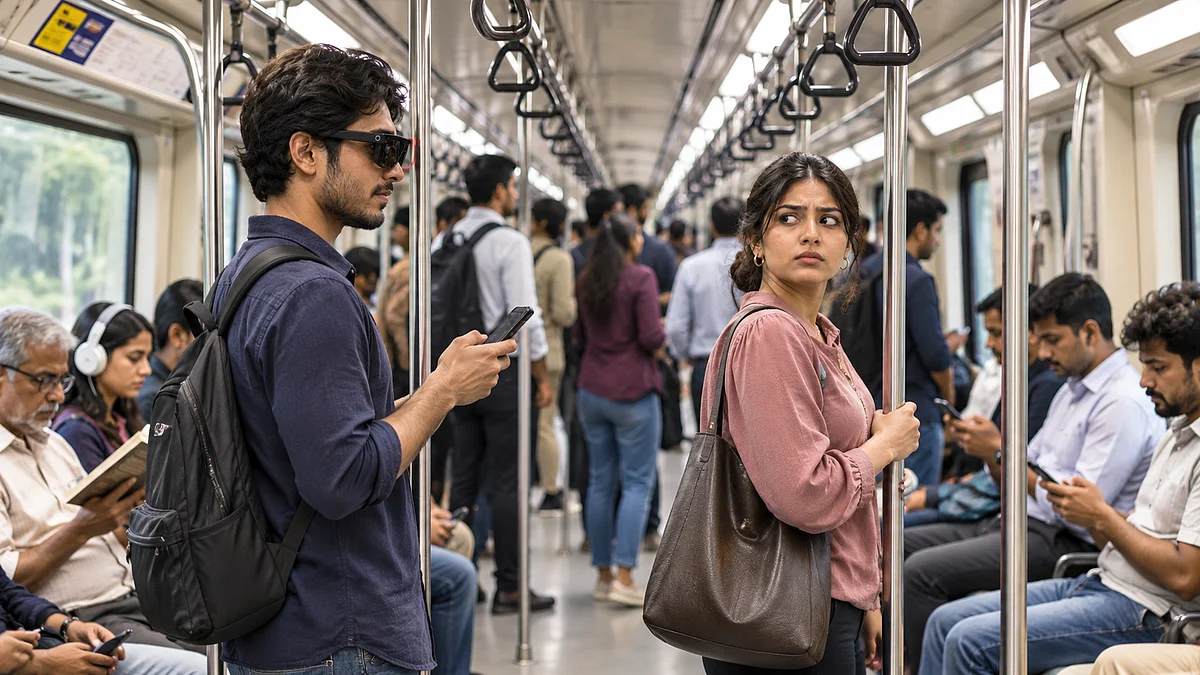
Smart glasses could soon transform everyday spaces into privacy traps, raising serious concerns about consent and recording without permission. As these stylish glasses become more popular, questions arise about whether current laws and safeguards are keeping pace with the technology. Satya Tirtharaj Ghosal moderates a debate with Sristi Mukhopadhyay, an Advocate at Calcutta High Court, highlighting the worry these glasses pose.
Unlike visible cameras, the camera lens in smart glasses is hidden inside the fashion, making it difficult for people to detect or object to any recording.
In public spaces like lifts, metro coaches, offices, and cafés, the presence of recording lights, though tiny and poorly understood, could lead to increased cases of sexual harassment of women at the workplace. Victims might find it challenging to detect and prove the violation due to the discreet nature of the camera. Most wearers are likely curious, not malicious, but the added worry for women is significant, as they already plan their safety daily by choosing their seating, routes, and locations.
If faced with such a situation, the reporter suggests first collecting evidence, such as names, time, place, and CCTV footage. They would then inform the person discreetly not to delete the recording and take appropriate action, such as contacting the police, filing a complaint on the national cybercrime portal, and requesting the platform to remove any shared content.
Clear policies in workplaces, defining recording devices, banning them in sensitive areas, and requiring permission, are essential. Existing voyeurism, privacy, and obscenity laws, though partly helpful, are not specifically designed for wearable cameras and enforcement lags behind the rapid spread of footage.
Workplace policies should evolve with technology to clearly outline where camera-enabled smart glasses can and cannot be used, ensuring that everyone's privacy and safety are protected. India's laws on voyeurism, privacy violations, and the circulation of explicit content are crucial, but identifying the responsible person and gathering evidence when using discreet technology is challenging. Stronger awareness, quicker action, and clearer regulations are necessary to keep pace with the evolving landscape.
Written by urgent.news from Free Press Journal's reporting — not their text. Machine-written — may contain errors; check the original before relying on it.