Bothy: Building Verifiable AI Decisions With Arweave Receipts
Bothy anchors hash-only fingerprints of AI outputs — and the human approvals on them — to Arweave, so anyone can verify decisions without trusting the vendor.
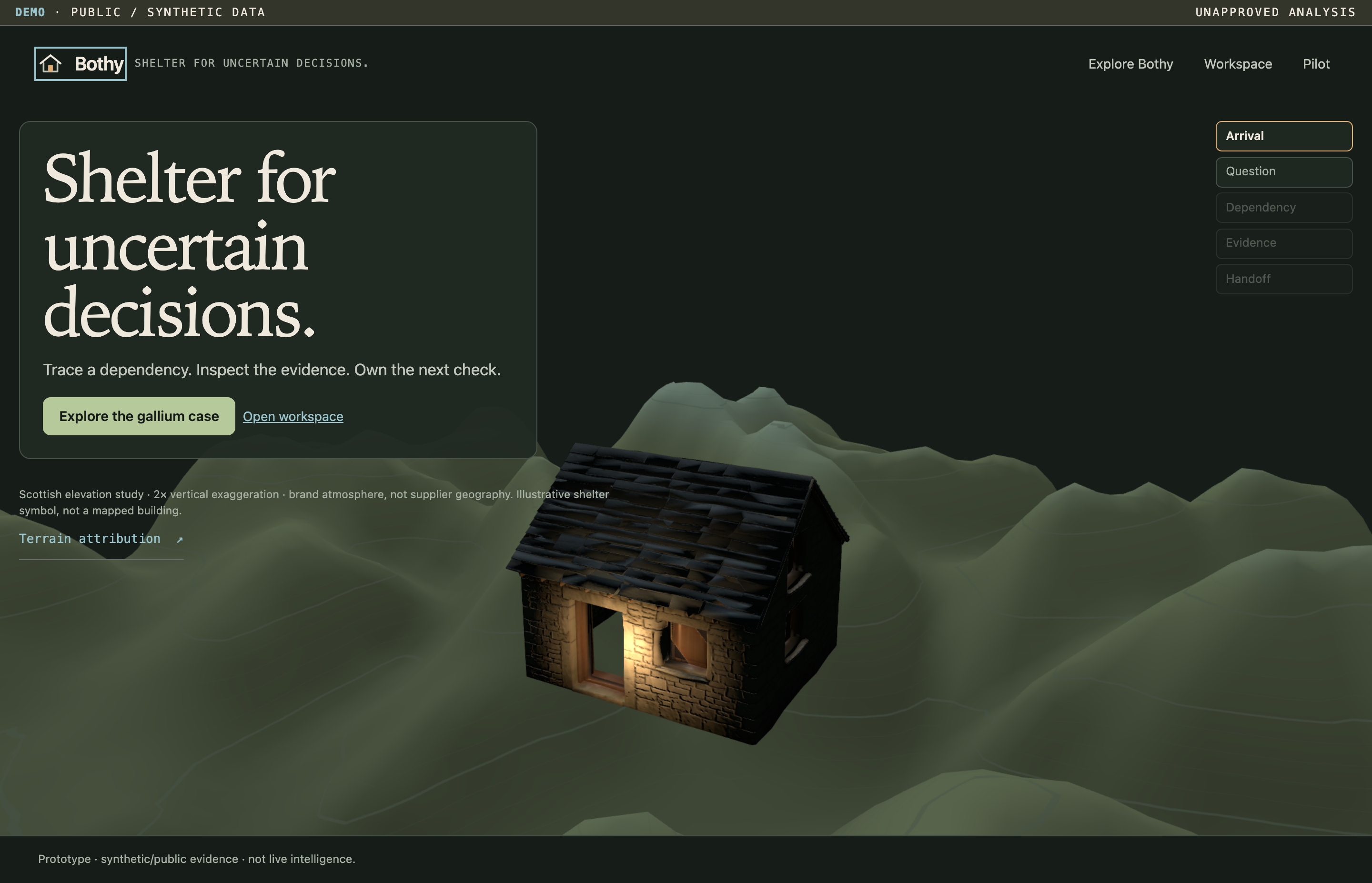
Every winter in the UK, mountain road closures require a decision from a dedicated winter duty officer. Gathering data from the Met Office, weather, route topology, and incident history proves challenging as these scattered across various systems. To address this issue, the open-source Bothy platform was created. Bothy creates an evidence-first agent that watches a curated evidence graph, producing a risk assessment, a score, and a draft for the duty officer.
The platform then hands the decision to a named human, who can approve or reject the suggested decision. The agent also produces defense briefs for supply-chain analysts, creating citations of potential outcomes if a dependency went offline.
The main issue with AI safety features is that they cannot independently verify if the output existed at a specific time, and whether the human signed it. In order to solve this problem, Bothy anchors SHA-256 receipts to Arweave mainnet at two critical moments: when the agent generates an output and when a human decides on it. By doing this, the platform creates a tamper-evident record, keeping only the fingerprint on the blockchain permanently. This ensures that the evidence behind a decision is verifiable at any given time.
Bothy accomplishes this by using a canonical payload, which covers the immutable fields only, keys sorted recursively, scores rounded to four decimals, and other relevant information. This approach allows a judge to recomputing the fingerprint in their environment and compare it to the server's anchored record, making the record tamper-evident by construction.
The platform guarantees that the decision is a named responsibility-holder's signature on a specific outcome, with an audit trail that hashes to a specific value. If anyone edits the brief, draft, or log, the recomputation will fail, making the system reliable and trustworthy.
Written by urgent.news from HackerNoon's reporting — not their text. Machine-written — may contain errors; check the original before relying on it.