As Texas embraces carbon storage, a Black community questions the risks
Texas now issues permits for companies to store carbon dioxide underground. East Texas residents fear safety risks, and skeptics doubt the climate benefits.
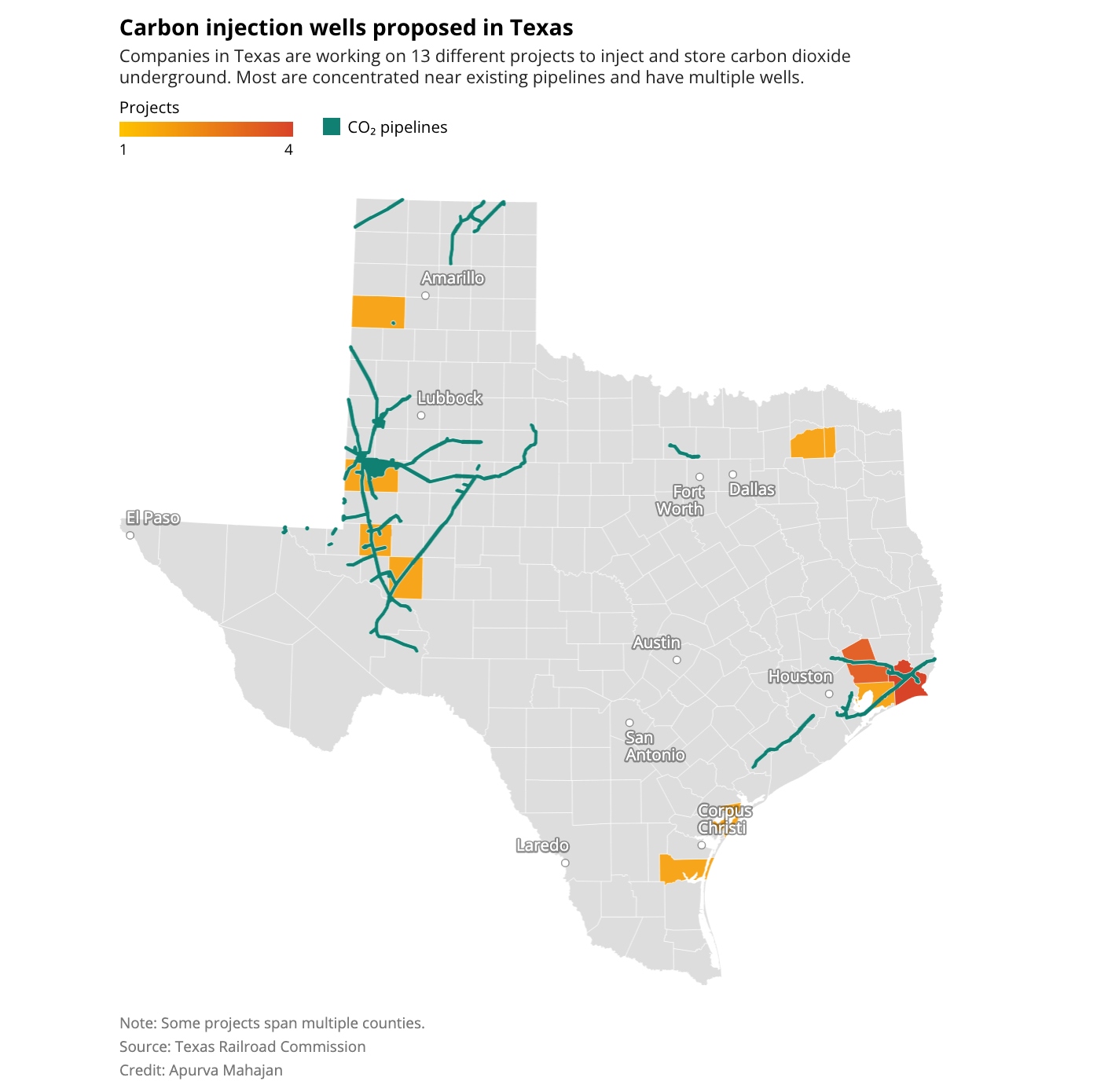
In a rural area near Beaumont, Texas, Exxon Mobil is poised to begin injecting carbon dioxide underground for the purpose of long-term storage. This marks a significant step forward for the oil and gas industry, which has long championed carbon capture and storage as a means of reducing emissions. Texas legislators have voiced their support for the technology, while state regulators have spent years seeking federal approval to expedite the permitting process.
Exxon Mobil has secured seven agreements to store carbon dioxide, which would equate to emissions from 2 million cars. However, the nearby community of Cheek, which is predominantly Black and comprised of working-class or elderly residents, has raised concerns about the safety of the project. Many residents are skeptical of the company's assurances that their groundwater and well-being will be protected.
The potential risks include contamination of groundwater and the possibility of carbon dioxide leaks that could suffocate residents. Some experts have criticized carbon capture and storage as a "dangerous distraction" in the fight against climate change, highlighting its high costs and limited effectiveness. Despite these concerns, carbon capture supporters argue that storing emissions is a crucial part of an "all of the above" strategy to combat climate change.
The Environmental Defense Fund has acknowledged the validity of residents' safety concerns but emphasized the urgent need for more carbon management infrastructure. State Representative Drew Darby, a Republican from San Angelo, has urged the Railroad Commission to expedite carbon capture projects while ensuring public safety. The agency has faced criticism for its track record of failing to safeguard communities from industry-related risks.
Written by urgent.news from Grist's reporting — not their text. Machine-written — may contain errors; check the original before relying on it.