Analysis-Trump’s minerals push has yet to loosen China’s grip ahead of Xi talks
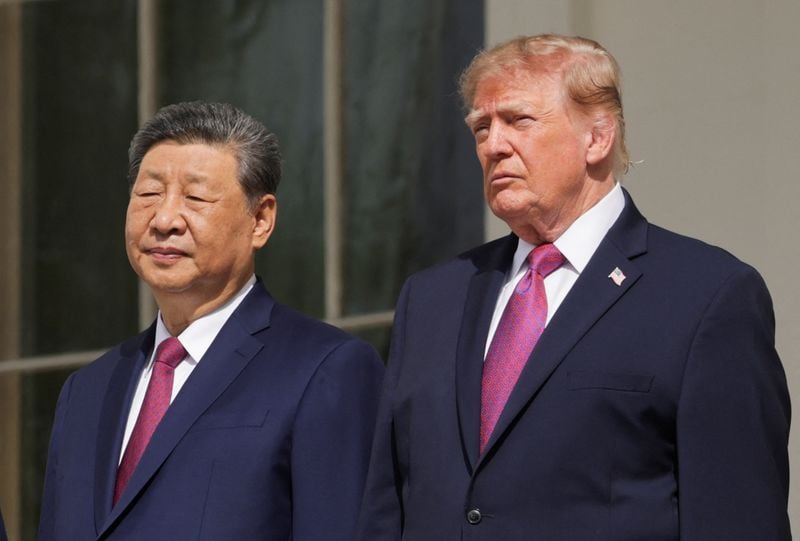
US President Donald Trump is set to meet with Chinese President Xi Jinping this week, but a crucial component of his trade strategy remains unfulfilled: securing a domestic supply of critical minerals to diminish China's dominance. Despite billions of dollars in federal investment, several US mining projects are years away from producing the essential materials for semiconductors, robotics, weapons systems, and the artificial intelligence boom.
This dependence places Trump in a precarious position during trade talks, as he must carefully navigate his pressure on tariffs and export controls without jeopardizing access to crucial metals, magnets, and chemical compounds.
China's position as the world's leading rare earths miner has long been a tool for Beijing to wield leverage in negotiations. Last year, Beijing restricted exports of minerals and magnets, disrupting operations at Ford and other US manufacturers. In response, the US and China engaged in negotiations to maintain access to these resources.
However, the gap between Trump's ambitions in this area and the slow pace of execution underscores the challenge of revitalizing an industry that the US largely abandoned at the end of the 20th century, according to Samir Kapadia, head of trade at the Washington-based business advisory firm Vogel Group. Many projects remain only on paper, with few shovel-ready operations.
The upcoming meeting with Xi on Thursday will be a pivotal test for Trump's strategy. He and Xi may opt to extend their current trade truce, which is set to expire in January and includes export-control waivers for certain critical minerals. China has historically used these minerals as a means of control, claiming they are necessary to prevent their use in conflict.
However, the US has fallen behind in production, with manufacturing capacity for neodymium-iron-boron magnets in 2025 standing at around 4,500 metric tons annually, compared to China's approximately 210,000 metric tons.
Written by urgent.news from Investing.com's reporting — not their text. Machine-written — may contain errors; check the original before relying on it.
This story
This is one outlet's version. Read the fullest account.
- Tok Mat says South China Sea code talks nearly 90pc complete, Malaysia pushing for deal by this year malaymail.com
- South China Sea code of conduct: can Beijing and Asean meet 2026 deadline? scmp.com
- General : ASEAN, China Agree On Nearly 90 Pct Of COC , Malaysia Optimistic Talks Near Completion bernama.com