Three summits, three arenas: The diplomatic endgame of 2026
As 2026 draws to a close, three major summits—EAS, APEC and the G20—will test whether global multilateralism can survive great-power rivalry, or if backroom bargains will steal the show.
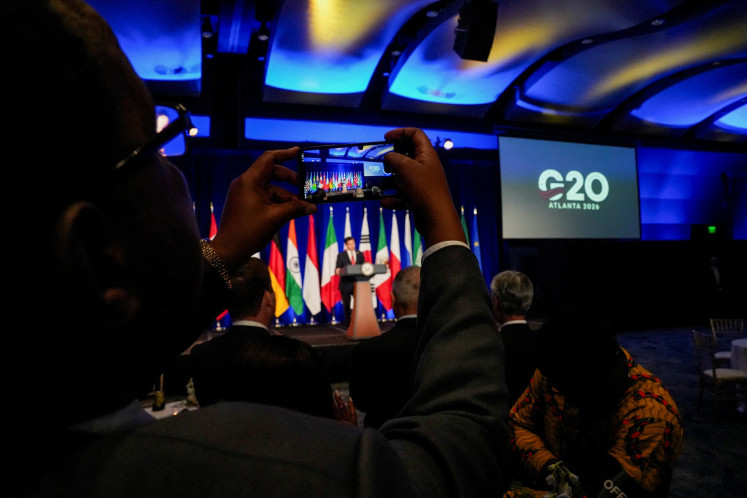
As the year 2026 comes to a close, three major international summits—EAS, APEC, and G20—will provide a critical test for global multilateralism amidst escalating great-power rivalry. These gatherings, which will take place in Manila, Shenzhen, and Miami respectively, will not only yield declarations but also highlight which leaders attend, who abstain, and the side events that emerge.
Amidst deepening international divisions, including a heightened US-China rivalry, conflicts in Ukraine and West Asia, economic turmoil, and weakening multilateral institutions, these summits aim to restore the cooperation that has increasingly been eclipsed by great-power competition. With Indonesia standing out as a participant in all three summits, alongside only six other countries and as the only ASEAN member state attending each event, its role becomes even more pivotal.
The EAS, led by ASEAN and eight dialogue partners, including the US, China, Russia, and India, will mark the first of these events. While ASEAN's central influence remains the event's organizing principle, its ability to exert cohesive control over major powers is limited. The EAS provides a broader strategic scope than its counterparts, yet its capacity to generate significant cohesion is constrained.
The attendance of US President Donald Trump could be significant, although his presence may be more motivated by supporting the Philippines than strengthening ASEAN. China's representation is usually through its Premier, rather than President Xi Jinping, while Russia is typically represented by Foreign Minister Sergey Lavrov. Their continued participation underscores the EAS as a valuable diplomatic platform.
The EAS's strategic breadth is contrasted by its limited ability to create unified action. Nonetheless, the participation of key world leaders will be instrumental in determining the efficacy of these summits in navigating the complexities of contemporary global relations.
Written by urgent.news from The Jakarta Post Academia's reporting — not their text. Machine-written — may contain errors; check the original before relying on it.