SpaceX’s Starship enters Earth’s orbit, but booster catch aborted
The 124-metre Starship roared into the sky from Starbase in southern Texas for its 15th test flight, but minutes later, the landmark nature of the mission went awry.
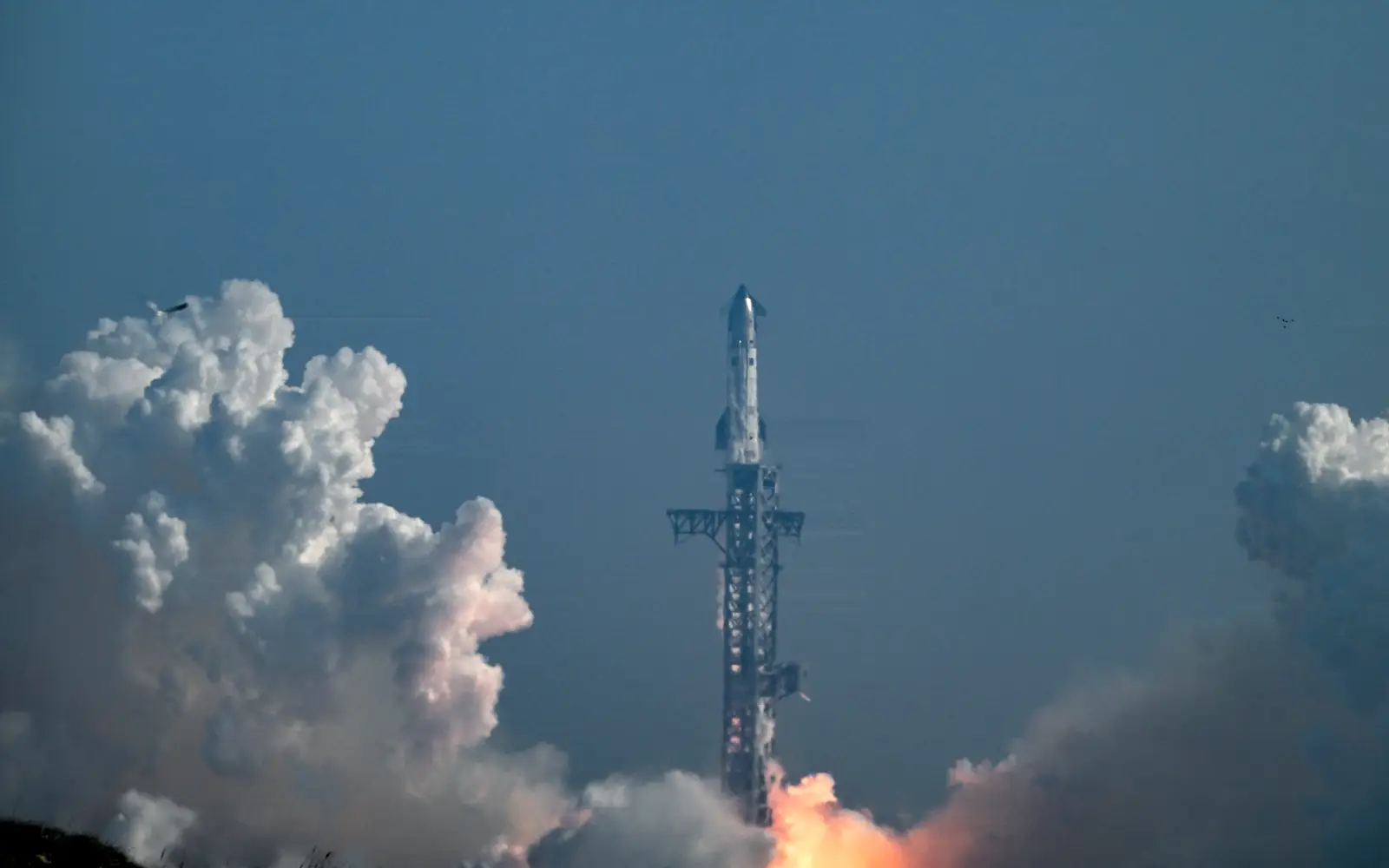
Washington: SpaceX's Starship rocket encountered an unspecified issue during its 15th test flight on Friday, leading to the abort of the planned booster recovery. The 124-meter (407-foot) Starship soared into the sky from SpaceX's Starbase in southern Texas, but minutes later, the problem with the Super Heavy booster forced the company to divert it to an offshore splashdown in the Gulf of Mexico near the launch site.
A fireball erupted as the booster fell into the water, with a section sticking out vertically afterward. SpaceX's Dan Huot stated that they are unsure of the reason behind the inability to bring the booster back. Meanwhile, the Starship spacecraft successfully entered Earth's orbit and is expected to circle the globe 14 times before returning on Saturday.
SpaceX confirmed that both the Starship and its heatshield are healthy, with no issues currently tracked for the vehicle or the range for the return. Clayton Swope, an aerospace expert, described the mission as a "mixed bag so far" after the failed booster catch. Despite the setback, SpaceX plans to attempt the first capture of the Starship after over 22 hours of flight, with the spacecraft expected to land at the launch site around 3:20pm (2120 GMT) on Saturday.
The mission has involved launching 26 satellites to join Musk's Starlink satellite internet constellation. SpaceX, the company founded by Elon Musk, has revolutionized the space sector with its partially reusable Falcon rockets. However, the Starship project has faced years-long delays due to novel engineering challenges, such as transferring fuel to the spaceship while in orbit. SpaceX aims to produce a spaceship every two weeks and a booster every four weeks.
Written by urgent.news from Free Malaysia Today's reporting — not their text. Machine-written — may contain errors; check the original before relying on it.
This story
This is one outlet's version. Read the fullest account.
- SpaceX's Starship enters Earth's orbit, but booster catch aborted gulfnews.com
- SpaceX’s Starship enters Earth’s orbit, but booster catch aborted freemalaysiatoday.com
- SpaceX's Starship enters Earth's orbit, but booster catch aborted channelnewsasia.com