Scientists created a Doctor Octopus-inspired brain interface for controlling robotic arms
Researchers built a brain-computer interface that reads touch-triggered brainwaves, allowing users to direct extra robotic arms while their biological hands remain fully occupied.
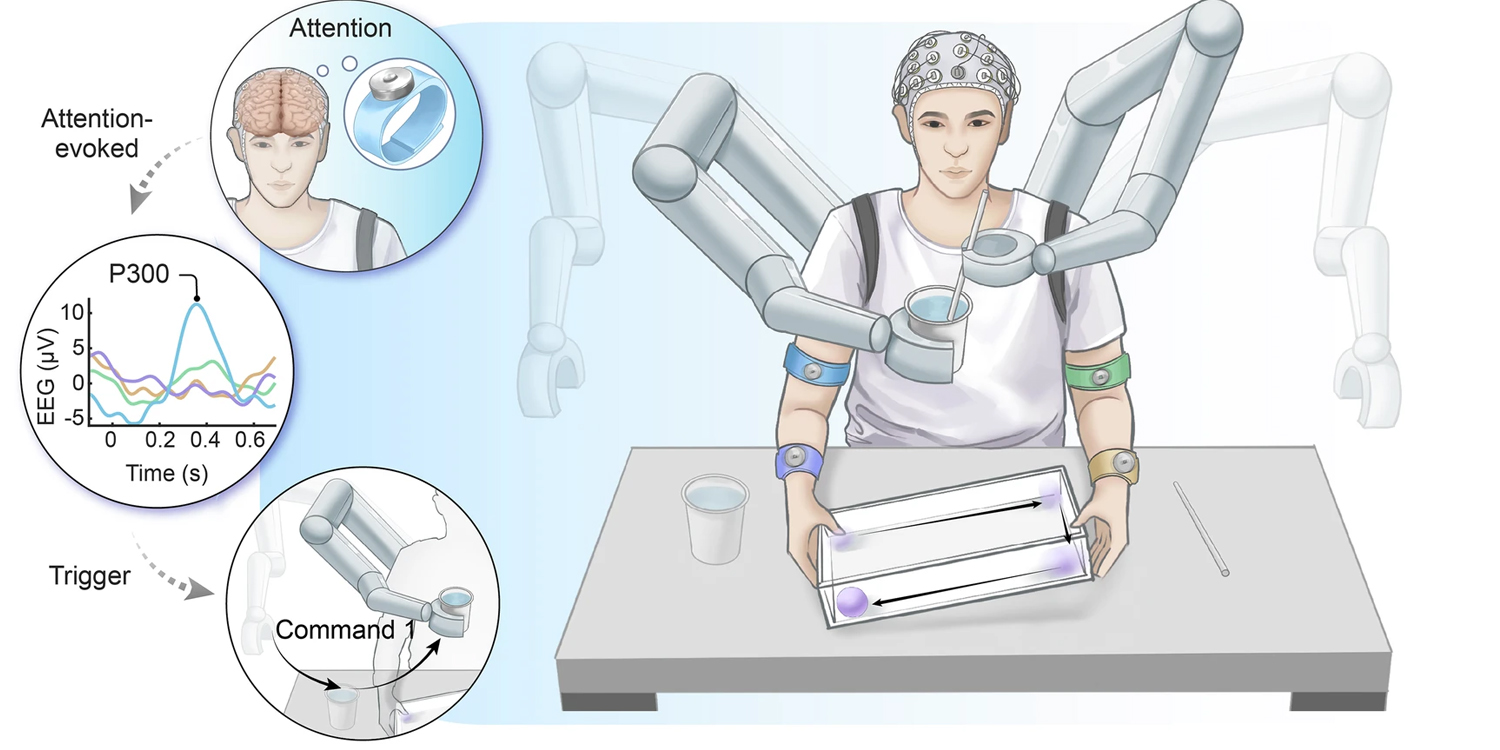
Scientists have developed a novel brain-computer interface inspired by Doctor Octopus that allows people to control robotic arms while using their own hands, according to a study published in Nature Communications. Volunteers participated in three days of practice, where they focused on brief vibrations delivered to their arms to trigger brainwave responses and select among four commands.
After the practice, the accuracy gap between using both hands and staying still was no longer statistically significant. The interface uses a P300 brainwave response, which can be detected through scalp sensors, allowing for multitasking without interfering with physical coordination. The research, led by Tianyu Jia of Imperial College London, draws inspiration from the fictional character's ability to control extra arms and aims to push the boundaries of human movement control abilities.
Written by urgent.news from PsyPost's reporting — not their text. Machine-written — may contain errors; check the original before relying on it.