Ocean that once covered Flinders Ranges preserved Earth's earliest life
Ancient sea level changes led to the preservation of some of the Earth's earliest complex life forms, according to new research that mapped the Flinders Ranges.
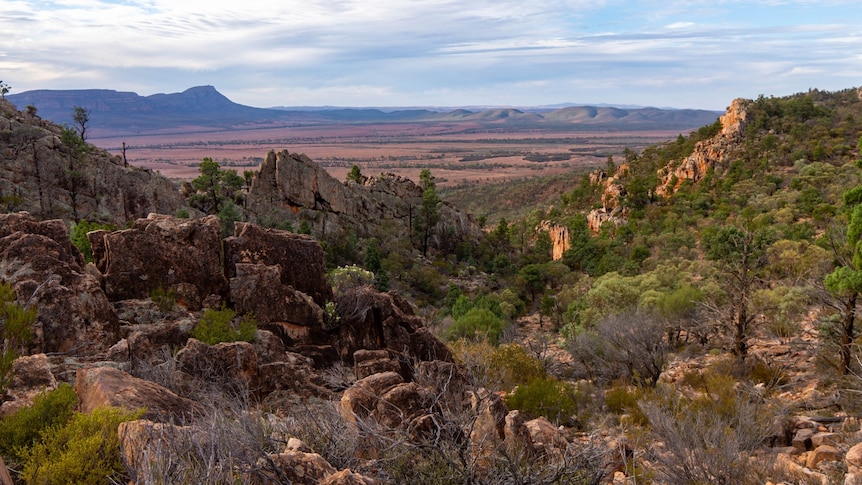
A recent study has offered fresh insights into the ancient Flinders Ranges landscape and early fossil formations. Researchers from Adelaide University discovered evidence of canyons that were once underwater, contributing to a better understanding of Earth's earliest complex life forms. The study, focusing on the Ediacaran period around 550 million years ago, involved mapping geological features across South Australia's Flinders Ranges.
University of Adelaide associate professor Diego Garcia-Bellido explained that the Flinders Ranges were once submerged in the ocean. Canyons were carving through the terrain, creating spaces for more sediment to accumulate. The Nilpena Ediacara National Park, located within the Flinders Ranges, revealed unusual rock formations, indicating the presence of deep submarine canyons.
These canyons, measuring up to 280 meters deep and 6 kilometers wide, were formed by the flooding of seawater, which played a crucial role in their creation and the subsequent preservation of early life forms.
The findings suggest that as the sea level rose, the canyons filled with sediment, creating an ideal environment for the shallow water microbial mat to thrive. This environment, where the Ediacara biota began to grow, is believed to have produced the most diverse assemblage of pre-animal life. Fossils of early soft-bodied organisms, known as Ediacaran biota, were first discovered in the Flinders Ranges in 1946.
The study's findings hold significance for the ongoing bid for UNESCO World Heritage status for the Flinders Ranges. The preservation of early complex life forms, captured in these fossils, sheds light on the planet's earliest stages of life development. Researchers aim to uncover more about these primitive organisms and the conditions that allowed them to flourish.
Written by urgent.news from ABC News AU's reporting — not their text. Machine-written — may contain errors; check the original before relying on it.