Humanity's farthest messenger: Nasa's Voyager 1 nears a one light-day milestone
Nasa's Voyager 1 is on the brink of an incredible achievement, closing in on a distance of one light-day from Earth. Launched in 1977, this remarkable spacecraft has journeyed through space for nearly 49 years and now requires a full day to receive communications from home. Despite this immense distance, Voyager 1 continues to transmit invaluable scientific data, enhancing our understanding of…
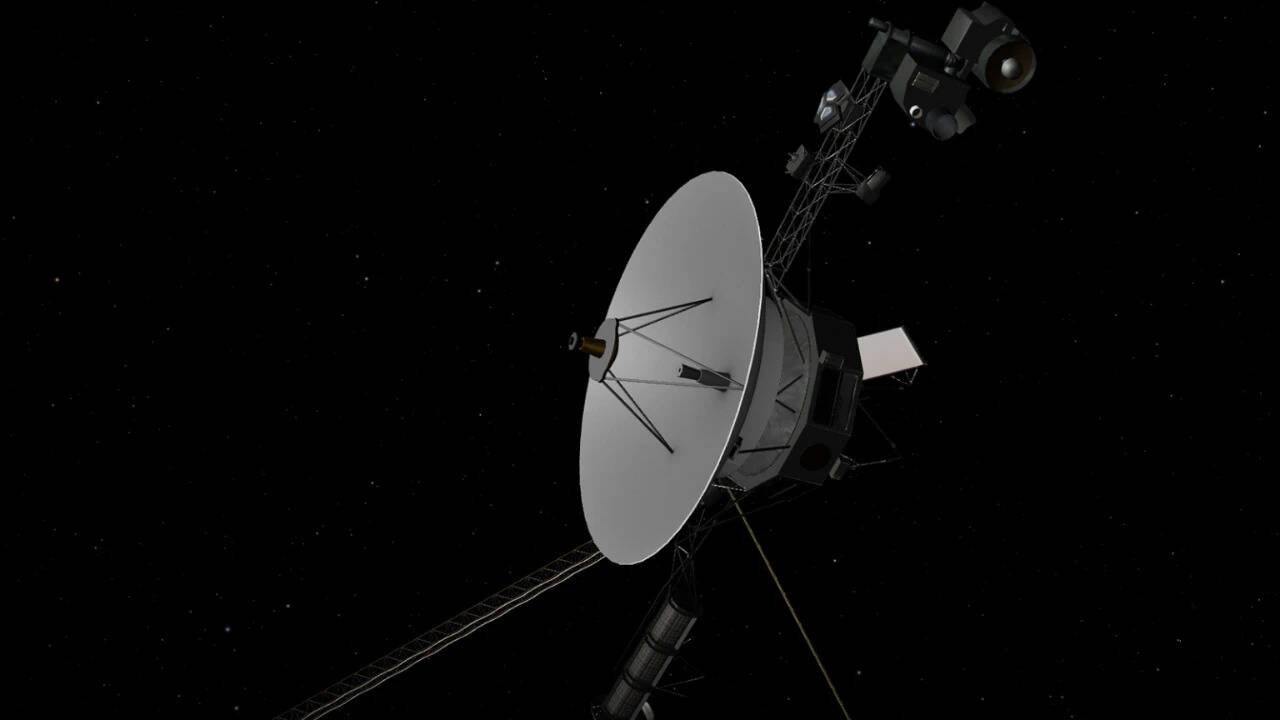
CAPE CANAVERAL, Fla. (AP) — NASA's Voyager 1 is poised to become the first human-made object to reach a distance of one light-day from Earth, marking a staggering 16 billion miles (26 billion kilometers) since its launch 49 years ago. The spacecraft will transmit its radio signals back to Earth in precisely 24 hours, aligning with the concept of a "light-day."
Experts anticipate Voyager 1 will reach a full light-year and surpass another star in 18,000 years, and more than double that before approaching another celestial body. Project manager Suzanne Dodd views Voyager 1 as Earth's ambassador traversing interstellar space, invoking a sense of wonder for those on our home planet. "It's a national treasure," she remarked to the Associated Press. "Truly extraordinary."
To celebrate this milestone, NASA is encouraging individuals to utilize their mobile devices or flashlights to emit a cascade of golden light, spelling out V-G-R via Morse code, after sunset on Tuesday. This act seeks to create a golden wave in the night sky. Although Voyager 1 has experienced occasional issues typical of aging technology, both Voyager 1 and its counterpart Voyager 2 continue to transmit scientific and engineering data as they journey at a velocity of 38,000 mph (61,000 kph).
While Voyager 1 achieved interstellar space in 2012, it will be until 2035 before Voyager 2 reaches the one light-day milestone. Voyager 1 had previously navigated past Jupiter and Saturn in 1979 and 1980, respectively, before venturing into interstellar space. Voyager 2, launched two weeks prior to Voyager 1, toured Jupiter, Saturn, Uranus, and Neptune, capturing awe-inspiring images before entering interstellar space in 2018.
Dodd, who has been associated with the Voyagers since 1984, likens them to weather satellites, constantly relaying information about their uncharted environment, such as magnetic field strength and pressure, as well as cosmic rays. The Voyager spacecraft rely on a weekly command from a skeleton flight control team at NASA's Jet Propulsion Laboratory in California, escalating to more frequent communications when spacecraft complications arise, often assisted by retired personnel who once worked on the mission.
In September, the team successfully completed a power-conserving procedure for the plutonium-powered spacecraft, followed by a brief communication loss in October, which they are currently working to resolve. This dedication and enthusiasm have enabled Voyager 1 to maintain its operations, earning it a place in Guinness World Records for being the farthest human-made object and the most distant photograph of Earth, known as the "Pale Blue Dot."
This image, taken in 1990, was captured from beyond Neptune and serves as a reminder of the small stage we occupy in a vast cosmic arena. Cornell University astronomer Carl Sagan, part of the imaging team, introduced the picture to the world in 1990, emphasizing its significance. Although most people alive today were not present when the Voyagers were launched, "all of us — everyone on Earth — have been touched by these missions," according to the Planetary Society's Bill Nye, co-founded in 1980 by Sagan.
Sagan also contributed to the Golden Record, a 12-inch gold-plated phonographic record containing greetings in 55 languages, images, and diagrams, along with a stylus and instructions. Sagan included the voice of his son Nick, who was 6 years old at the time, conveying a message to any potential discoverers: "Hello from the children on Planet Earth."
The record also carries a stylus and instructions, serving as a time capsule of life on Earth in 1977. Dodd believes that someone or something may find this record in around 1,000 years.
Written by urgent.news from CityNews's reporting — not their text. Machine-written — may contain errors; check the original before relying on it.
This story
This is one outlet's version. Read the fullest account.
- NASA’s Voyager 1 closes in on a light-day in interstellar space for a new distance record toronto.citynews.ca
- Nasa’s Voyager 1 probe poised to achieve mega-distance milestone freemalaysiatoday.com
- NASA’s Voyager 1 to hit new space distance record of one light-day aljazeera.com
- NASA’s Voyager 1 closes in on a light-day in interstellar space for a new distance record winnipegfreepress.com
- NASA's Voyager 1 probe poised to achieve mega-distance milestone channelnewsasia.com