Energiewende: Produktion von Sonnenstrom steuert auf Rekord zu
Solarenergie trägt immer stärker zur Stromerzeugung in Deutschland bei. Welche Folgen hat das?
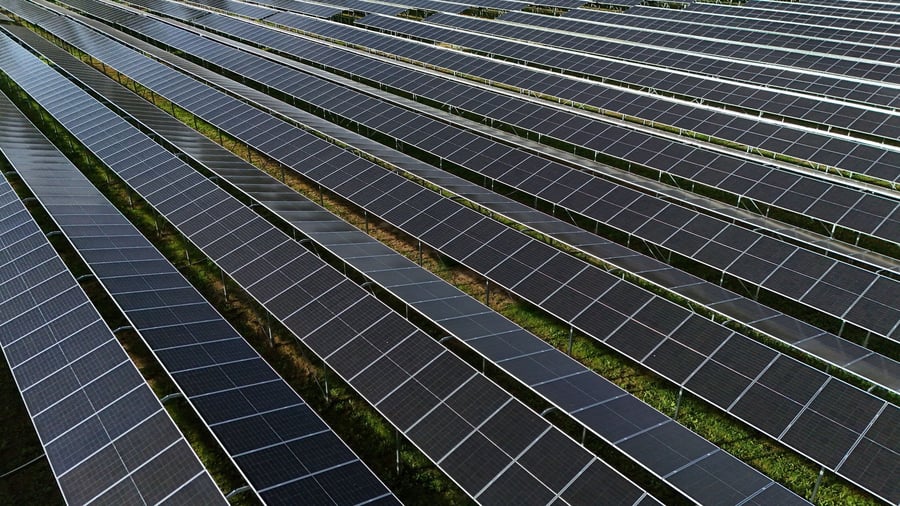
The production of solar energy in Germany is steadily climbing towards a record high, surpassing 100 Terawatt-hours for the first time in a single calendar year, according to the German Solar Industry Association (BSW-Solar). As of September 27th, the figure stood at 90.2 Terawatt-hours, which is higher than the total output of the entire year 2025, which was 90 Terawatt-hours.
The BSW-Solar attributes the impressive numbers to an unusual number of sunny hours and the continued expansion of photovoltaic installations. Twenty years ago, the yearly production was only 2.2 Terawatt-hours. Carsten Körnig, Chief Executive Officer of BSW-Solar, described the approaching record as a milestone in the Energiewende, stating that photovoltaics has evolved from a niche technology to a cornerstone of our power supply.
This transformation benefits society as a whole, providing cheaper electricity, reducing energy imports, and significantly lowering climate damage. A quantity of 100 Terawatt-hours is substantial. For comparison, Hamburg consumed 10.7 Terawatt-hours in the previous year. Households in Germany typically consume between 2,000 to 4,000 Kilowatt-hours.
Renewables are becoming increasingly important for Germany's electricity generation. According to the Federal Statistical Office, 59.1% of the total domestically produced electricity in the first half of the year came from renewable sources. Of this, photovoltaics accounted for 17.8% of the total, making it the third-largest source of electricity in domestic production. Wind power was the leading energy source, while coal was the second-largest.
Written by urgent.news from Handelsblatt's reporting — not their text. Machine-written — may contain errors; check the original before relying on it.