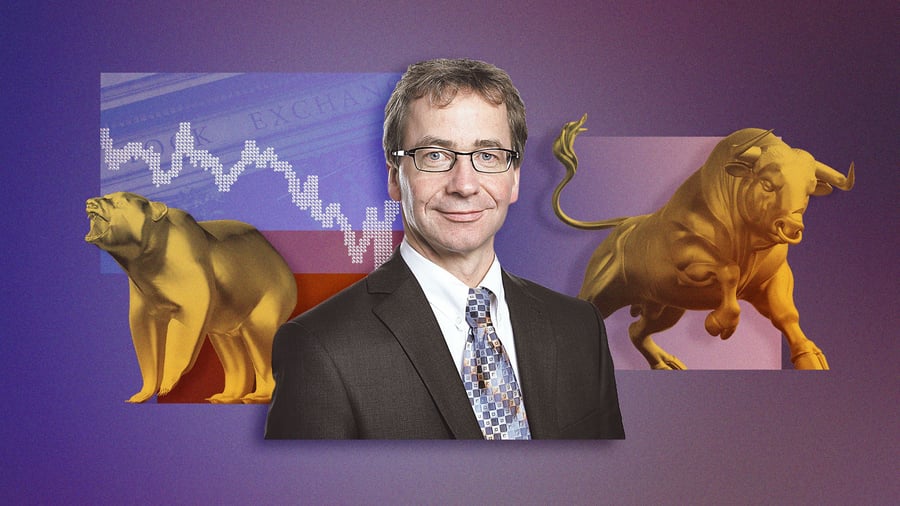
Vermögen: „Mir fehlt der Respekt vor dem Geld“
Superreiche gelten als Gefahr für die Demokratie. Philanthropie-Berater Andreas Schiemenz hält dagegen: Großzügigkeit sei keine Frage des Kontostands und der Staat nicht allzuständig.

In a world where money often dictates influence, Herman Schiemenz reflects on his own journey, growing up in a working-class family where the value of money was never emphasized. Despite this upbringing, he managed to connect with wealthy individuals, challenging the notion that they are inherently detached.
Schiemenz's path to philanthropy began during his studies when he founded a youth organization that required financial support. This experience taught him firsthand how money could have a positive impact. In his wealth management career, he sought to understand why some high-net-worth individuals in Northern Germany choose to donate, while others do not. He also explored how to approach these affluent individuals without harboring a sense of superiority or disrespect towards their wealth.
Schiemenz admits that he has shed his morality and has replaced it with a respect for the person he is speaking with, regardless of their financial status. This approach is crucial, especially in a time when wealth in influential figures like tech billionaires often raises concerns about their impact and motives. He believes that wealth and power are intertwined, but it is not fair or accurate to assume someone is disreputable simply because they are wealthy.
Schiemenz stresses the importance of engagement from all sectors of civil society, including those with varying income levels. He argues that excluding people from philanthropic opportunities based on their financial status is counter-productive. He also points out that the image of the super-rich is currently dominated by a few Americans whose wealth has become politically influential.
However, he does not believe this trend will necessarily translate to Europe, where his impression is that the democratic foundations are more robust.
While acknowledging that there are some wealthy Americans who engage in politics in ways some consider antidemocratic, Schiemenz points out that there are also individuals like MacKenzie Scott, who are philanthropically active and have been criticized for it. He sees potential for a more nuanced discussion about the role of the wealthy in society, including those who might be perceived as unconventional or even "anti-democratic."
Schiemenz believes that philanthropy should not be confined to a single ideological perspective. He advocates for a cross-section of society, including those with left-leaning and conservative viewpoints, to engage in philanthropic activities. He emphasizes that everyone has a responsibility to contribute to their community and society, rather than viewing philanthropy as a privilege reserved for the wealthy.
He also cautions against the notion that the "rich" should not be held accountable for their wealth, suggesting that everyone, regardless of their financial status, can contribute to society through acts of generosity. Schiemenz argues that instead of looking down on wealthy individuals, society should encourage them to use their resources for the greater good.
He believes that this approach could help counteract the perception of a zero-sum game, where winners have losers, and instead foster a sense of shared responsibility among all community members.
Written by urgent.news from Handelsblatt's reporting — not their text. Machine-written — may contain errors; check the original before relying on it.
Also reported by 1 other outlet
- Assets: "I lack respect for money" handelsblatt.com