UN chief says 'immediate and drastic' emissions cuts needed to avert climate change catastrophe
"You cannot build peace on a burning planet," United Nations Secretary-General António Guterres told reporters, stressing that climate change is central to the U.N.'s work because it contributes to geopolitical instability.
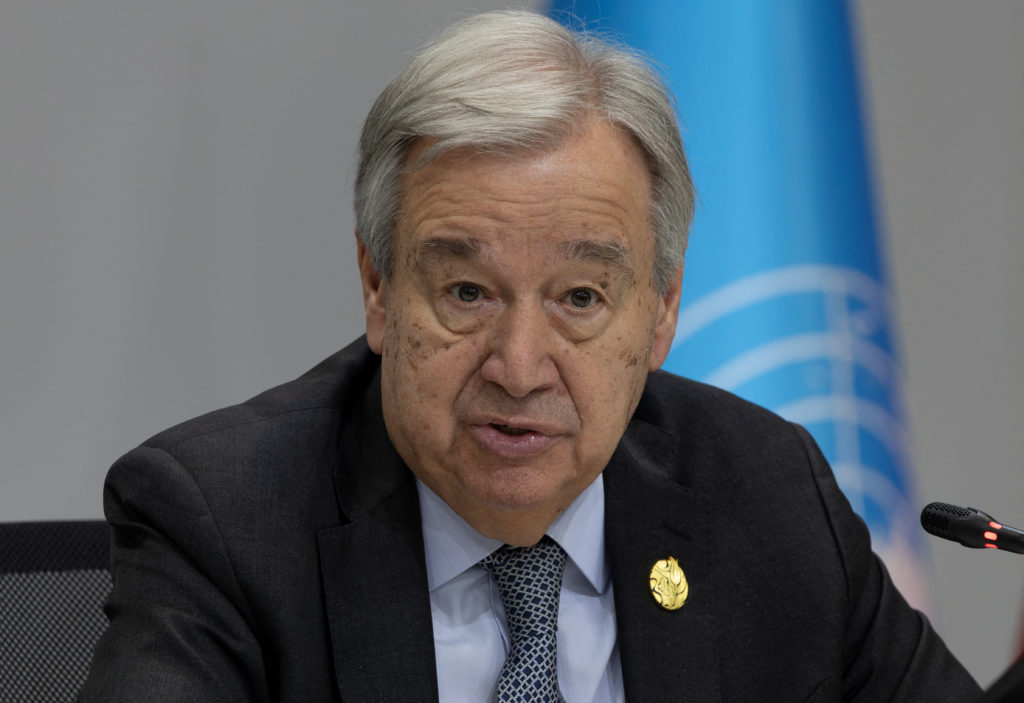
The world must immediately and drastically reduce emissions from fossil fuels to prevent the most severe consequences of climate change, United Nations Secretary-General António Guterres declared during his final climate summit in Turkey. Guterres emphasized that climate change is central to the U.N.'s work as it contributes to geopolitical instability, hunger, displacement, debt, and competition for resources, all of which threaten global peace.
He stated that you cannot build peace on a burning planet and that climate change exacerbates poverty, poverty cycles, and threatens the future of young people by destroying the natural systems upon which their prosperity depends. Furthermore, Guterres highlighted that those who contributed least to the crisis bear the brunt of the consequences, underscoring the need for justice and equity in addressing climate change.
At the annual U.N. climate talks in Turkey, world leaders are attempting to reach a consensus on concrete actions to address climate change and provide assistance to countries most vulnerable to its impacts, including island nations facing land loss due to rising sea levels. The main point of contention at the summit revolves around electrification, with a proposed goal to increase the share of electricity in global energy consumption from around 21% to 35% by 2035, preferably from renewable sources like solar and wind.
However, the proposal does not mandate the use of renewable energy for electricity generation, potentially allowing the continued use of fossil fuels, at least initially. Climate TRACE, a satellite-based emissions tracking organization, found that clean energy adoption would cut global emissions by 14%, compared to 7% if fossil fuels were still used for electrification.
International Energy Agency Executive Director Fatih Birol emphasized the importance of the maximum number of countries signing the pledge, which works best without a clean energy requirement. However, environmental groups argue that electrification should be an end to fossil fuel dependence rather than an end in itself. Jasmin Duregger, from Greenpeace's Global Gas Campaign, stated that electrification must end fossil fuel dependence, not be an end in itself.
Small island nations, who are highly vulnerable to climate change, have been the most vocal at this year's summit, COP31, emphasizing that a U.N. fund for compensating vulnerable nations must be urgently strengthened. Guterres called upon wealthier countries, which have historically contributed the most to climate change, to fulfill their financial commitments and contribute more significantly.
Guterres stressed that progress in slowing global warming has stalled for the past five years, and the world is on track to exceed the Paris Agreement's temperature limit of 1.5 degrees Celsius above pre-industrial temperatures. According to a recent report by the independent Climate Action Tracker, even if countries fulfill all their emission reduction promises, the global temperature will still rise by 2.6 degrees Celsius (4.7 degrees Fahrenheit) by the end of the century.
Guterres called for a 6% annual reduction in emissions for several years to mitigate the overshoot and bring global temperatures back below 1.5 degrees Celsius as soon as possible. He emphasized that climate change is a global issue requiring collective action from all nations, as no country can protect itself from its impacts alone.
Written by urgent.news from PBS NewsHour Science's reporting — not their text. Machine-written — may contain errors; check the original before relying on it.