The World’s Largest Marine Turtle Makes a Move South
Nesting leatherbacks chase cooler waters to Ecuador’s beaches The post The World’s Largest Marine Turtle Makes a Move South appeared first on Nautilus .
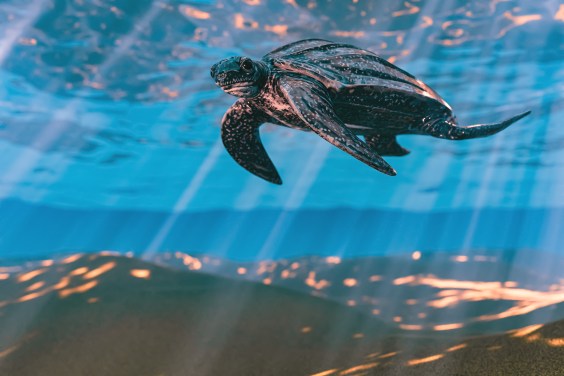
Leatherback sea turtles, one of the largest marine species, are making a surprising move from their usual nesting grounds to the beaches of Ecuador. These turtles are not only impressive in size, comparable to a grand piano, but also boast remarkable adaptability to varying water temperatures. They can withstand tropical waters up to 86°F, and even endure colder waters as low as 32°F, by regulating their body temperature through activity and fat insulation.
However, a recent study highlights that rising ocean temperatures are forcing these turtles to seek cooler waters. Traditionally, the critically endangered eastern Pacific leatherback population would nest on the coasts of Mexico and Costa Rica. But now, they're being spotted about 1,000 miles further south in Ecuador. According to Juan José Alava, a biologist from Simon Fraser University in Canada, this shift suggests the turtles are adapting to their changing environment.
The study, which compiled records of nesting activity along Ecuador's coast since 1980, revealed a significant increase in leatherback nesting since the turn of the century. This is particularly noteworthy as hatchling leatherbacks hadn't been observed along Ecuador's coast since 1983. The discovery of new nests in the winters of 2020 and 2021 in Manabí Province was met with great enthusiasm.
Moreover, these nests have been successfully relocated to protected areas, resulting in successful hatching in 2025 and 2026. However, this positive development is overshadowed by a concerning trend of increased leatherback strandings along the Ecuadorian coast. Between 2011 and 2026, at least 35 dead leatherbacks were found stranded, often due to injuries from fisheries and other human activities.
Despite this setback, the leatherbacks' shift to Ecuadorian waters offers a glimmer of hope for a subspecies that is rapidly heading towards extinction in the eastern Pacific within the next 60 years.
Written by urgent.news from Nautilus's reporting — not their text. Machine-written — may contain errors; check the original before relying on it.