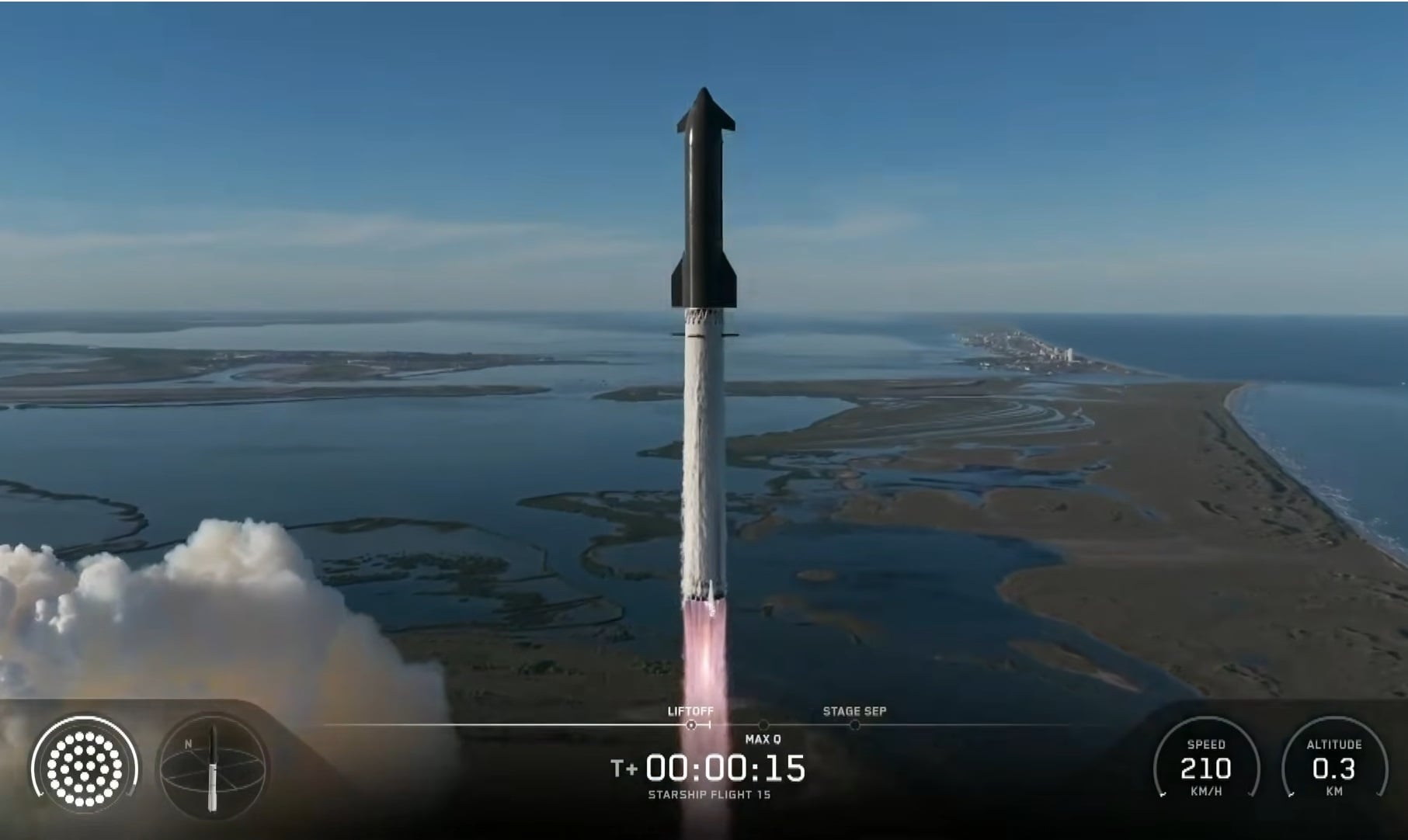
SpaceX launches Starship on ambitious 22-hour Flight 15 test, but aborts booster 'chopsticks' catch (video)
SpaceX's Starship megarocket reached orbit today (Nov. 13) during its 15th test flight, but the company scrapped a plan to catch the vehicle's massive booster back at the launch site.
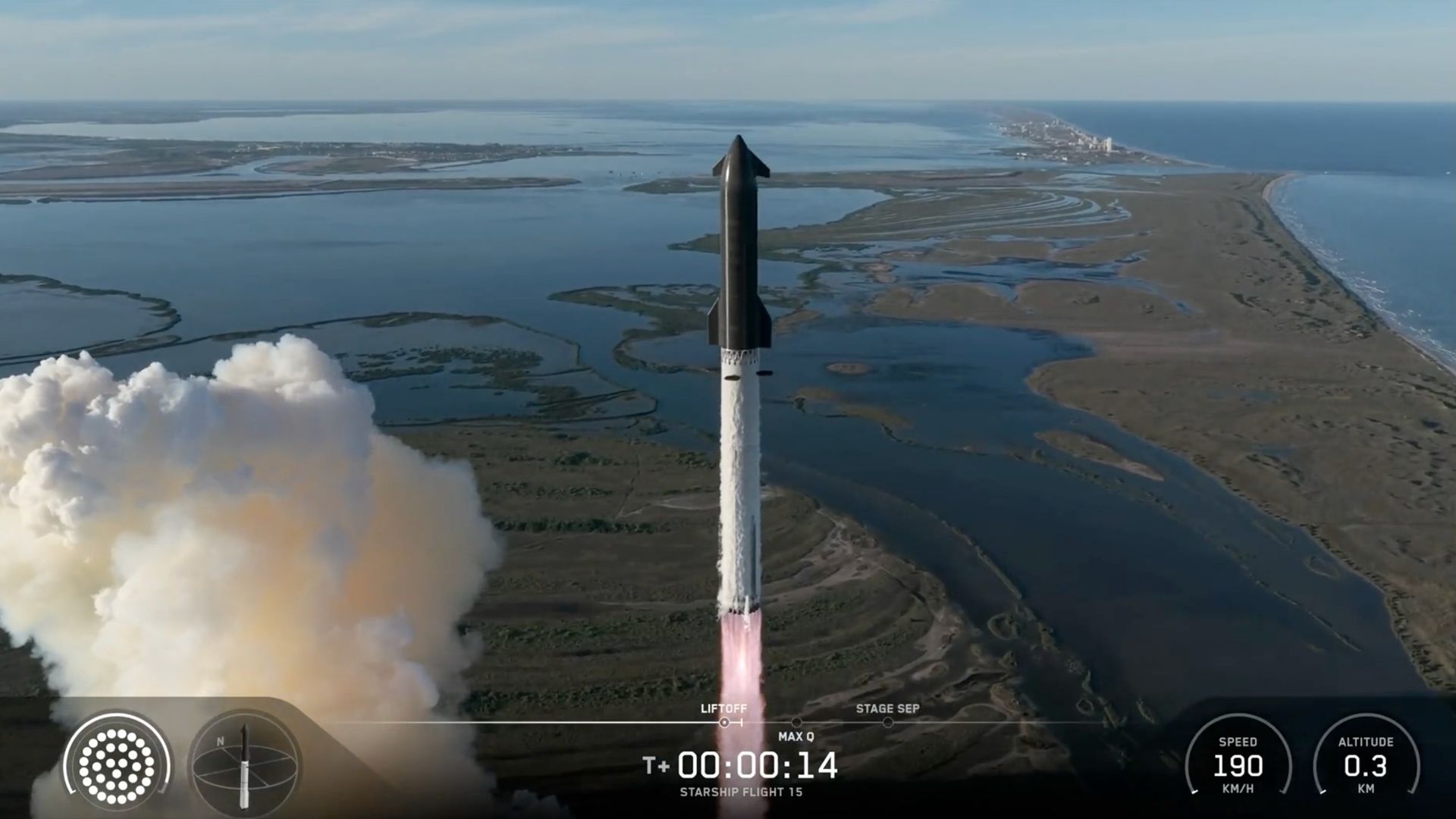
On November 13, SpaceX launched its 15th test flight of the Starship rocket from its Starbase facility in Texas. The Super Heavy booster and the Starship upper stage ascended into the sky, powered by over 18 million pounds of thrust from the booster's 33 Raptor 3 engines. The flight proceeded smoothly through the initial ascent, executing Super Heavy's main engine cutoff and Starship's hot-staging about 2.5 minutes after launch.
SpaceX had planned to catch the Super Heavy booster using the Starbase launch tower's giant mechanical "chopstick" arms, but the catch attempt was called off. The booster was instead brought down for a controlled splashdown in the Gulf of Mexico, approximately 6.5 minutes after launch. The decision to abort the catch was not immediately clear.
Starship's Raptors continued to fire after stage separation, successfully completing their first burn about eight minutes into the flight. Two minutes later, Starship achieved orbit insertion at an altitude of around 170 miles (275 kilometers). This marked Starship's second time in orbit, following its successful orbit insertion on Flight 14 on September 28.
Starship is carrying 26 of SpaceX's upgraded Starlink V3 satellites, which will be deployed into orbit over a 42-minute period starting 35 minutes after launch. These V3 satellites are more powerful than the V2 Starlinks currently orbiting, adding a terabit of data capacity to the Starlink constellation. Three of the V3 Starlinks are equipped with cameras to capture images of Ship's heatshield tiles and other hardware after deployment, aiding SpaceX in determining if the spacecraft can safely return to Starbase.
The Starship test flight is scheduled to continue for 14 orbits, lasting over 21 hours in space. The next contingency checkpoint for a potential return to Earth is 10 minutes after the satellite deployment. If conditions permit, SpaceX plans to execute a 10-second deorbit burn around 21 hours and 36 minutes after launch, setting Starship on a trajectory back to the Starbase launch site for a splashdown.
Written by urgent.news from Space.com's reporting — not their text. Machine-written — may contain errors; check the original before relying on it.
This story
This is one outlet's version. Read the fullest account.
- Double-catch drama: Why Starship's Flight 15 is so important to SpaceX space.com
- Can SpaceX catch its Starship? scientificamerican.com
- SpaceX aims to safely land Starship and booster stage after orbital flight newscientist.com
- Will you be able to see Starship launch to orbit in the sky? r.smartbrief.com