Short-term inflation clocks in at 11.21pc
ISLAMABAD: Short-term inflation rose to 11.21 per cent year-on-year in the week ending on Nov 12, driven largely by perishable food products, according to official data released by the Pakistan Bureau of Statistics (PBS) on Friday. The index, comprising 51 items, whose prices are collected from 50 markets in 17 cities, is calculated weekly to track changes in the prices of essential commodities…
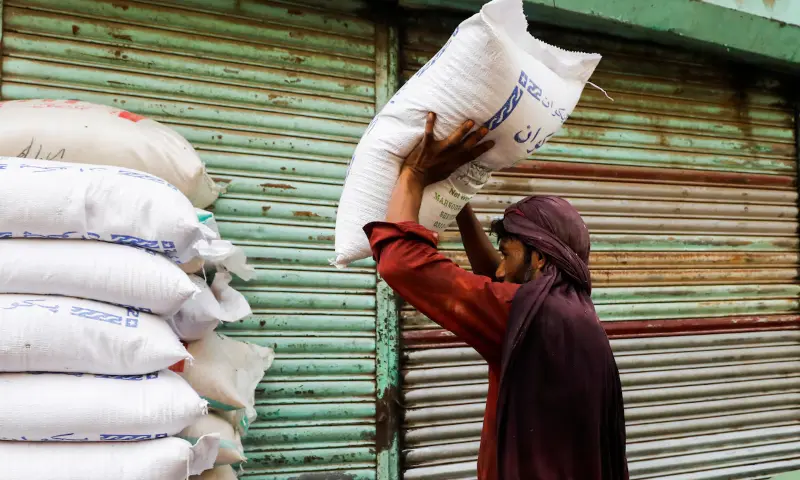
Official data released by the Pakistan Bureau of Statistics (PBS) revealed that short-term inflation jumped to 11.21 percent year-on-year in the week ending November 12. This surge was predominantly driven by perishable food products. The index, which monitors 51 essential items from 50 markets across 17 cities, observed that 19 of these items (37.25 percent) saw price increases, while 9 items (17.65 percent) experienced price declines. The remaining 23 items (45.10 percent) remained unchanged from the previous week.
The double-digit inflation trend has persisted for several consecutive weeks, primarily due to persistent increases in petroleum and diesel prices. However, oil prices have been gradually declining over the past three days. This decline in oil prices is expected to become apparent in the next review. Despite this, the unprecedented increase in LPG prices has been the main catalyst behind the rise in short-term inflation.
The Sensitive Price Index (SPI), which tracks short-term inflation, slightly declined by 0.46 percent week-on-week, indicating price fluctuations in both food and non-food items. The increase in energy costs is not only fueling inflation but also indirectly boosting sales tax collections as prices of goods and services rise. This is a classic case of cost-push inflation, where rising energy costs lead to higher food prices, placing mounting pressure on households due to higher consumer prices.
The items that experienced the most significant price increases over the previous week included tomatoes (12.06 percent), eggs (5.98 percent), potatoes (2.42 percent), garlic (1.76 percent), chicken (1.32 percent), firewood (1.10 percent), wheat flour (0.94 percent), pulse masoor (0.64 percent), beef (0.47 percent), and LPG (0.30 percent).
Conversely, items that saw price declines over the same period were petrol (7.42 percent), diesel (6.10 percent), onions (1.70 percent), bananas (1.03 percent), gur (0.59 percent), sugar (0.43 percent), powdered milk (0.36 percent), pulse moong (0.32 percent), and pulse gram (0.08 percent).
On an annual basis, LPG recorded the highest price increase at 111.35 percent, followed by tomatoes (78.94 percent), electricity for Q1 (52.38 percent), wheat flour (36.14 percent), diesel (30.77 percent), petrol (26.23 percent), onions (19.67 percent), chili powder (15.55 percent), mutton (14.67 percent), plain bread (12.35 percent), beef (11.30 percent), and chicken (10.98 percent).
Conversely, potato prices fell by 36.41 percent, followed by sugar (24.54 percent), eggs (23.29 percent), salt powder (12.51 percent), pulse masoor (7.21 percent), pulse moong (6.83 percent), gur (6.63 percent), and bananas (3.35 percent).
Written by urgent.news from Dawn's reporting — not their text. Machine-written — may contain errors; check the original before relying on it.