Sachverständigenrat: „In ihren Rechten verletzt“ – Grimm siegt vor Gericht im Streit der Wirtschaftsweisen
Im Zwist um das Aufsichtsratsmandat von Veronika Grimm hat ein Gericht geurteilt: Die anderen Wirtschaftsweisen dürfen sie nicht zu Transparenzregeln zwingen – und auch keine Prüfungen anordnen.
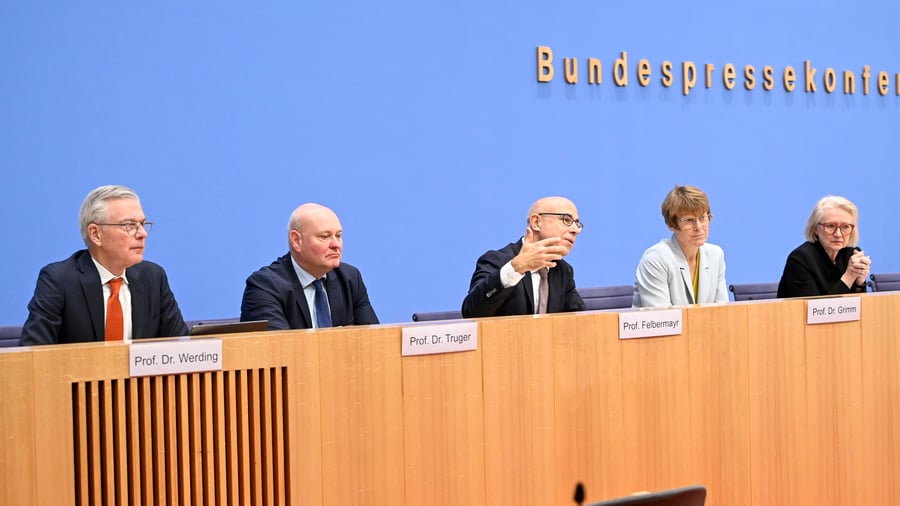
A three-year dispute at Germany's top economic think tank has reached a court ruling, with Veronika Grimm prevailing over the other members. The Administrative Court in Wiesbaden granted a complaint from Grimm, arguing that the other members of the Sachverständigenrat could not force her to disclose certain information. The ruling was published on Friday, with the court's justification providing insight into the case.
Grimm has been a member of the council since 2020, evaluating Germany's overall economic development. It was revealed in late 2023 that she had received an offer to join the supervisory board of Siemens Energy. The other four members, including Monika Schnitzer as chair, did not consider this compatible with the council's independence and asked Grimm to resign if she accepted the supervisory board mandate.
Grimm declined and joined the council instead, prompting the other members to introduce a compliance code. This code includes disclosure obligations for council members to identify potential conflicts of interest. The code was decided against Grimm's vote. She challenged this in July 2024 before the Administrative Court in Wiesbaden, arguing that the compliance code was illegal as only the legislator can enact such rules for the council.
The court agreed with Grimm, stating that the council members are left to their own conscience to determine if assignments might conflict with their interests. The court also noted that the compliance code is currently under seal, making it unclear what specific regulations are at stake. Grimm has frequently used her ability to write minority votes in recent years, often calling for more liberal economic policies and less state intervention in the analyses of her colleagues.
In 2020, she wrote eleven minority votes, while the other four members combined wrote only five. Recently, Grimm distanced herself from the council's latest annual report, advocating for more structural reforms, deeper state spending cuts, and opposing potential tax increases. The court's ruling on the passus regarding the fachliche Absicherung of the compliance code stated that it would put any minority vote under review for personal independence, which it deemed unreasonable.
Grimm is expected to resign from the council soon, though a decision by the other members is unclear. The council's chair, Monika Schnitzer, said only that the council would not comment on the judgment until it is evaluated by lawyers. Grimm declined to comment until the ruling was reviewed. The press conference following the presentation of the new report saw Schnitzer stating that the code should be made public so members can "make their own assessment."
Grimm said she could not provide information until the code was disclosed. Rival member Gabriel Felbermayr, replacing Malmendier, said he had signed the code and believed it was right. Other members may reach different conclusions, and it is legitimate. The economic think tank dispute has been widely discussed in economic and political circles for some time, with concerns about reputational damage.
Written by urgent.news from Handelsblatt's reporting — not their text. Machine-written — may contain errors; check the original before relying on it.